

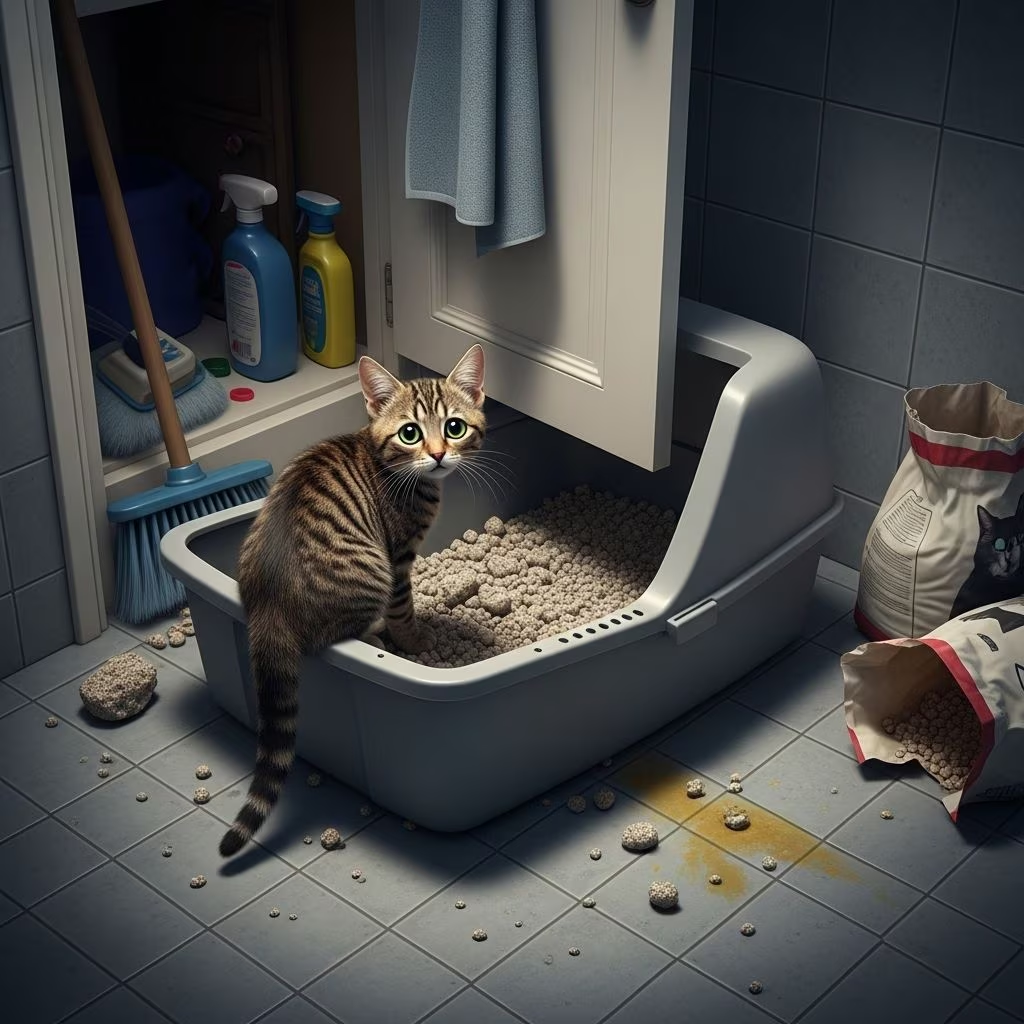
House soiling remains one of the most frustrating challenges for cat owners, often signaling underlying issues that require prompt attention. Whether your feline is urinating on carpets, pooping near the box, or scattering litter everywhere, understanding the root causes empowers you to implement targeted solutions. This guide draws from veterinary insights and behavioral expertise to help you reclaim a litter-trained home.
Recognizing the Signs of Litter Box Avoidance
Cats are naturally fastidious, preferring clean, private spots for elimination. When they bypass the litter box, it typically manifests as urine puddles on soft surfaces, feces deposited in corners, or even spraying on vertical areas. These behaviors differ from accidents; intentional soiling often involves covering or specific patterns. Early detection prevents escalation, as reinforced habits become harder to break.
- Urine spots on bedding or rugs, sometimes with a strong ammonia scent.
- Feces placed just outside the box or in high-traffic zones.
- Scattered litter tracking across floors from overzealous digging.
- Sudden changes in frequency or volume of elimination.
Tracking these patterns in a journal, noting locations, times, and contexts, aids in diagnosis. For instance, consistent soiling in one room may point to territorial stress rather than box aversion.
Medical Factors Behind Elimination Problems
Before assuming behavioral causes, rule out health issues, as pain or discomfort often drives cats to avoid familiar spots. Conditions like urinary tract infections (UTIs), bladder stones, kidney disease, or constipation make box use painful, leading to substrate preferences elsewhere.
Senior cats face heightened risks from arthritis, reducing mobility to reach boxes, or diabetes causing increased urination volumes that overflow standard pans. Gastrointestinal upset from dietary changes or parasites can also prompt avoidance.
Action Steps:
- Schedule a veterinary exam immediately, including urinalysis and bloodwork.
- Discuss fecal tests for worms or infections.
- Monitor for symptoms like straining, blood in urine, or lethargy.
Vets may prescribe antibiotics, pain relief, or diet adjustments. Post-treatment, retrain gradually to rebuild positive associations.
Optimizing Litter Box Setup for Success
Many avoidance issues stem from suboptimal box design or placement. Cats evolved to dig in soft soil, so mismatches in size, litter type, or location deter use.
| Issue | Common Cause | Solution |
|---|---|---|
| Box too small | Large breeds can’t turn comfortably | Choose extra-large pans (1.5x cat length) |
| Hooded or lined | Feels confining or crinkly | Switch to open, liner-free boxes |
| Litter type disliked | Scented or non-clumping | Use unscented clumping clay |
| High sides scatter litter | Enthusiastic diggers | High-sided or covered entry models |
Placement matters: situate boxes in quiet, low-traffic areas with escape routes, away from food and water—cats instinctively separate these zones. Avoid cramped spots like between fixtures; test multiple locations to find preferences. For kittens or seniors, ensure easy access without jumps.
Cleaning Routines to Keep Cats Coming Back
Dirty boxes top the aversion list. Cats detect odors humans miss, abandoning fouled pans for clean alternatives. Scoop daily—twice for multi-cat homes—and fully replace litter weekly, washing with mild soap (no harsh chemicals or ammonia, which mimic urine).
Enzyme cleaners neutralize lingering scents on soiled areas; avoid masking sprays that attract returns. Products like those breaking down urine proteins prevent re-marking. In multi-cat setups, designate boxes per cat to minimize competition.
Multi-Cat Household Dynamics and Strategies
Tension in homes with multiple felines often triggers box avoidance, as bullied cats seek safe havens or dominant ones mark territory. Provide n+1 boxes (n = number of cats), spread across floors in private spots.
- Introduce new cats slowly with scent swapping.
- Enrich environment: vertical shelves, perches reduce floor fights.
- Scent soakers like cardboard scratchers neutralize territories.
Play sessions with interactive toys diffuse aggression, promoting harmony. Separate feeding stations further minimize stress.
Stress and Environmental Triggers
Changes like moves, new pets, or visitors unsettle cats, prompting inappropriate elimination as coping. External stressors—stray cats visible through windows—induce anxiety spraying.
Mitigate by:
- Covering problem windows temporarily.
- Maintaining routines during transitions.
- Using pheromone diffusers for calming effects.
For new adoptions, confine to a ‘safe room’ with box, food, and toys until settled.
Deterrents and Attraction Techniques
Make off-limit areas unappealing while luring to boxes. Aversion methods include foil, double-sided tape, or nubby runners on soiled spots—cats dislike sticky or unstable textures. Place food bowls atop cleaned messes, leveraging elimination-food separation instincts.
Attraction: Position a new, appealing box near soiling sites, gradually relocating it. Pair with preferred litter; some attractant formulas encourage use. Consistency yields results in weeks.
Special Cases: Kittens, Seniors, and Reluctant Starters
Kittens may need litter training if separated early from mothers. Confine to small areas with shallow boxes and frequent checks. Seniors benefit from low-entry boxes and nearby placement.
Reluctant users respond to positive reinforcement—treats post-use—but never punish, as it heightens fear.
FAQs: Quick Answers to Common Concerns
Why does my cat poop next to the box but pee inside?
This suggests constipation or box size issues; try larger pans and high-fiber food after vet clearance.
How many litter boxes for two cats?
Minimum three, in separate locations for privacy.
What if cleaning doesn’t help?
Consult a vet for medical checks, then a behaviorist for stress analysis.
Can diet affect litter habits?
Yes, poor digestion leads to loose stools; transition foods slowly.
Is punishment effective?
No—it worsens fear-based avoidance.
Long-Term Prevention Plan
Sustain success with routine health checks, annual vet visits, and environmental vigilance. Rotate litters occasionally to prevent pickiness, and monitor for stress cues like hiding. Invest in quality, durable boxes to avoid wear that harbors odors. Patience and consistency transform problem pets into reliable users, fostering a peaceful coexistence.
References
- Urinating Outside the Litter Box: What to do when it’s behavioral — Just Cats Clinic. Accessed 2026. https://justcatsclinic.com/urinating-outside-the-litter-box-what-to-do-when-its-behavioral/
- Cat Not Using Litter Box: Causes and Solutions — Best Friends Animal Society. Accessed 2026. https://bestfriends.org/pet-care-resources/cat-not-using-litter-box-causes-and-solutions
- Solutions to 8 Common Cat Litter Box Issues — Chewy. Accessed 2026. https://www.chewy.com/education/cat/training-and-behavior/8-common-cat-litter-box-problems-and-solutions
- Feline Behavior Problems: House Soiling — Cornell University College of Veterinary Medicine. Accessed 2026. https://www.vet.cornell.edu/departments-centers-and-institutes/cornell-feline-health-center/health-information/feline-health-topics/feline-behavior-problems-house-soiling
- Cat Behavior and Litter Box Management Tips — Cat Care Society. Accessed 2026. https://www.catcaresociety.org/cat-behavior-and-litter-box-management-tips/
- 5 Litter Box Tips for Litter Box Issues — Arm & Hammer. Accessed 2026. https://www.armandhammer.com/en-ca/articles/tips-getting-cat-use-litter-box



