

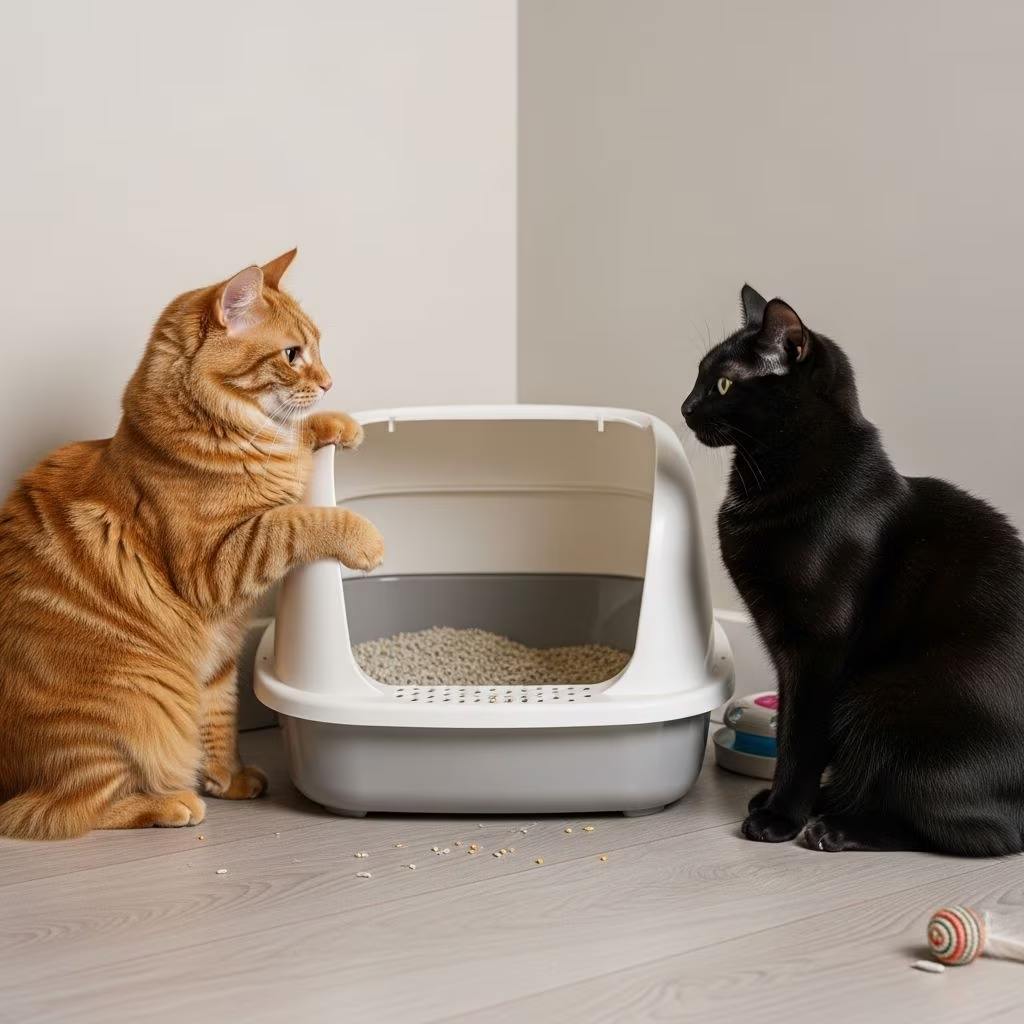
Cats often exhibit strong territorial instincts, particularly around their litter boxes, which can lead to conflicts in multi-cat households. These behaviors stem from natural survival mechanisms where felines protect essential resources like elimination areas.
Understanding Feline Territorial Nature
Cats are inherently territorial animals, evolved from solitary hunters who defend personal spaces vigorously. In domestic settings with multiple cats, this instinct manifests strongly at shared resources such as litter boxes. A cat may perceive the box as its exclusive domain, refusing to share or aggressively protecting it from others.
This guarding can escalate to ambushes, where one cat attacks another upon exiting the box, causing stress and potential avoidance of litter use altogether. Indoor cats, lacking outdoor territories, redirect these instincts toward household items, amplifying issues in confined spaces.
Recognizing Signs of Litter Box Guarding
Early detection of territorial behavior prevents escalation. Common indicators include:
- Guarding positions: A cat positions itself near the box entrance, staring down or blocking access to others.
- Stalking movements: Low-slung creeping toward a cat using the box, signaling an impending ambush.
- Vocal warnings: Hissing, growling, or yowling when another cat approaches or uses the facility.
- Following patterns: Trailing another cat to the box or reacting to digging sounds with agitation.
- Escape reactions: Multiple cats fleeing the area simultaneously after an interruption.
These signs differentiate from medical issues; persistent observation helps distinguish territorial aggression from health problems like urinary tract infections.
Reasons Cats Claim Litter Boxes as Territory
Several factors drive this behavior:
- Resource scarcity: Insufficient boxes force competition, triggering defense mechanisms.
- Poor placement: Boxes in dead-end spots or with single exits heighten vulnerability, prompting guarding.
- Social tension: Unresolved rivalries between cats extend to private moments like toileting.
- Insecurity: New cats, changes in home dynamics, or past traumas amplify protective instincts.
In multi-cat homes, even neutered felines revert to wild-like guarding to secure ‘high-value’ zones, potentially leading to housesoiling—full elimination outside the box due to aversion.
Distinguishing Territorial Issues from Other Problems
Not all litter avoidance signals territory disputes. Use this table to compare:
| Behavior Type | Description | Key Signs | Solutions |
|---|---|---|---|
| Territorial Guarding | One cat dominates box access | Ambush attacks, stalking | Add boxes, improve layout |
| Housesoiling | Full voids on floors | Horizontal surfaces, aversion | Check medical, litter type |
| Marking | Spraying urine vertically | Stress-related, small amounts | Reduce anxiety, spay/neuter |
| Medical Aversion | Avoids box due to pain | Frequent small attempts | Vet visit essential |
Housesoiling often links to box aversion from past pain or unsuitable litter, while marking ties to stress. Always rule out health issues first.
Optimal Litter Box Strategies for Peace
Addressing territory starts with setup. Follow the golden rule: number of cats plus one extra box. Distribute across floors and key areas:
- One per level in multi-story homes.
- Strategic spots allowing multiple escape routes—no closets or corners.
- Uncovered boxes for better visibility and quick exits.
For problem rooms, add a second box diagonally opposite the guarded one to dilute ownership without adjacency. Clean daily to prevent scent buildup that reinforces claims.
Placement Tips to Deter Ambushes
Positioning reduces ambush risks:
- Visual access: Face boxes toward doors for early warnings.
- Escape options: Open areas with dual exits.
- Neutral zones: Avoid core territories of dominant cats.
Test setups by observing usage; adjust based on preferences for privacy versus openness.
Enrichment and Distraction Techniques
Redirect guarding energy through environmental tweaks:
- Vertical spaces: Shelves, trees for separate territories.
- Interactive toys: Auto-play devices distract stalkers pre-ambush.
- Positive associations: Treats near each other, supervised play to build tolerance.
Never reward post-ambush; preempt with diversions when the victim approaches unnoticed.
Building Harmony in Multi-Cat Homes
Long-term resolution involves fostering positive interactions. Ensure ample resources—food stations, water bowls, scratching posts—to minimize competition. Gradual introductions for new cats prevent initial turf wars.
Monitor progress; persistent issues may require pheromone diffusers or professional behaviorists. Consistency yields results, often within weeks.
Frequently Asked Questions
Why does my cat hiss at the litter box?
Hissing indicates territorial defense or discomfort; check for sufficient boxes and vet health.
How many litter boxes for 3 cats?
Minimum four: one per cat plus one, spread out.
Can neutered cats still guard boxes?
Yes, instincts persist despite sterilization.
What if a cat avoids the box after an ambush?
Separate temporarily, add boxes, enrich environment to rebuild confidence.
Does litter type matter for territory?
Yes, preferences cause aversion; experiment with unscented clumping varieties.
Conclusion
Proactive management of litter box territory transforms tense households into harmonious ones. By prioritizing quantity, placement, and enrichment, cats reclaim security without conflict.
References
- Territorial Cat Behavior in Litter Boxes — Purina Pet Expert Team. 2025-06-05. https://www.purina.com/articles/cat/behavior/understanding-cats/territorial-behavior-litter-box
- Resource Guarding in Cats: Stop Litter Box Ambushes — Liz’s Kitty Bootcamp. 2022-03-07. https://lizskittybootcamp.com/2022/03/07/resource-guarding-cats-litter-box-ambushes/
- Cat Territorial Over Litter Box: Understanding and Managing Feline Behavior — UAH Pet. N/A. https://www.uahpet.com/blogs/post/cat-territorial-over-litter-box-understanding-and-managing-feline-behavior
- Prevent Litter Box Ambushes — Cat Behavior Associates. N/A. https://catbehaviorassociates.com/prevent-litter-box-ambushes/



