

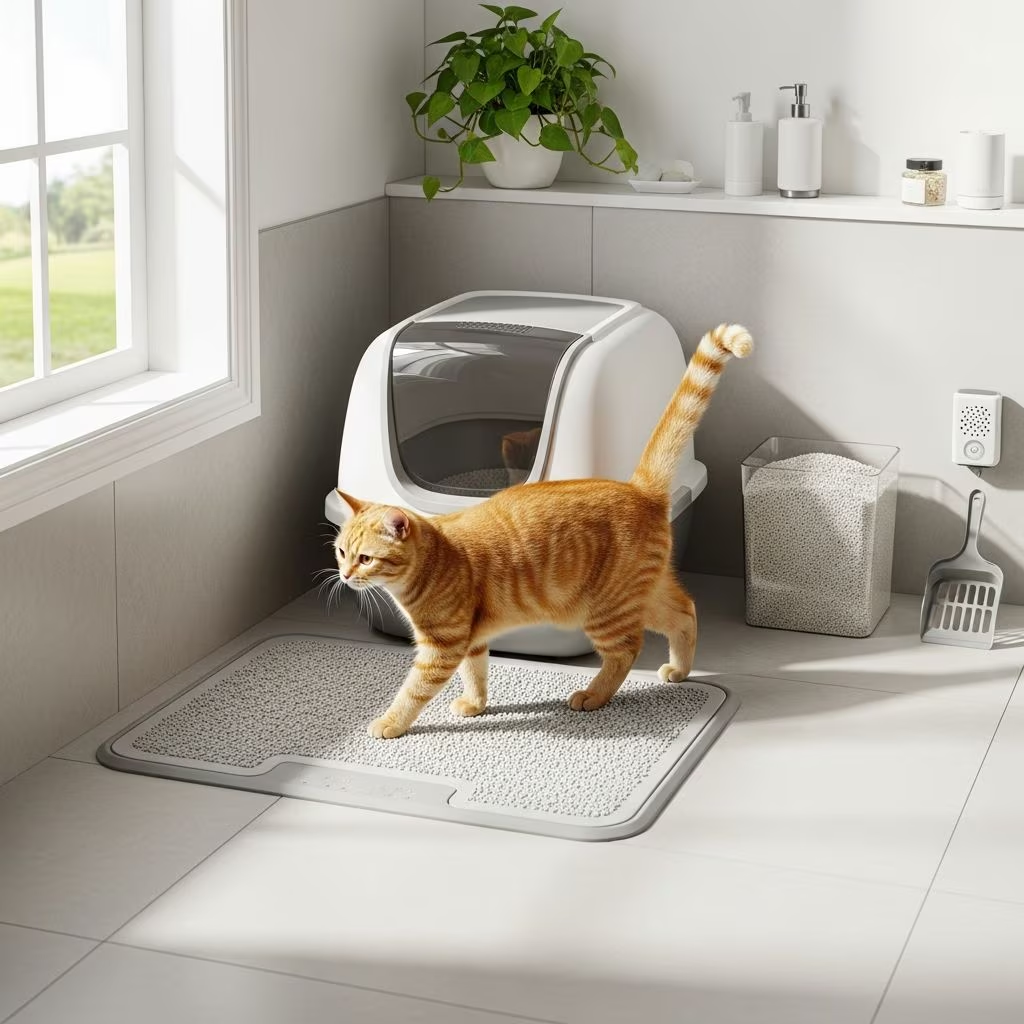
Ensuring your cat consistently uses the litter box is essential for a harmonious home. Proper training prevents accidents and promotes feline health by mimicking their natural elimination instincts. This guide draws from expert veterinary and humane society recommendations to help you create an environment where your cat thrives with the litter box.
Understanding Feline Elimination Instincts
Cats are naturally fastidious creatures, evolved to bury waste in soft substrates like soil or sand to avoid predators. Indoor litter boxes replicate this, but mismatches in setup can lead to avoidance. Factors like litter type, box design, location, and cleanliness directly influence success. Adult cats transitioning from outdoors or seniors with mobility issues require tailored approaches to rebuild habits.
Selecting the Perfect Litter Box Setup
Start with equipment that matches your cat’s preferences. Offer multiple options initially to identify favorites, as cats may prefer different boxes for urination versus defecation.
- Box Size and Design: Opt for large, shallow boxes about 1.5 times your cat’s length for easy entry and movement. Uncovered models suit most cats, providing visibility and escape routes, while covered ones appeal to privacy-seekers. Avoid high-sided boxes for arthritic seniors.
- Litter Choices: Test unscented, clumping clay litters for their fine texture, or mix in garden soil for outdoor cats. Provide side-by-side boxes with varied litters like fine-grained clay, non-clumping, or natural alternatives to pinpoint preferences.
- Quantity Rule: Follow the guideline of one box per cat plus one extra, placed in separate quiet areas to reduce competition in multi-cat homes.
| Box Type | Pros | Cons | Best For |
|---|---|---|---|
| Uncovered | Easy access, visibility | Less privacy, odor spread | Kittens, seniors |
| Covered | Privacy, odor control | Can feel trapping | Shy adults |
| Automatic | Self-cleaning | Noisy, expensive | Busy owners |
Prime Locations for Litter Box Placement
Position boxes in low-traffic, quiet spots away from food, water, and noisy appliances. Avoid corners where cats feel cornered. Ideal areas include laundry rooms or basements with easy access. In multi-story homes, place one per floor initially.
- Ensure 24/7 accessibility, especially for night use.
- Keep away from beds or high-perch areas if soiling fabric is an issue.
Step-by-Step Training for Kittens
Kittens learn quickly with consistency. Begin training immediately upon adoption.
- Introduce Early: After waking, meals, or play, place the kitten in the box and gently guide paws to scratch litter, simulating digging.
- Supervise Closely: Confine to a small room or crate with box at one end, bed/food at the other. Note usage in a diary.
- Reward Success: Praise and treat immediately after use. Regular feeding schedules predict elimination times.
Most kittens master this in days, but backtrack if accidents occur.
Retraining Adult and Senior Cats
Adults avoiding boxes often stem from medical issues, stress, or poor setups. Rule out health problems like UTIs via vet check first.
- Preference Testing: Set up multiple boxes with varied litters and note choices. Transition outdoor cats with soil-mixed litter.
- Confinement Boot Camp: Use a crate or small room: litter at one end, essentials at the other. Cover soiled areas with litter entirely if needed. Provide daily play sessions.
- Gradual Freedom: Expand access room-by-room, maintaining boxes in each. Use deterrents like double-sided tape or scat mats on old spots for a month.
For seniors, low-sided boxes and frequent cleaning accommodate joint issues. Expect 4-6 weeks with patience.
Maintenance Routines for Lasting Habits
Cleanliness is paramount—cats shun soiled boxes.
- Scoop solids daily; fully replace litter weekly with mild soap rinse.
- Leave faint scents initially to guide, but prioritize dryness.
- In multi-cat setups, extra boxes prevent overflow.
Troubleshooting Common Problems
Accidents signal issues—address systematically.
| Problem | Possible Cause | Solution |
|---|---|---|
| Urine spraying | Stress, territory | More boxes, pheromones, vet check |
| Pooping outside | Dirty box, litter aversion | Test litters, clean thoroughly |
| Avoidance post-move | Change anxiety | Confinement retraining |
Clean accidents with enzymatic cleaners. Block access to favored spots visually or with repellents.
Advanced Strategies for Stubborn Cases
For persistent issues:
- Enrich environment with play to reduce stress-induced elimination.
- Consult behaviorists if medical clearance given.
- Track patterns in a journal for correlations like time or location.
FAQs
Why does my cat suddenly stop using the litter box?
Often due to medical issues, box dirtiness, or stress. Vet visit first, then reassess setup.
How many litter boxes for two cats?
Three: one per cat plus one, in different locations.
Can older cats learn litter habits?
Yes, with patience, preference testing, and confinement—many succeed in weeks.
Is punishment effective?
No—cats don’t connect it to accidents. Use positive reinforcement only.
What litter do cats prefer most?
Fine, unscented clumping clay; test individually.
Consistent training fosters a clean, stress-free bond with your cat. Patience and observation yield results.
References
- Remedial Litter Box Training — Louisiana SPCA. 2020-09. https://www.louisianaspca.org/wp-content/uploads/2020/09/Remedial-Litter-Box-Training.pdf
- Litter Box Training — Longmont Humane Society. N/A. https://www.longmonthumane.org/resources/cat-care-tips/litter-box-training/
- How to litter train a cat and why it’s never too late — Catsan. N/A. https://www.catsan.co.uk/cat-litter-tips-and-advice/how-to-litter-train-a-cat-and-why-its-never-too-late
- How to Litter Train a Kitten: Litter Training a Cat — YouTube (K&H Pet Products). N/A. https://www.youtube.com/watch?v=sZlj8VMPlHI
- How to train older cat to use litter box? — Cats.com Community (Aisling). N/A. https://cats.com/community/litter-problems/training-an-older-cat-to-use-litter-box
- Preventing and solving litter box problems — Animal Humane Society. N/A. https://www.animalhumanesociety.org/resource/preventing-and-solving-litter-box-problems



