

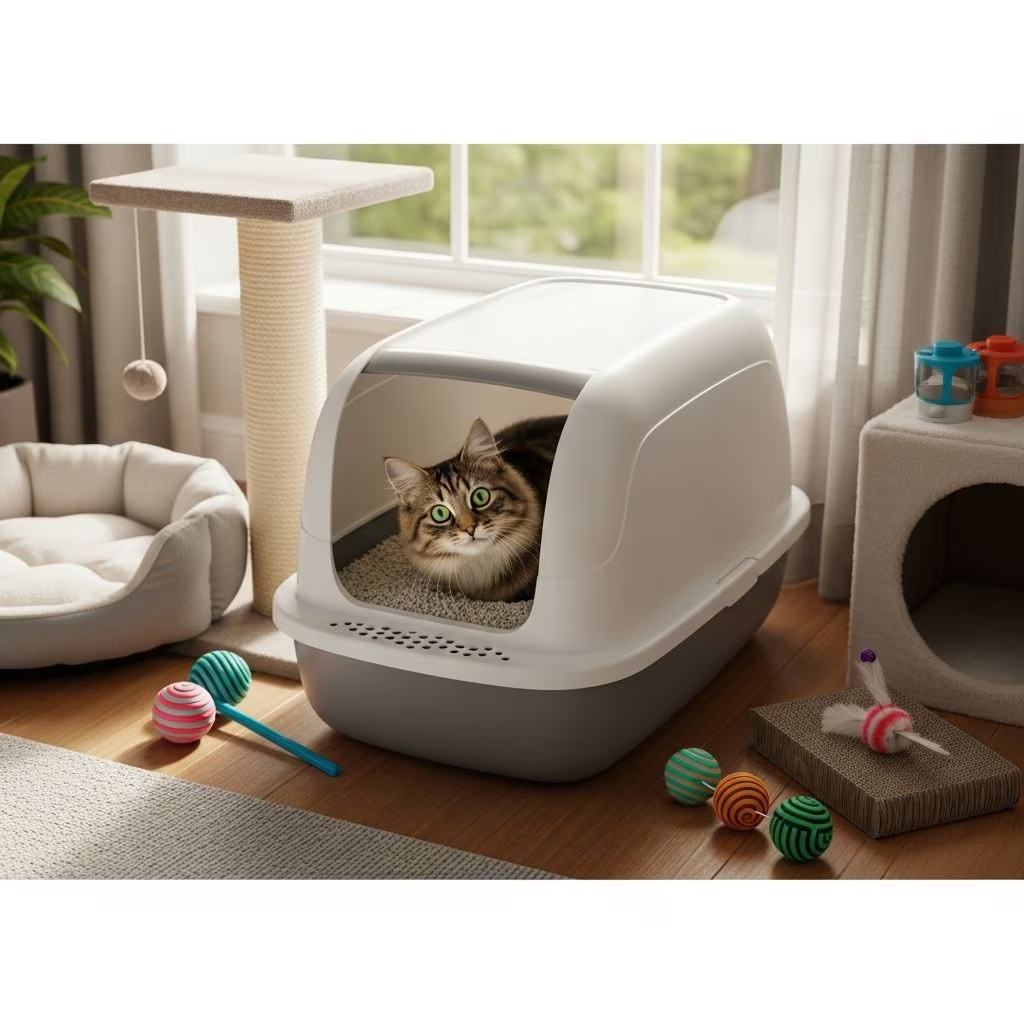
Selecting the appropriate litter box for your feline companion is one of the most important decisions you’ll make as a cat owner. The choice between an open and an enclosed litter box can significantly impact your cat’s bathroom habits, comfort level, and overall well-being. Unlike many pet care decisions that rely primarily on anecdotal evidence, this particular choice has been the subject of scientific research, providing us with valuable insights into feline preferences and behavior patterns.
Understanding Litter Box Fundamentals
The litter box serves as one of the most essential tools in maintaining a healthy and hygienic environment for your cat. It’s not merely a functional necessity but also a space where your cat’s sense of security and comfort plays a critical role. When cats feel uncertain or uncomfortable using their litter box, behavioral issues can develop, leading to inappropriate elimination outside the designated area. Therefore, understanding the nuances between different litter box styles can help prevent such problems before they start.
Cats are naturally fastidious animals with specific preferences regarding their bathroom habits. Their decision to use or avoid a particular litter box depends on multiple factors, including accessibility, cleanliness, box size, and the type of litter material used. The container’s design—whether open or enclosed—plays a role in this decision-making process, but perhaps not in the way many cat owners assume.
What Science Reveals About Feline Preferences
For years, many cat owners operated under the assumption that cats universally prefer open litter boxes over covered ones. However, groundbreaking research conducted by veterinary professionals has challenged this common belief. A pivotal study from Ross University School of Veterinary Medicine examined the preferences of 28 cats over a two-week period, with each cat having access to both an open and a covered litter box.
The findings were striking and somewhat surprising to many pet owners. The research revealed that approximately 70% of cats showed no preference between open and enclosed litter boxes, using both types equally throughout the study period. Among the remaining cats, preferences were evenly divided: 15% favored covered boxes while 15% preferred open designs. This distribution suggests that individual personality and comfort play more significant roles than the fundamental box design itself.
Perhaps most importantly, the study emphasized that when litter boxes are maintained with proper cleanliness standards—involving daily scooping at minimum—most cats remain content regardless of whether their box is open or enclosed. This finding underscores a critical principle: maintaining a clean litter box matters far more to your cat than the aesthetic design or structural configuration.
Advantages of Open Litter Box Designs
Open litter boxes represent the most traditional and straightforward approach to feline waste management. These uncovered designs offer several distinct advantages that make them suitable for many household situations and individual cats.
Superior Air Circulation and Odor Management
One of the most significant benefits of open litter boxes is the natural airflow they provide. Cats possess an exceptionally keen sense of smell, and open designs allow for superior air circulation, which reduces unpleasant odor accumulation. This ventilation prevents the trapped smell that can sometimes occur in enclosed spaces, creating a fresher environment that may be more inviting to your cat. The natural movement of air through an open box helps keep the litter drier and more pleasant.
Enhanced Accessibility for All Cat Types
Open boxes typically feature lower entry points, making them ideal for kittens, senior cats, and those with mobility challenges or arthritis. The absence of a roof or entrance hole means no cat needs to squeeze through a tight space or navigate an awkward entry mechanism. This straightforward accessibility is particularly valuable for larger cats who might feel cramped in smaller enclosed models or those with physical limitations that affect their movement and flexibility.
Simplified Cleaning and Maintenance
From an owner’s perspective, open litter boxes are significantly easier to clean and maintain. There are no complex components, removable tops, or doors to manipulate. Simple daily scooping, regular washing, and disinfection can be completed quickly without managing additional parts. This ease of maintenance helps owners stay consistent with cleaning schedules, which directly benefits their cats’ litter box satisfaction.
Health Monitoring Capabilities
Open litter boxes provide excellent visibility for observing your cat’s waste, allowing you to monitor their health status effectively. Changes in waste consistency, frequency, or appearance can indicate potential health concerns, and the open design makes these observations straightforward without any obstruction or enclosed space limiting your view.
Advantages of Enclosed Litter Box Designs
While open boxes have their merits, enclosed designs offer their own set of compelling advantages that appeal to both cats seeking privacy and owners concerned with aesthetics and odor containment.
Privacy and Security for Sensitive Cats
Some cats are naturally more anxious or prefer seclusion, particularly during vulnerable moments. Enclosed litter boxes provide a private retreat where cats can feel secure and protected from household activity. This sense of enclosure can be particularly beneficial for cats with anxiety, those adjusting to new homes, or those living in busy households with multiple pets or frequent human activity.
Aesthetic Appeal and Home Integration
Enclosed litter boxes often present a more finished appearance that blends more seamlessly with home décor compared to the utilitarian look of open trays. For owners who want to minimize the visual presence of the litter box, enclosed models can be tucked into corners or furniture without announcing their purpose to visitors. This aesthetic consideration is particularly important in open-concept living spaces or for owners concerned with maintaining a polished home appearance.
Litter Scatter Reduction
Cats that enthusiastically kick or scatter litter can create significant messes with open boxes. Enclosed designs contain this behavior, preventing litter particles from being distributed across surrounding flooring areas. This containment feature reduces cleaning time and helps maintain a tidier home environment while still accommodating your cat’s natural digging instincts within the designated space.
Enhanced Odor Containment
Quality enclosed litter boxes with proper design can effectively trap and contain odors within the box, limiting their spread throughout your home. While ventilation is important, many modern enclosed models balance containment with adequate airflow to prevent litter from becoming excessively damp while still managing odor distribution.
Potential Drawbacks to Consider
Despite their advantages, both styles present certain limitations that warrant consideration when making your decision.
Open Box Limitations
- Limited privacy for cats preferring seclusion
- Potential for litter being kicked outside the box boundaries
- Odor can disperse more readily throughout living spaces
- Less aesthetic appeal in home environments
Enclosed Box Limitations
- Space constraints may be uncomfortable for larger cats
- Reduced airflow can lead to damp litter if ventilation is inadequate
- More complex cleaning requirements due to multiple components
- Entry holes may feel confining to anxious cats
- Difficulty observing cat waste for health monitoring
Critical Factors That Outweigh Box Style
Research emphasizes that certain factors matter significantly more to cats than whether their box is open or enclosed. Understanding these priorities can guide your selection more effectively than debating box styles.
Cleanliness Standards
Cats demonstrate a strong preference for pristine litter boxes. Daily scooping, regular washing, and maintaining odor-free conditions are non-negotiable for most felines. A meticulously maintained open box will always be preferable to a neglected enclosed one.
Adequate Box Size
The litter box should be sufficiently spacious for your specific cat. General recommendations suggest that box dimensions should be 1.5 times the length of your cat from nose to tail base. Larger cats, in particular, need boxes with wider entryways and greater internal space to move and position themselves comfortably.
Appropriate Litter Depth and Type
Cats typically prefer a litter depth of 2-4 inches, allowing them to dig and cover waste naturally. Fine-grain clumping litter is generally preferred over coarser alternatives, as it more closely mimics the natural substrates cats seek in outdoor environments.
Strategic Box Placement
Location matters tremendously. Boxes should be placed away from food and water areas, in quiet, easily accessible locations where cats feel safe using them without interruption or threat. Placing boxes in high-traffic areas or near noisy appliances can discourage use regardless of the box’s design.
Making the Right Choice for Your Household
Determining whether to choose an open or enclosed litter box depends on multiple factors specific to your situation.
Choose an open box if:
- You have kittens, senior cats, or cats with mobility issues
- Your cat is larger and may feel restricted in enclosed spaces
- You prefer straightforward maintenance and cleaning
- You want easy health monitoring capabilities
- Your cat displays anxiety or claustrophobic tendencies
- You prioritize superior air circulation
Choose an enclosed box if:
- Your cat demonstrates a preference for privacy and seclusion
- Litter scatter is a significant concern in your home
- Aesthetic appeal and home integration matter to your household
- Odor control is your primary concern
- You have dogs or small children who access the litter box area
- Your cat is comfortable with confined spaces
Evaluating Your Cat’s Individual Needs
The most important step in selecting a litter box involves understanding your specific cat’s personality, physical condition, and behavioral preferences. Since scientific research demonstrates that most cats adapt equally well to either style when cleanliness is maintained, prioritizing your cat’s individual comfort becomes the deciding factor.
If you’re uncertain about your cat’s preference, consider your cat’s behavior in other contexts. Does your cat enjoy hiding and enclosed spaces, or does it prefer open areas where it can observe its surroundings? Is your cat anxious and hesitant, or confident and outgoing? These personality traits often correlate with litter box preferences, helping you make an informed decision.
Advanced Features and Modern Solutions
Modern litter box technology has introduced automatic and self-cleaning options in both open and enclosed designs. These innovations can help maintain cleanliness standards consistently, addressing one of the most critical factors in cat satisfaction. When considering automatic litter boxes, ensure the model accommodates your cat’s size and maintains adequate ventilation regardless of whether it features an open or enclosed design.
Frequently Asked Questions
Do cats universally prefer one litter box style over another?
No. Research indicates that approximately 70% of cats show no preference between open and enclosed boxes, while preferences among the remaining cats are evenly distributed. Individual personality matters more than box style.
Is it acceptable to use an enclosed litter box?
Yes, enclosed boxes are perfectly acceptable as long as they’re properly designed with adequate ventilation, appropriate size for your cat, and maintained with consistent cleanliness. The enclosed design itself doesn’t harm cats when these conditions are met.
How often should litter boxes be cleaned?
Daily scooping is the minimum standard. Most cats strongly prefer boxes that are scooped at least once daily, with complete litter changes typically recommended weekly or as needed based on the number of cats and litter type used.
What’s the ideal number of litter boxes in a multi-cat household?
The general recommendation is one box per cat, plus one additional box. So for two cats, provide three boxes. This reduces competition and stress while ensuring each cat has access to a clean option.
Can litter box preferences change over time?
Yes. As cats age or experience health changes, their preferences may shift. Senior cats might benefit from lower-entry open boxes, while younger cats might remain adaptable. Monitoring your cat’s behavior and adjusting accordingly helps maintain litter box satisfaction throughout their life.
References
- Litter box preference in domestic cats: covered versus uncovered — Ross University School of Veterinary Medicine, published in Journal of Feline Medicine and Surgery. 2013-04. https://pubmed.ncbi.nlm.nih.gov/23103684/
- Best Types of Litter Boxes: Find Your Cat’s Perfect Fit — Purina US. https://www.purina.com/articles/cat/behavior/litter/best-types-of-litter-boxes
- Is an Open Top Cat Litter Box Better? — Neakasa. https://neakasa.com/blogs/all/open-top-cat-litter-box
- Is a Covered Litter Box Better? All the Pros & Cons — Litter-Robot. https://www.litter-robot.com/blog/covered-cat-litter-box/



