

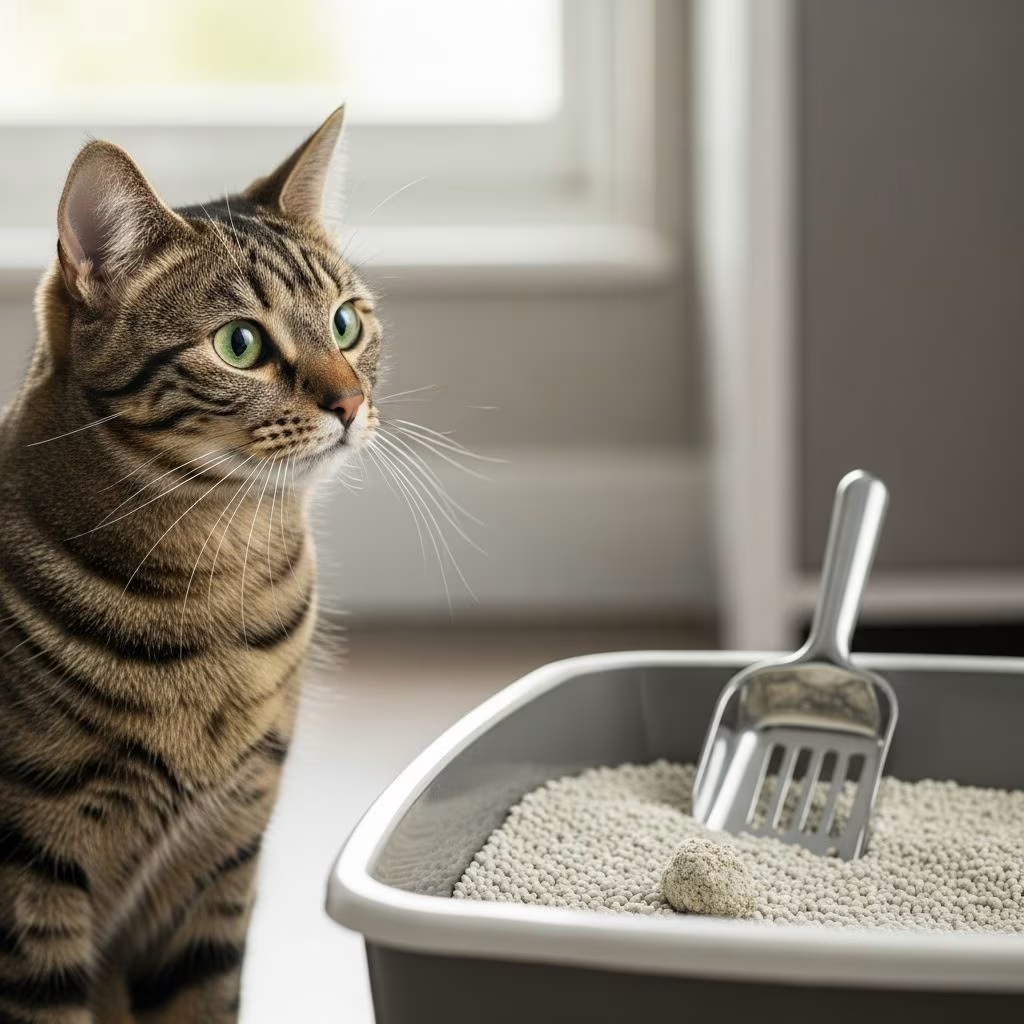
The Natural Instinct Behind Waste Concealment
Cats possess a deeply ingrained instinct to bury their waste, a behavior rooted in their evolutionary history as solitary hunters. In the wild, covering feces helps mask their presence from predators and competitors, reducing the likelihood of detection. This fundamental behavior typically develops early in a cat’s life through observation and imitation of their mother, becoming an integral part of their bathroom routine. When a cat naturally covers their waste, it represents their innate desire to maintain cleanliness and manage their territorial boundaries within the home environment.
Physical Health Conditions That Interfere with Covering Behavior
One of the most significant factors affecting a cat’s ability or willingness to cover their waste involves underlying health complications. Medical issues can substantially alter bathroom habits and create discomfort that makes the covering process physically challenging or emotionally distressing for your feline companion.
Joint Discomfort and Mobility Challenges
Arthritis and other degenerative joint conditions represent common culprits in preventing cats from covering their waste properly. The bending, crouching, and repetitive digging motions required to bury feces can exacerbate joint pain and inflammation, causing your cat to avoid these movements altogether. Senior cats, particularly those over twelve years of age, frequently experience arthritis-related discomfort that makes the physical demands of litter box maintenance increasingly difficult. Rather than enduring pain while attempting to cover their waste, cats may opt to eliminate the extra effort entirely and leave their feces exposed.
Gastrointestinal Disorders
Digestive system problems create urgency and discomfort that fundamentally change how cats interact with their litter boxes. Conditions such as inflammatory bowel disease, chronic diarrhea, and constipation can make the elimination process painful or uncomfortable. When a cat associates the litter box with pain or distress, their primary motivation becomes escaping the box as quickly as possible rather than completing their normal covering routine. Additionally, cats experiencing gastrointestinal issues may feel physically unwell, which reduces their inclination to engage in post-elimination behaviors.
Acute Illness and Respiratory Infections
Various acute health conditions can temporarily suppress normal litter box behaviors. Upper respiratory infections and other illnesses may leave your cat feeling lethargic and unmotivated to perform the additional effort required for waste coverage. Cats experiencing systemic illness often prioritize rest and recovery over maintaining their typical bathroom habits, viewing the covering process as an unnecessary expenditure of limited energy reserves.
Urinary Tract and Kidney Issues
Serious urinary conditions such as feline interstitial cystitis can create pain during elimination and increased urgency to urinate. These conditions cause cats to rush through their bathroom visits, making them unlikely to take time for covering their waste. Kidney stones or urinary blockages similarly create discomfort and panic during elimination, driving cats to evacuate the litter box immediately upon finishing.
Psychological Stress and Environmental Anxiety
Cats are sensitive creatures whose behavioral patterns reflect their emotional state. Stress and anxiety can fundamentally disrupt normal litter box behaviors, including the covering of waste. Environmental changes, household upheaval, or perceived threats can cause behavioral shifts that perplex and concern cat owners.
Environmental Changes and Transitions
Significant changes to a cat’s living environment can trigger stress responses that alter their bathroom habits. Moving to a new residence, introducing new family members or pets, rearranging furniture, or even modifying daily routines can create anxiety that manifests as behavioral changes. Cats thrive on predictability and consistency, and disruptions to their established patterns can cause them to abandon normal practices, including covering their waste as a way of asserting control or expressing distress about their circumstances.
Threat Assessment and Safety Concerns
When cats feel threatened or unsafe during bathroom visits, they may skip the covering process to minimize the time spent in a vulnerable position. A litter box located in a high-traffic area where household members frequently pass by can create anxiety. Cats that feel trapped or unable to escape quickly from their litter box may abandon covering behaviors to prioritize rapid exit from the situation. Additionally, fear of other pets or disturbances in the bathroom area can cause cats to eliminate quickly without attending to their typical post-elimination routine.
Anxiety-Related Scent Seeking
Interestingly, some cats stop covering their waste specifically to maintain their scent in the litter area. When experiencing anxiety, cats may leave their waste exposed as a self-soothing mechanism, deriving comfort from their own odors. This behavior serves as a coping mechanism, allowing cats to manage their emotional distress by maintaining visible territorial markers that provide psychological reassurance.
Litter Box Setup and Environmental Factors
The physical characteristics of a cat’s litter box environment play a crucial role in determining whether they will engage in covering behavior. Cats possess specific preferences regarding their bathroom facilities, and deviations from these preferences can result in behavioral problems.
Litter Box Dimensions and Accessibility
Adequate space is essential for cats to position themselves properly during waste coverage. Litter boxes that are too small restrict movement and prevent cats from achieving the digging posture necessary for effective burying. Cats require sufficient room to turn comfortably before and after elimination, and undersized boxes frustrate these natural movements. When space limitations prevent proper positioning, cats may abandon covering attempts rather than struggle within confined quarters. Industry recommendations suggest selecting litter boxes that are 1.5 times the length of your cat’s body to ensure adequate maneuvering room.
Litter Substrate Preferences and Composition
The type of litter material available in the box significantly influences whether cats will cover their waste. Cats can develop strong preferences regarding litter texture, grain size, and odor. Some cats dislike coarse or overly fine litter, while others object to heavily scented varieties. When cats find the litter uncomfortable or unpleasant to walk through, they lose motivation to dig and cover, particularly if the discomfort extends through their paws during the burying process. Providing litter depth of at least two to three inches allows cats to dig effectively, whereas shallow litter prevents proper waste coverage.
Location and Privacy Considerations
The positioning of litter boxes within your home environment dramatically affects whether cats feel comfortable lingering long enough to cover their waste. Boxes placed in high-traffic areas where household members frequently pass create discomfort and discourage cats from spending extended time in vulnerable positions. Conversely, litter boxes hidden in remote corners may discourage usage altogether due to inconvenience. The optimal location balances accessibility with privacy, allowing cats to reach their facilities easily while maintaining a sense of security during use. Proximity to food and water bowls also matters significantly; cats naturally avoid eliminating near feeding areas, so boxes should be positioned away from these locations.
Box Design and Cover Configuration
The design style of the litter box influences cat comfort and behavior. Covered litter boxes appeal to some cats seeking privacy but distress others who feel trapped without escape routes. Open boxes provide visibility and quick exit options, while hooded designs reduce litter scatter and odor but can create claustrophobic feelings. Experimenting with different box styles helps identify your individual cat’s preferences.
Learned Behaviors and Early Life Experiences
A cat’s litter box habits develop significantly through early learning and maternal influence. Early experiences establish behavioral patterns that often persist throughout adulthood, sometimes creating challenges for cat owners seeking to modify these ingrained behaviors.
Maternal Modeling and Observational Learning
Kittens learn covering behaviors by observing their mother and littermates during early life. Cats whose mothers neglected to cover their waste may never develop this behavior themselves, carrying this pattern forward into adulthood without deliberate intervention from human caretakers. The absence of early modeling creates a behavioral gap that proves difficult to reverse through later training, as the neurological pathways associated with this behavior fail to develop during critical early periods.
Environmental Imprinting
Early experiences in litter box environments create lasting associations and preferences. Kittens raised with specific litter types, box styles, or locations develop expectations about appropriate bathroom facilities. Changes to these established patterns during adulthood can trigger behavioral resistance, as cats struggle to adapt to unfamiliar bathroom conditions that contradict their early learning.
Age-Related Cognitive and Physical Decline
As cats progress into their senior years, various age-related changes can interfere with normal litter box behaviors, including waste coverage. Both physical limitations and cognitive changes contribute to altered bathroom habits in elderly felines.
Geriatric Mobility Issues
Senior cats experience progressive physical decline that affects their ability to perform complex litter box behaviors. Arthritis, muscle weakness, and reduced flexibility make the coordinated movements required for waste coverage increasingly difficult. Cats over twelve years of age frequently display mobility limitations that make bending, crouching, and digging uncomfortable or impossible. Rather than struggle with painful movements, senior cats may simply eliminate and exit the box without attempting coverage.
Cognitive Dysfunction Syndrome
Feline cognitive dysfunction, analogous to dementia in humans, affects senior cats’ ability to remember and execute learned behaviors. Cats experiencing cognitive decline may forget established litter box habits, become disoriented within familiar spaces, or lose the neurological drive to perform routine behaviors like waste coverage. This condition represents a progressive deterioration that requires compassionate management and veterinary support rather than behavioral correction.
Territorial Marking and Behavioral Communication
In some instances, cats deliberately leave waste uncovered as a form of territorial communication or behavioral statement. This represents an intentional choice rather than a physical inability or medical issue, reflecting your cat’s attempt to convey information through olfactory means.
Cats may leave feces exposed to establish or reinforce territorial boundaries, particularly in multi-cat households where competitive dynamics influence behavior. The exposed waste serves as a prominent olfactory marker that communicates presence and dominance to other animals in the environment. Understanding that this behavior stems from normal feline communication rather than litter box problems helps owners respond appropriately rather than attempting to suppress a biologically driven behavior.
Strategic Solutions for Improving Litter Box Coverage Behavior
Veterinary Assessment as the Foundation
Before implementing behavioral interventions, consult with a veterinarian to rule out underlying medical conditions. Cats displaying sudden changes in litter box habits warrant thorough physical examination to identify potential health issues. Medical problems must be addressed through appropriate treatment before behavioral modification strategies can prove effective.
Litter Box Optimization Strategies
Implementing the following adjustments can encourage improved covering behavior:
- Provide multiple litter boxes throughout your home, following the guideline of one box per cat plus one additional box
- Ensure boxes are appropriately sized, measuring at least 1.5 times your cat’s body length
- Maintain litter depth between two and three inches to facilitate effective digging
- Experiment with different litter types to identify your cat’s preferences
- Position boxes in private, low-traffic areas away from feeding stations
- Keep boxes clean, scooping daily and replacing litter regularly
- Avoid placing litter boxes in areas where cats feel trapped or threatened
Stress Reduction and Environmental Management
For stress-related behavioral changes, focus on creating a calm, predictable home environment. Provide safe spaces where cats can retreat during anxious moments, maintain consistent daily routines, and minimize disruptive household changes when possible. Calming supplements like Zylkene and increased interactive playtime can help reduce anxiety and encourage normal bathroom behaviors.
Senior Cat Considerations
Elderly cats benefit from low-sided litter boxes that reduce strain during entry and exit, joint supplements like GlycoFlex for arthritis relief, pain medications prescribed by veterinarians, and cognitive-supporting supplements such as omega-3 supplements. Maintaining multiple accessible boxes on different home levels accommodates senior cats’ reduced mobility.
Frequently Asked Questions
Is it harmful if my cat doesn’t cover their poop?
While uncovered waste poses minor sanitation challenges, it typically represents a behavioral or health issue requiring attention rather than causing direct harm to your cat. However, the underlying cause should be identified and addressed to ensure your cat’s wellbeing.
Can I train an adult cat to cover their waste?
Training can be challenging but sometimes effective, particularly if the behavior stems from litter box dissatisfaction rather than medical issues. Positive reinforcement with treats when your cat covers waste, combined with clicker training techniques, may encourage the behavior in some cats.
How many litter boxes should I have?
The standard recommendation is one box per cat plus one additional box. This provides choices and ensures adequate facilities even if one box becomes temporarily inaccessible.
Why did my cat suddenly stop covering their waste?
Sudden behavioral changes warrant veterinary evaluation to identify potential medical causes. If health issues are ruled out, assess recent environmental changes that might trigger stress or evaluate whether litter box conditions have changed.
References
- Why Doesn’t My Cat Cover Her Poop? Top 6 Causes Explained — Cats.com. https://cats.com/why-doesnt-my-cat-cover-her-poop
- Why Do Cats Bury Their Poop? — PetMD. https://www.petmd.com/cat/behavior/why-do-cats-bury-their-poop
- Top Reasons Cats Stop Covering Their Poop — Pets Best Insurance. https://www.petsbest.com/blog/3-reasons-cats-stop-covering-their-poop
- Litter Box Problems — ASPCA. https://www.aspca.org/pet-care/cat-care/common-cat-behavior-issues/litter-box-problems
- Uncovered Secrets: Why Cats Don’t Always Cover Their Poop — Kinship. https://www.kinship.com/cat-behavior/cat-not-covering-poop
- My Cat’s Pooping Outside the Litter Box–What Do I Do? — Chewy. https://www.chewy.com/education/cat/training-and-behavior/my-cat-is-pooping-outside-the-litter-box
- Cat Not Using Litter Box: Causes and Solutions — Best Friends Animal Society. https://bestfriends.org/pet-care-resources/cat-not-using-litter-box-causes-and-solutions



