

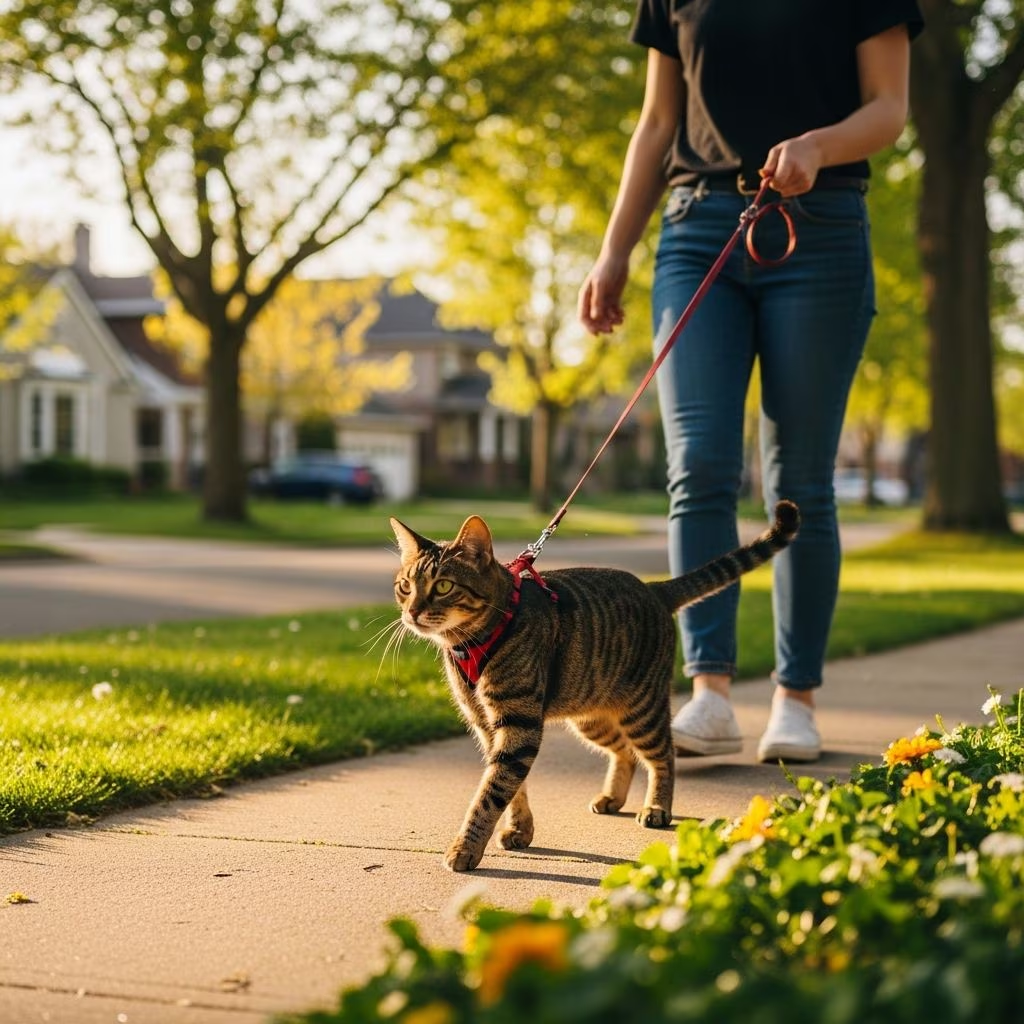
Cat Leash Training 101: A Complete Guide to Getting Outside
Cats have a reputation for being natural-born homebodies, spending their days lounging on the couch, taking catnaps, and enjoying early-morning cuddles. However, some felines possess an adventurous spirit that craves more exploration than what your home can provide. For cat parents looking to nurture their pet’s curiosity and love of adventure, leash training offers an exciting solution. Leash training a cat can provide excellent physical activity and mental stimulation while allowing your kitty to safely explore the world beyond your front door. Whether your cat is a kitten or an older feline, this comprehensive guide will walk you through everything you need to know about leash training your cat.
What Is Cat Leash Training?
Cat leash training is the process of teaching your feline companion to accept walking on a tether attached to a harness or cat walking jacket. While the concept is similar to walking a dog on a leash, there’s one key difference: your cat will still use their litter box as their primary bathroom spot. According to pet behavior experts, leash training opens up a whole new world for cats, allowing them to travel beyond the confines of the house and visit places like the backyard while remaining safe and secure.
The fundamental principle behind cat leash training is providing your pet with supervised outdoor experiences that enrich their lives. This practice acknowledges that while cats are naturally independent creatures, many benefit tremendously from controlled outdoor exploration. The process requires patience, understanding of feline behavior, and a commitment to respecting your cat’s individual comfort level and preferences.
Why Leash Training a Cat Is Beneficial
Leash training offers numerous advantages for both cats and their owners:
- Physical Exercise: Outdoor exploration provides cats with natural movement and activity, helping maintain a healthy weight and muscle tone.
- Mental Stimulation: New sights, sounds, and smells engage your cat’s senses and provide valuable cognitive enrichment.
- Environmental Enrichment: Outdoor experiences expose cats to diverse environments that indoor settings cannot replicate.
- Bonding Opportunity: Shared adventures strengthen the relationship between you and your feline companion.
- Safety Control: Unlike free roaming, leash training allows outdoor exploration while maintaining complete supervision and control.
- Reduced Behavioral Issues: Mental and physical stimulation can decrease destructive behaviors caused by boredom or excess energy.
These benefits make leash training an excellent option for cats that display signs of restlessness, excessive indoor play, or constant attention-seeking behaviors. By providing an outlet for their natural curiosity and hunting instincts, you’re promoting overall wellness and happiness.
What You Need for Leash Training a Cat
Before beginning the leash training process, you’ll need to gather a few essential items. Having the right equipment is crucial for your cat’s safety, comfort, and the overall success of your training efforts.
Essential Equipment
A Well-Fitted Harness or Cat Walking Jacket: This is the most important piece of equipment. A proper harness distributes pressure evenly across your cat’s body and prevents choking or escape. When selecting a harness, ensure it fits snugly without being too tight. You should be able to fit one finger between the harness and your cat’s body. The harness should have secure attachment points, typically at the back, and your cat should not be able to slip out of it. Different styles are available, including H-style harnesses, jacket-style harnesses, and figure-eight designs. Try several options to find what works best for your individual cat.
Never attach a leash directly to your cat’s collar. Experts strongly advise against this practice for two critical reasons: first, it can cause choking or neck injury if your cat suddenly pulls or attempts to escape, and second, cats can easily slip out of collars, putting them at risk of running away. A proper harness provides secure attachment points and distributes force safely across your cat’s body.
A Shorter Leash with Slack: Choose a leash that’s shorter than those used for dogs, typically 4 to 6 feet long. A shorter leash gives you better control while still allowing your cat freedom to explore. Ensure the leash has some slack built in, allowing your cat to move naturally without constant tension. Retractable leashes can work, but many professionals recommend standard fixed-length leashes for better control during training.
Rewards and Treats: Have on hand your cat’s favorite treats, toys, or other positive reinforcements. These will be essential for encouraging good behavior and making the training experience enjoyable for your feline.
How to Train a Cat to Walk on a Leash
Leash training a cat requires patience, consistency, and a willingness to let your cat set the pace. Unlike dogs, cats are naturally independent and may require more time to adjust to the harness and leash. However, with the right approach and plenty of encouragement, most cats can successfully learn to walk on a leash. Follow these steps to begin your cat’s outdoor adventure.
Step 1: Acquaint Your Kitty with the Harness
The first step in the leash training process is helping your cat become comfortable with wearing a harness. Since this is a new and potentially strange object, your cat may be cautious or resistant initially. Start by introducing the harness in a positive, pressure-free manner. Practice snapping the harness together or undoing the Velcro to familiarize your cat with these sounds before actually putting it on them. This desensitization process helps reduce anxiety when it’s time to actually wear the harness.
If your cat seems hesitant or fearful, try placing the harness and leash in their favorite spot, such as near their food bowl or on their preferred couch cushion. This creates a positive association and allows your cat to investigate the equipment at their own pace. Some cats may take several days or even weeks to become comfortable with this step, and that’s perfectly normal.
Step 2: Getting Your Cat Used to Wearing the Harness
Once your cat has shown curiosity about the harness, gently lay it against their body and reward them immediately with treats or praise for staying calm. If your cat remains relaxed, slowly progress to fastening the harness while continuing to provide positive reinforcement. Never force the harness onto your cat or punish them for resistance. The goal is to create positive associations with the harness.
Keep early harness-wearing sessions short, perhaps just a few minutes. Remove the harness while your cat is still calm and comfortable. Reward them generously with treats, toys, or playtime. Repeat this process daily, gradually extending the duration your cat wears the harness. This step should continue for several weeks, allowing your cat to fully acclimate before moving forward. Proper fit is essential during this phase; the harness should not be so tight that it restricts movement or causes discomfort, but it also shouldn’t be so loose that your cat can slip out of it.
Step 3: Practice Inside the House
After your cat demonstrates comfort wearing the harness, it’s time to introduce the leash and practice indoors. Begin with short five-minute training sessions in a familiar, safe environment like your living room or bedroom. Attach the leash to the harness and let your cat drag it around initially to become accustomed to the feeling. When you pick up the leash, hold it gently and loosely, allowing your cat to lead the way rather than attempting to direct them.
Follow your cat around as they explore, maintaining a slack leash. Avoid pulling or tugging on the leash, as this creates negative associations and can frighten your cat. Instead, encourage movement with treats, toys, or gentle verbal praise. Gradually extend these indoor practice sessions from five minutes to ten, then fifteen minutes as your cat becomes more confident and comfortable.
The key principle during indoor practice is to let your cat lead. Unlike dog training, where we typically want the dog to follow our direction, cat leash training requires you to follow your cat’s lead. This approach respects your cat’s independent nature and makes the experience enjoyable rather than stressful. With consistent practice and positive reinforcement, your cat will begin to move more freely while wearing the harness and leash.
Step 4: Add the Leash and Direct Your Cat
As your cat becomes more comfortable with the harness and leash indoors, you can begin gently directing them using treats, toys, a target stick, or even a laser pointer. Guide your cat for just a few steps, then release control and allow them to decide where they want to go. Continue using positive reinforcement throughout these sessions. The goal is to teach your cat that wearing the harness and leash can lead to fun and rewarding experiences.
Keep the leash loose throughout all indoor practice. A loose leash prevents discomfort and gives your cat the freedom to move naturally. Praise and reward your cat frequently to reinforce positive behavior. Some cats may try to stay in one spot or move very slowly at first, and that’s completely acceptable. Never force your cat to walk or move faster than they’re comfortable with.
Step 5: Suit Up Before Stepping Out
Once your cat demonstrates comfort wearing the harness and leash indoors and shows willingness to walk, you can begin planning outdoor adventures. However, it’s crucial to put the harness and leash on your cat before going outside. Never let your cat walk out through the door on their own, even if they’re already wearing their harness.
This precaution is important because cats that are accustomed to walking outside while leashed may begin to assume they can exit through open doors without the leash, a behavior known as door dashing. To prevent this dangerous habit, always pick up your harnessed and leashed cat and carry them outside. Set them down once you’re in a secure outdoor area where escape is not possible.
Step 6: Start Exploring (Slowly!)
Your first outdoor leash walk is an exciting milestone! Begin in a safe, calm, and fully enclosed area like your backyard. Once outside, follow your cat’s lead completely. Some cats may be perfectly content to lie in the grass and soak up the sun, while others may want to explore the entire neighborhood. Some cats may feel overwhelmed by the new sights, sounds, and smells and want to return inside immediately.
Whatever your cat’s reaction, honor their preferences and pace. Use treats and encouragement to make the experience positive, but never force your cat to explore beyond their comfort level. Watch for signs of stress, such as tail thumping, dilated pupils, flattened ears, or attempts to return inside. If your cat shows these signs, bring them back indoors without frustration or punishment.
Repeat outdoor adventures regularly if the first outing was successful. Your cat will likely begin to anticipate these outings and may vocalize excitedly or display other signs of enthusiasm when it’s time for their leash walk. Over time, outdoor exploration will become part of your routine together.
Remember: Never Force Your Cat to Walk on a Leash
The most critical rule of leash training is to never force your cat to do something they’re not ready for or uncomfortable with. If your cat instantly darts back inside or freezes when you go outside, don’t be discouraged. Try again in a few days to see if they gradually become more comfortable. Some cats need more time to adjust to outdoor environments than others.
However, if your cat consistently refuses to engage with the harness, shows extreme stress during outdoor exposure, or fails to progress despite weeks of patient training, leash training may simply not be suitable for your individual cat. Not all cats are suited for outdoor walks, and that’s perfectly acceptable. Some cats are content as indoor-only pets, and forcing them into uncomfortable situations can damage your relationship and cause unnecessary stress.
Respect your cat’s personality, preferences, and comfort level throughout the entire training process. Positive reinforcement and patience are far more effective than force or coercion. A successful leash training experience should be enjoyable for both you and your feline companion.
Tips for Success
- Start Young: While cats of any age can learn to walk on a leash, kittens and younger cats typically adapt more easily than older cats. However, don’t assume an older cat cannot be trained; many older cats successfully learn leash walking with patience.
- Choose Quiet Times: Start outdoor walks during quiet times of day when there are fewer distractions, other animals, and people. This reduces stress and allows your cat to focus on the new experience.
- Select Safe Locations: Choose enclosed or quiet areas for initial outdoor walks. Avoid busy streets, areas with loose dogs, or other hazards that could frighten your cat or pose safety risks.
- Be Consistent: Regular, scheduled leash walks help your cat develop expectations and anticipation. Aim for regular outings to reinforce the positive associations.
- Watch Body Language: Learn to read your cat’s body language and stress signals. Tail position, ear position, and overall body tension communicate your cat’s emotional state.
- Bring Identification: Even though your cat is on a leash, accidents can happen. Ensure your cat wears a collar with ID tags and consider microchipping for additional safety.
Frequently Asked Questions
Q: At what age can I start leash training my cat?
A: You can begin harness introduction with kittens as young as 8 weeks old. Young cats typically adapt faster to harnesses and leashes than older cats, but cats of any age can be trained with patience and positive reinforcement.
Q: How long does it take to leash train a cat?
A: The timeline varies depending on your individual cat. Some cats may be comfortable with outdoor walks within a few weeks, while others may require several months of patient training. Consistency and positive reinforcement speed up the process.
Q: Can all cats be leash trained?
A: While most cats can be leash trained, not all cats will enjoy or tolerate it. Factors such as personality, past experiences, and individual temperament influence your cat’s receptiveness to leash training. Some cats are simply happier as indoor-only pets.
Q: What if my cat refuses to wear a harness?
A: Some cats take longer to accept a harness. Continue with gradual desensitization, always pairing the harness with positive rewards. Try different harness styles, as some cats prefer certain designs over others. If after several months your cat still refuses, leash training may not be suitable for them.
Q: Is it safe to use a collar instead of a harness?
A: No. Experts strongly recommend against using a collar alone for leash walking. Collars can cause choking or neck injury if your cat pulls suddenly, and cats can easily slip out of collars. A properly fitted harness is essential for your cat’s safety.
Q: What should I do if my cat escapes during a leash walk?
A: Prevention is key. Always ensure your cat wears a harness they cannot slip out of, maintain a secure grip on the leash, and choose safe locations for walks. If escape occurs, try to remain calm and call your cat gently. Having proper identification and microchipping increases the chances of recovery.
Q: Can I use a retractable leash for my cat?
A: While retractable leashes can be used, many professionals recommend standard fixed-length leashes for better control during training. Retractable leashes may be suitable for experienced cats in safe environments, but they offer less control during the training phase.
References
- Leash Training a Cat 101: A Complete Guide to Getting Outside — Chewy. 2024. https://www.chewy.com/education/cat/training-and-behavior/cat-walking-101-train-cat-walk-leash
- How to Leash Train a Cat — PetMD. 2024. https://www.petmd.com/cat/behavior/how-to-leash-train-cat
- Hiking With Cats: How to Turn Your Kitty Into an Adventure Cat — Chewy. 2024. https://www.chewy.com/education/cat/general/how-to-hike-with-your-cat-according-to-actual-adventure-cats-and-their-humans



