

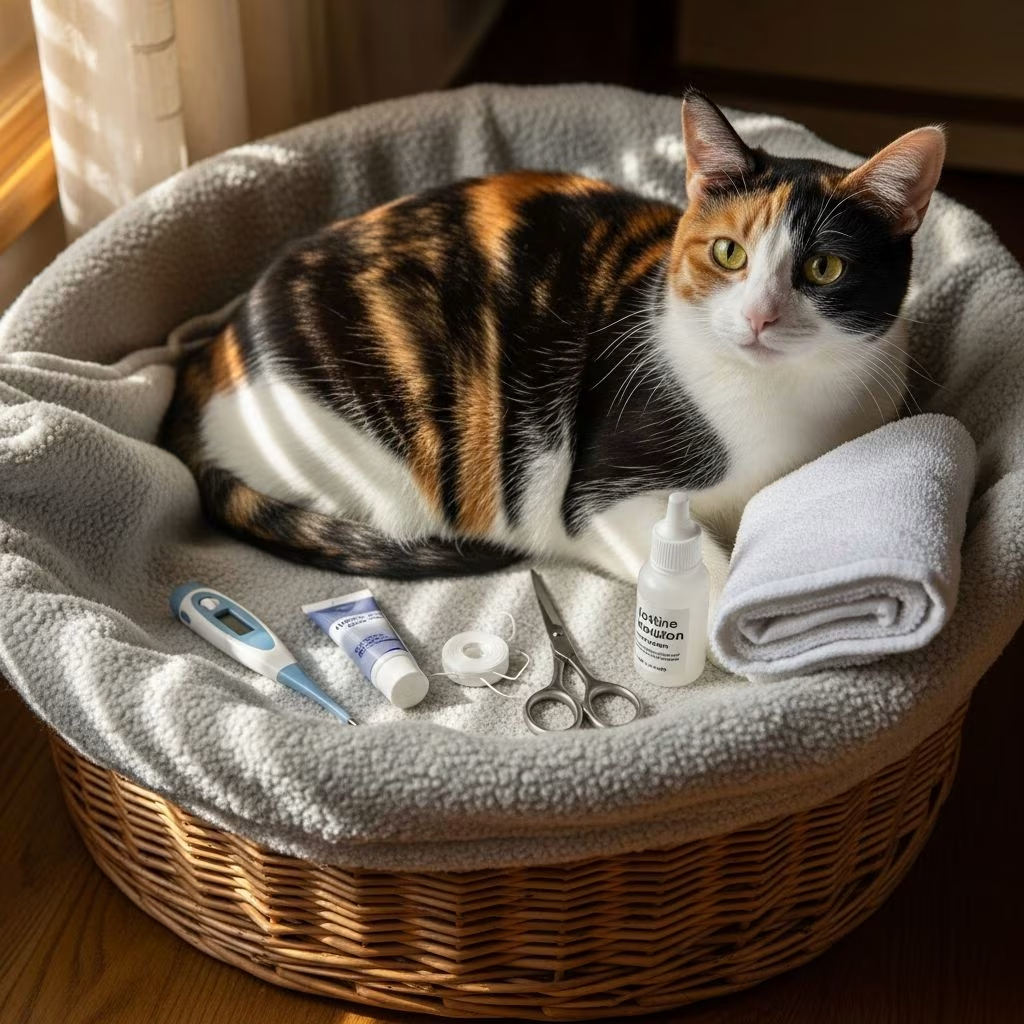
Welcoming a litter of kittens into your home marks a remarkable milestone for any cat owner. Understanding the intricacies of feline labor empowers you to support your pet through this natural yet delicate process. This comprehensive guide explores preparation strategies, behavioral cues, the progression of birth stages, potential challenges, and postpartum care, drawing from veterinary insights to help ensure a positive outcome for both queen and kittens.
Recognizing the Onset of Labor
As gestation nears its end—typically around 63-65 days—your cat exhibits distinct pre-labor signals. These behaviors indicate her body is gearing up for delivery, allowing you to ready your space and supplies.
- Restlessness and Pacing: She may wander aimlessly, seeking a secluded spot, often revisiting her litter box without result.
- Increased Vocalization: Expect more meowing, purring, or panting as discomfort builds.
- Excessive Grooming: Focus on the abdominal area, mammary glands, and vulva prepares her for nursing and birth.
- Nesting Instinct: Scratching bedding or hiding signals she’s selecting her birthing site.
- Temperature Drop: A rectal temperature below 100F (37.8C) often precedes active labor by 12-24 hours.
Monitor these from day 60 onward. A calm, low-traffic environment minimizes stress, which can delay proceedings.
Essential Preparations Before Birth
Proactive setup transforms potential chaos into controlled support. Assemble a ‘kitten kit’ 1-2 weeks prior.
| Item | Purpose |
|---|---|
| Clean towels and cloths | Drying kittens, cleaning messes |
| Warm water bowl | Hygiene during intervention |
| Dental floss or thread | Tying umbilical cords if needed |
| Disposable gloves | Safe handling |
| Heating pad or microwaveable pack | Warming orphans (avoid hot water bottles) |
| Scale | Tracking kitten weights |
| Vet contact info | Emergency calls |
Designate a quiet ‘kittening box’—a large plastic bin with low sides, lined with newspapers or fleece, placed in a warm (75-80F), draft-free room. Respect her choice if she opts elsewhere; forcible relocation risks distress. Stock extra food, as her appetite may surge post-birth.
Understanding the Three Stages of Feline Labor
Cat labor unfolds in three distinct phases, with stages 2 and 3 repeating per kitten. Total duration spans 2-24 hours, though first-time mothers may extend stage 1 up to 36 hours.
Stage 1: Preparation and Dilation
This initial phase, lasting 6-36 hours, involves cervical softening and initial uterine contractions, often invisible externally. Your cat appears uncomfortable: straining mildly, licking her genitals, and discharging clear or bloody mucus. She may refuse food and seek isolation. Intervention is unnecessary unless prolonged beyond expectations—contact your vet if no progress after 24 hours in multiparous cats or 36 in primiparous ones.
Stage 2: Active Delivery of Kittens
Contractions intensify, propelling kittens through the pelvis. The first appears as a fluid-filled ‘water bag’ at the vulva, rupturing to ease passage. Delivery per kitten takes 5-60 minutes; intervals between range from minutes to 2 hours, with litters of 3-5 common.
- Normal Presentations: Head-first (anterior) is typical; breech (posterior) occurs in 40-50% without issue.
- Maternal Role: Queen tears the amniotic sac, licks to stimulate breathing, severs the cord, and cleans.
- Timeline: First kitten often within 30 minutes of visible straining; full litter in 4-16 hours.
Observe discreetly; excessive handling disrupts oxytocin flow.
Stage 3: Placental Expulsion
Post-kitten, each placenta (greenish-black) passes within minutes. Count meticulously—one per kitten. Deficits may indicate retention, twins sharing, or maternal consumption (instinctual for nutrients and hygiene). Retained placentas risk infection; notify your vet if mismatched.
Common Challenges and When to Intervene
Most births proceed uneventfully, but vigilance catches 5-10% complications like dystocia.
- Prolonged Straining: Over 30-60 minutes without kitten—possible uterine inertia or malposition.
- Weak Kitten: If unmoving post-birth, gently rub with a towel; clear airways if sac intact.
- Heavy Bleeding: Bright red beyond spotting warrants immediate vet.
- Lethargy or Fever: Post-labor signs of metritis.
- Abandoned Newborns: Rare, but mum rejecting signals health issues.
Never pull kittens—risks tearing. For stuck presentations, apply gentle lubricant (KY jelly) and support the queen. Call vet for any concern; nighttime emergencies favor pre-arranged protocols.
Immediate Postpartum Care
After the last placenta, mum grooms her brood, stimulating nursing. Ensure:
- Breathing Check: Pink gums, chest rise within seconds.
- Nursing: Kittens knead and suckle; milk production ramps 24-48 hours post-birth.
- Warmth: Ambient 85F first week, reducing gradually.
- Queen’s Recovery: Offer wet food, water nearby; monitor lochia (dark discharge) for 3 weeks.
Weigh kittens daily—expect 10-15g gain. Separate only for dire needs, using incubators if orphaning.
Nutrition and Health Monitoring After Birth
Queen’s caloric needs quadruple; transition to kitten food rich in protein (30%+), fats (20%+), and taurine. Fresh water essential. Schedule vet check 24-72 hours post-birth for deworming, vaccines, and spay discussion (delay 8-12 weeks minimum).
| Week Post-Birth | Kitten Milestones | Queen Care |
|---|---|---|
| 1 | Eyes closed, umbilical healing | High-calorie diet, rest |
| 2 | Eyes open, crawling | Lactation peak |
| 3-4 | Walking, weaning start | Gradual diet normalization |
Watch for mastitis (swollen teats) or fading kitten syndrome (hypothermia, cries).
Frequently Asked Questions
How long does cat labor last?
Stage 1: 6-36 hours; full process 2-24 hours, varying by litter size and parity.
Can I assist with kitten delivery?
Only minimally—clear sac if mum fails, mimic her licking. Vet for complications.
What if fewer placentas than kittens?
Possible eating or retention; vet evaluation essential to prevent sepsis.
Is breech birth dangerous?
Common and safe if progressing; prolonged cases need aid.
When to spay after litter?
Wait 8-12 weeks post-weaning for recovery.
Long-Term Considerations for Breeding Cats
Breeding exhausts queens; limit to 3-4 litters lifetime. Early spaying prevents pyometra, mammary cancer. Socialize kittens from week 2 for adoptability. Rehoming plans prevent overcrowding.
Armed with this knowledge, you’re equipped to navigate cat labor confidently. Prioritize observation over interference, fostering a serene environment for nature’s miracle.
References
- Cat Labour & Giving Birth – What You Need To Know — Purina. 2023. https://www.purina.co.nz/care-and-advice/cat/health/labour-and-giving-birth
- Cat birth — International Cat Care. 2024-02-01. https://icatcare.org/articles/cat-birth
- PREGNANCY AND PARTURITION — Vet Clinic of MB. 2021-08-01. https://vetclinicofmb.com/wp-content/uploads/sites/11/2021/08/Pregnancy-and-parturition-.pdf
- Cat labour – a guide to your cat giving birth — PDSA. 2024. https://www.pdsa.org.uk/pet-help-and-advice/pet-health-hub/other-veterinary-advice/cat-labour-a-guide-to-your-cat-giving-birth
- Cat giving birth — Joii Pet Care. 2023. https://www.joiipetcare.com/blogs/advice/cat-giving-birth



