

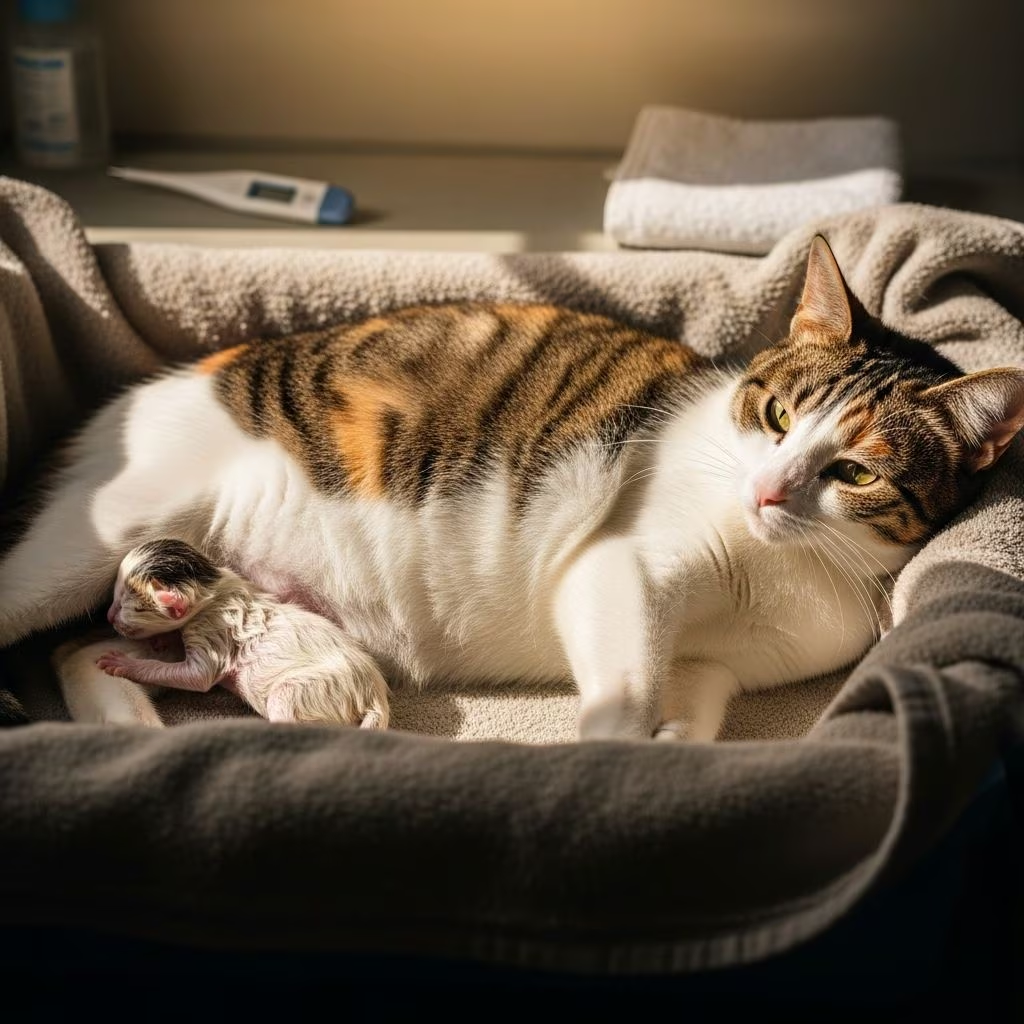
Cat labor, also known as queening, typically unfolds over several hours to a day, with the entire process from first signs to all kittens born averaging 12 to 24 hours, though first-time mothers may experience longer durations up to 36 hours in the initial phase.
Understanding Feline Pregnancy Timeline
Before delving into labor specifics, grasping the pregnancy duration sets the context. Domestic cats carry litters for about 63 to 65 days, roughly nine weeks or two months, divided into three trimesters of around 20 days each.
- First Trimester (Days 1-21): Subtle changes like mild appetite increase and early nipple darkening may occur, but most owners notice little.
- Second Trimester (Days 22-42): Belly enlargement becomes evident, alongside calmer behavior and increased affection toward owners.
- Third Trimester (Days 43-65): Pronounced abdominal swelling, voracious hunger, frequent grooming of belly and vulva, and nesting instincts signal imminent birth.
This progression prepares both the queen and her caregiver for labor onset around day 63.
Recognizing the Onset of Labor
As delivery nears, physiological shifts prepare the birth canal. Rectal temperature often drops below 100°F (37.8°C), a reliable pre-labor indicator, sometimes accompanied by minor vaginal discharge.
Behavioral cues intensify: restlessness, excessive vocalization, panting, and obsessive grooming around the vulva and teats. Queens frequently visit their nesting area, scratching to create a comfortable spot, and may seek owner reassurance.
| Pre-Labor Sign | Description | Typical Duration Before Active Labor |
|---|---|---|
| Temperature Drop | Below 100°F | 12-24 hours |
| Restlessness & Vocalizing | Pacing, meowing loudly | Hours to a day |
| Nesting Behavior | Scratching, rearranging bedding | Intermittent until stage 1 |
| Grooming Increase | Focus on genitals and abdomen | Ongoing |
Three Distinct Stages of Cat Labor
Feline labor divides into three stages, each with defined characteristics and timelines. Stages two and three repeat per kitten, while stage one precedes all deliveries.
Stage 1: Preparation and Contractions
This initial phase involves cervical dilation and uterine contractions, lasting 6 to 12 hours on average, but extending to 36 hours for primiparous queens. Visible straining is absent, though abdominal kitten movements may be felt. The queen appears uncomfortable, frequently repositioning and panting.
Monitor closely; this stage builds toward active delivery without immediate concern unless prolonged beyond expectations for experienced mothers.
Stage 2: Active Delivery of Kittens
Transitioning to visible straining marks stage 2, where abdominal muscles propel kittens through the pelvis. Each kitten delivery spans 5 to 30 minutes from straining onset.
The first kitten often arrives within an hour of strong contractions, encased in an amniotic sac that ruptures, releasing fluid cleared by the mother. Kittens emerge head- or breech-first; both are normal, though tail-first may prolong slightly.
Intervals between kittens range from 10 minutes to 2 hours, with litters averaging four (1-12 possible, larger in breeds like Siamese). Total stage 2 duration: 3-12 hours.
Stage 3: Placental Expulsion
Immediately post-kitten, greenish-black fetal membranes and placenta pass, typically one per kitten. The queen instinctively tears the sac, clears airways, severs the umbilical cord, and consumes the afterbirth, aiding uterine contraction and nutrition.
If kittens follow rapidly, placentas may expel together; count to ensure one per kitten, as retained ones risk infection.
Factors Influencing Labor Length
Duration varies by litter size, queen experience, and health. First litters extend stage 1; larger litters prolong overall process. Breeds with bigger litters, like Orientals, may extend intervals.
Normal total time: 4-16 hours for kittens, up to 24+ including rests (2-4 hours possible mid-process). Beyond this, intervention may be needed.
Potential Complications and Red Flags
While most births proceed smoothly, vigilance prevents issues like dystocia (difficult birth).
- Prolonged Straining: Over 20-30 minutes without kitten.
- No Kitten After 2-4 Hours: Post-stage 1.
- Weak or Lethargic Queen: Crying in distress, bleeding, foul discharge.
- Kitten Issues: Non-breathing newborn, ruptured sac without delivery.
- Missing Placenta: More kittens than afterbirths.
Contact a vet immediately for these; statistics show 80-90% of cat births are uncomplicated, but prompt action saves lives.
Preparing Your Home for Kitten Arrival
Create a quiet, warm (75-80°F) whelping box with low sides, soft bedding in a low-traffic area. Stock supplies: clean towels, heating pad (low, supervised), kitten milk replacer, gloves, bulb syringe, scissors (sterilized).
Ensure queen’s diet supports lactation: high-calorie kitten food from late pregnancy. Schedule pre-birth vet check for health confirmation.
Post-Birth Care for Queen and Kittens
After delivery, observe nursing initiation; kittens should suckle within 2 hours. Monitor weights (daily first week), warmth, and elimination (mother stimulates via licking).
Queen rest is vital; limit visitors. Vet exam 24-48 hours post-birth checks for retained tissues, mastitis. Weaning begins at 4 weeks, spay post-lactation unless breeding planned.
FAQs on Cat Labor
How long is normal cat labor?
12-24 hours total, with stage 1 up to 36 hours for first-timers.
Can cats give birth days apart?
Rarely; intervals under 2 hours typical, but rests up to 4 hours occur. Over 24 hours without progress warrants vet.
What if only one kitten is born?
Single-kitten litters happen; ensure placenta passes and monitor for more.
Should I pull the kitten out?
No; intervene only if sac ruptures and kitten hangs over 1 minute without progress—gently tug aligned with contractions.
When to spay after birth?
Wait until kittens weaned (8 weeks), typically 4-6 months post-delivery.
References
- Cat Pregnancy: Signs, Stages and Care — PetMD. 2023. https://www.petmd.com/cat/conditions/reproductive/cat-pregnancy-and-kittens-complete-guide
- Pregnancy and Parturition in Cats — VCA Animal Hospitals. 2023. https://vcahospitals.com/know-your-pet/pregnancy-and-parturition-in-cats
- Cat Birth — International Cat Care. 2023. https://icatcare.org/articles/cat-birth
- Cat Giving Birth — Joii Pet Care. 2023. https://www.joiipetcare.com/blogs/advice/cat-giving-birth
- Cat Labour – A Guide to Your Cat Giving Birth — PDSA. 2023. https://www.pdsa.org.uk/pet-help-and-advice/pet-health-hub/other-veterinary-advice/cat-labour-a-guide-to-your-cat-giving-birth
- Pregnancy and Parturition — Vet Clinic of MB. 2021-08. https://vetclinicofmb.com/wp-content/uploads/sites/11/2021/08/Pregnancy-and-parturition-.pdf



