

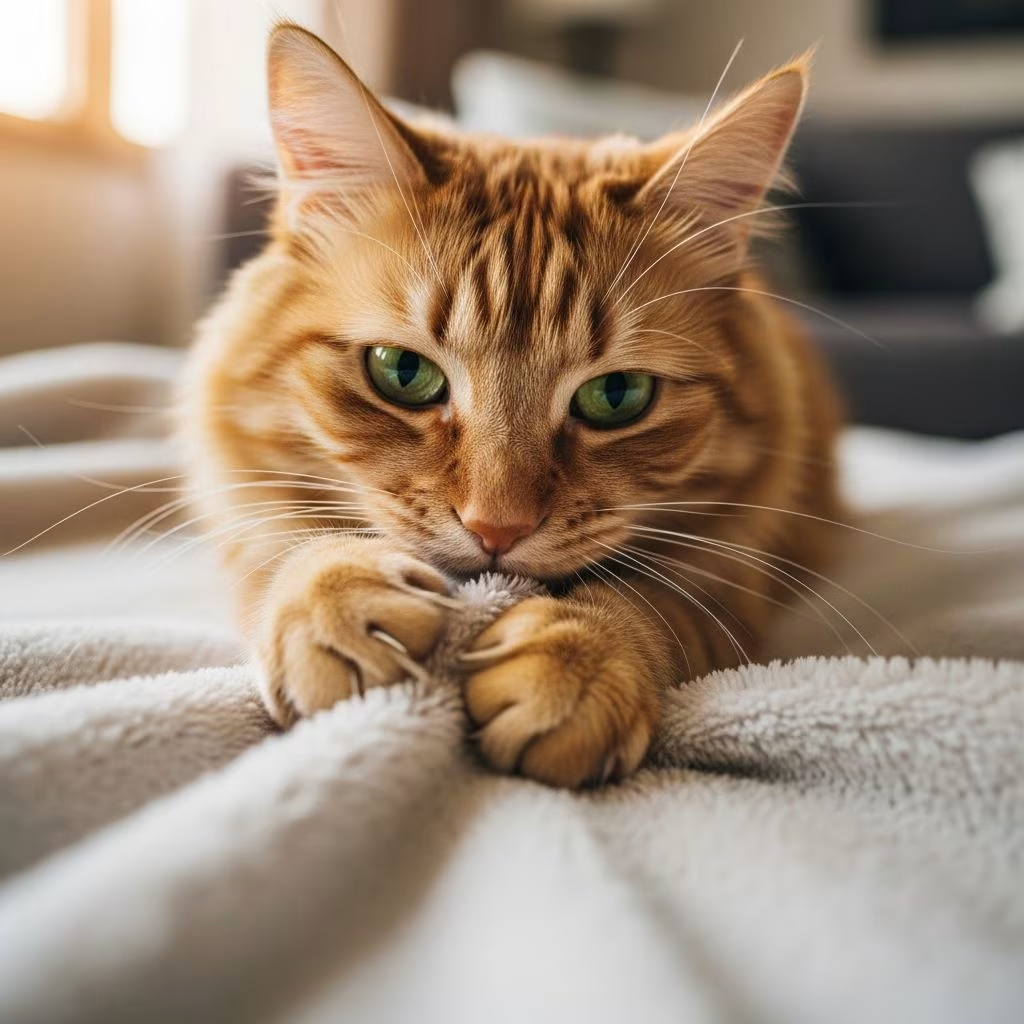
One of the most endearing sights for cat owners is watching their pet rhythmically push their paws into a soft surface, alternating between front legs in a motion reminiscent of kneading dough. This behavior, affectionately dubbed “making biscuits,” is a window into a cat’s inner world, blending ancient instincts with modern expressions of comfort and love. Far from random, kneading serves multiple purposes rooted in biology and emotion, helping cats communicate trust, claim space, and unwind.
The Rhythmic Paw Dance: Defining Kneading
Kneading involves a cat extending and retracting its claws while pressing down alternately with each front paw, typically on plush fabrics, blankets, or a human lap. This action occurs at a steady pace, about one to two seconds per paw, and is almost exclusively performed on yielding surfaces—cats rarely knead hard floors, opting instead for a gentle “marching” motion if they do interact with them. The claws may emerge slightly, which can make lap sessions prickly for owners, especially with larger or sharp-clawed cats.
Observing this helps owners gauge their cat’s mood: it’s a hallmark of relaxation, often paired with purring, half-closed eyes, and a tucked tail. Understanding this baseline lets you appreciate when it’s a sign of joy versus potential distress.
Roots in Kittenhood: The Nursing Connection
The primary origin of kneading traces back to a cat’s earliest days. Kittens instinctively knead their mother’s abdomen during nursing to stimulate milk letdown. This pawing triggers oxytocin release in the mother, boosting milk production, while the kittens associate the sensation with nourishment and safety. Tiny paws pressing rhythmically become wired into their brain as a feel-good ritual.
This early behavior persists due to **neoteny**, where juvenile traits carry into adulthood—a trait advantageous for domestic cats coexisting with humans. Adult cats knead to recapture that dopamine rush, the brain’s reward chemical that eases pain and promotes bliss, mirroring the contentment of suckling. Studies link this to calming pheromones from the mother’s mammary glands, which foster bonding and now help adult cats self-soothe.
Territory Claims: Scent Glands at Work
Beyond nostalgia, kneading doubles as a subtle territorial act. Cats possess eccrine scent glands in their paw pads, releasing unique pheromones with each push. These chemical signatures mark surfaces—or people—as “mine,” signaling to other cats (or pets) that the spot is claimed without aggression.
In multi-cat homes or outdoors, this reinforces boundaries peacefully. Indoor cats knead furniture or beds to layer their scent over time, creating a familiar olfactory map of their domain. One such pheromone, the “cat-appeasing pheromone,” even aids in reducing adult cat aggression when synthetically applied.
Relaxation Ritual: Preparing the Perfect Nest
Wild ancestors kneaded tall grasses to flatten nests for safe sleep, a habit echoed in domestic cats tamping blankets before curling up. This prepares a cozy, secure spot, stretching muscles and releasing tension along the way. Post-knead, many cats drool or suckle fabrics, amplifying the nursing echo for ultimate zen.
- Stress relief: Dopamine floods the brain, countering anxiety.
- Physical stretch: Limbering paws and shoulders after inactivity.
- Pre-sleep prep: Softening bedding for comfort.
Affection in Action: Kneading Humans
When directed at owners, kneading screams **trust and love**. Your lap becomes a surrogate mother, the ultimate compliment—your cat feels utterly safe with you. This bonding tool strengthens human-feline ties, much like pheromonal exchanges with mom.
However, those claws! Trim nails regularly and offer a blanket barrier to protect skin without curbing the joy.
Common Surfaces and Patterns
| Surface | Why Chosen | Owner Tips |
|---|---|---|
| Lap or stomach | Affection + warmth | Provide blanket; redirect if claws hurt |
| Blankets/beds | Nesting + marking | Dedicated cat blankets prevent furniture damage |
| Furniture | Territory claim | Scratching posts with textures mimic appeal |
| Toys/pillows | Relaxation play | Encourage with catnip-infused options |
When Kneading Signals Worry
Normal kneading is blissful and sporadic, but excess can flag issues. Heightened frequency might stem from anxiety, compelling dopamine loops, or pain like arthritis—cats knead to stretch sore limbs. Monitor for:
- Sudden intensity or new locations.
- Pairing with aggression, hiding, or appetite loss.
- Over-grooming or vocalizing.
Consult a vet to rule out medical causes; behaviorists can address compulsions. Environmental tweaks—like more play or pheromone diffusers—often restore balance.
Enhancing the Bond: Encouraging Healthy Kneading
Celebrate this quirk! Provide soft, washable targets to channel instincts safely. Interactive sessions before kneading times build security, reducing stress-driven episodes.
- Stock up on fleece blankets or cat-specific kneading pads.
- Incorporate pheromone products mimicking nursing scents.
- Observe patterns: note triggers for tailored care.
- Reward calm kneading with gentle pets to reinforce positivity.
Fun Facts About Feline Kneading
- Some cats “suckle” while kneading, a harmless nursing remnant.
- Bigger breeds like Maine Coons knead with more force—ouch!
- Kneading boosts endorphins, explaining the trance-like stare.
- Not all cats knead equally; shy ones may reserve it for solos.
FAQs: Your Kneading Questions Answered
Is cat kneading always a good sign?
Usually yes, indicating contentment. But excessive or frantic kneading warrants a vet check for stress or pain.
Why do cats knead and bite or drool?
Drooling ties to nursing joy; biting might mark territory or overexcitement. Trim claws and offer alternatives.
Can I stop my cat from kneading me?
Gently redirect to a blanket. Punishment erodes trust—focus on provision instead.
Do all cats knead?
Most do, but ferals less so. It’s tied to early nurturing experiences.
Is kneading linked to other behaviors like bunting?
Yes, both involve scent marking and affection—bunting uses facial glands for similar bonding.
Decoding Your Cat’s Messages Through Kneading
This paw performance weaves instinct, emotion, and evolution into daily life. By attuning to its nuances, owners deepen empathy, fostering happier homes. Next time those paws go to work, know it’s your cat’s heartfelt “I love you”—claws and all.
References
- Understanding why cats knead and bunt: The science behind feline behaviors — COAPE. 2023. https://coape.org/understanding-why-cats-knead-and-bunt-the-science-behind-feline-behaviors/
- The Science of Affection That Makes Cats Knead You — ScienceAlert. 2023-10-01. https://www.sciencealert.com/the-science-of-affection-that-makes-cats-knead-you
- Why Do Cats Knead? — PetMD. 2024. https://www.petmd.com/cat/behavior/why-do-cats-knead
- Kneading (cats) — Wikipedia. 2024. https://en.wikipedia.org/wiki/Kneading_(cats)
- Why Do Cats Knead? — AAHA. 2023. https://www.aaha.org/resources/is-my-cats-kneading-normal/



