Cat Kneading Explained
Discover the fascinating reasons behind your cat's kneading habit, from kitten instincts to adult comforts and territorial signals.
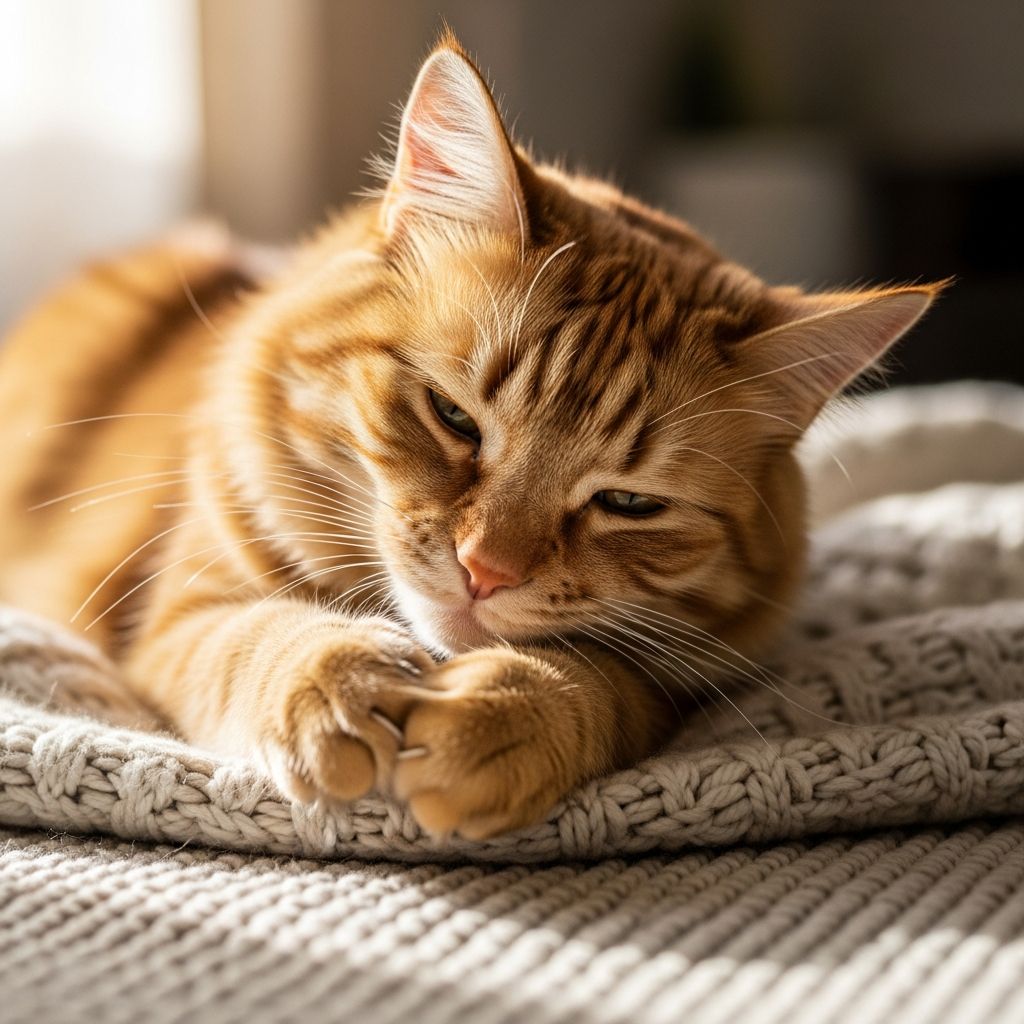
Cat kneading, often called “making biscuits,” involves rhythmic paw pressing into soft surfaces like blankets or laps. This instinctive action stems from kittenhood nursing and continues in adults for comfort, marking, and more.
The Instinctive Roots in Early Development
Kittens start kneading within their first week to stimulate milk flow from their mother by massaging mammary glands. This triggers oxytocin release in the mother, ensuring a steady milk supply.
The behavior pairs with suckling, fostering a deep sense of security amid maternal pheromones. As kittens grow, this association lingers, transforming into a self-soothing mechanism.
Neurological Rewards and Emotional Comfort
Adult cats knead to recapture nursing-era bliss. The action prompts dopamine and oxytocin release, promoting relaxation and bonding feelings.
Dr. Jennifer Sperry notes these neurochemical effects are theoretical but draw from mammalian studies, explaining why cats purr and knead when content.
Kneading often precedes naps, mimicking wild cats tamping bedding for safety. Soft textures provide ideal resistance, stretching muscles and easing tension.
Territorial Signaling Through Scent Glands
Paw pads house scent glands releasing unique pheromones during kneading, marking surfaces as familiar territory. This claims ownership, deterring rivals.
- Pheromones convey identity, health, and bonding signals.
- Similar to nursing pheromones, they reinforce comfort.
- Owners become ‘territory’ via lap kneading, showing trust.
Neoteny: Why the Kitten Trait Persists
Neoteny allows adult cats to retain juvenile behaviors, aiding socialization with humans and other pets. Kneading signals safety and affection.
Domestic cats exhibit this more than wild felines, adapted to human homes where soft laps replace rough grass.
When Kneading Signals Underlying Issues
Excessive kneading may indicate stress, compulsion, or pain from arthritis/injury, as it stretches limbs.
| Normal Kneading Signs | Potential Concern Signs |
|---|---|
| Purring, relaxed body | Frequent, intense sessions |
| On soft surfaces only | Accompanied by aggression |
| Brief episodes | Sudden increase in frequency |
Consult a vet if patterns change, ruling out medical causes.
Practical Tips for Cozy, Claw-Free Kneading
Redirect instincts to prevent scratches or furniture damage.
- Provide thick blankets or cat beds for designated kneading spots.
- Trim claws regularly to minimize discomfort.
- Use nail caps for gentle paws during lap time.
- Offer toys mimicking nursing textures for solo sessions.
Embrace it as affection—your cat views you as a safe ‘mother figure’.
Variations Across Cats and Contexts
Not all cats knead identically. Some ‘march’ on hard surfaces, others suckle blankets (wool-sucking linked to early weaning).
Males and females knead equally, but orphaned kittens may intensify the habit seeking comfort substitutes.
FAQs on Feline Kneading
Is kneading a sign of happiness?
Yes, it typically indicates contentment, relaxation, and trust, often with purring.
Why do cats knead people?
It marks you with their scent and recreates bonding with their mother, showing deep affection.
How to stop destructive kneading?
Redirect to scratch pads or blankets; provide alternatives and trim claws. Persistent issues warrant behavioral vet advice.
Do all cats knead?
Most do, rooted in instinct, but frequency varies by personality and history.
Can kneading indicate pain?
Increased kneading might relieve joint stiffness; monitor and vet check if excessive.
Evolutionary Perspectives on Paw Rhythms
Wild ancestors likely kneaded foliage for nests, blending survival with comfort. Domestication amplified neotenous traits, making kneading a human-cat bridge.
Though under-researched, experts like Dr. Lauren Finka highlight its multifaceted role beyond simple nostalgia.
References
- Why Do Cats Knead? — PetMD. 2023. https://www.petmd.com/cat/behavior/why-do-cats-knead
- Why Cats Knead | Figo Pet Insurance — Figo Pet Insurance. 2023. https://figopetinsurance.com/blog/why-cats-knead-science-behind-behavior
- The Science of Affection That Makes Cats Knead You — ScienceAlert. 2023. https://www.sciencealert.com/the-science-of-affection-that-makes-cats-knead-you
- Why Cats Knead: The Science and Meaning — Oak Park Animal Hospital. 2023. https://www.oakparkanimalhospital.com/blog/1433151-why-do-cats-knead
- Why Cats Really Knead – Surprising Scientific Explanations — YouTube (Jackson Galaxy). 2023. https://www.youtube.com/watch?v=0I8l7TvfeRA
- The (very cute) science of why cats knead — BBC Science Focus. 2023. https://www.sciencefocus.com/nature/why-do-cats-knead
- Kneading (cats) — Wikipedia (aggregated sources). 2023. https://en.wikipedia.org/wiki/Kneading_(cats)
Similar Articles








Read full bio of Sneha Tete