

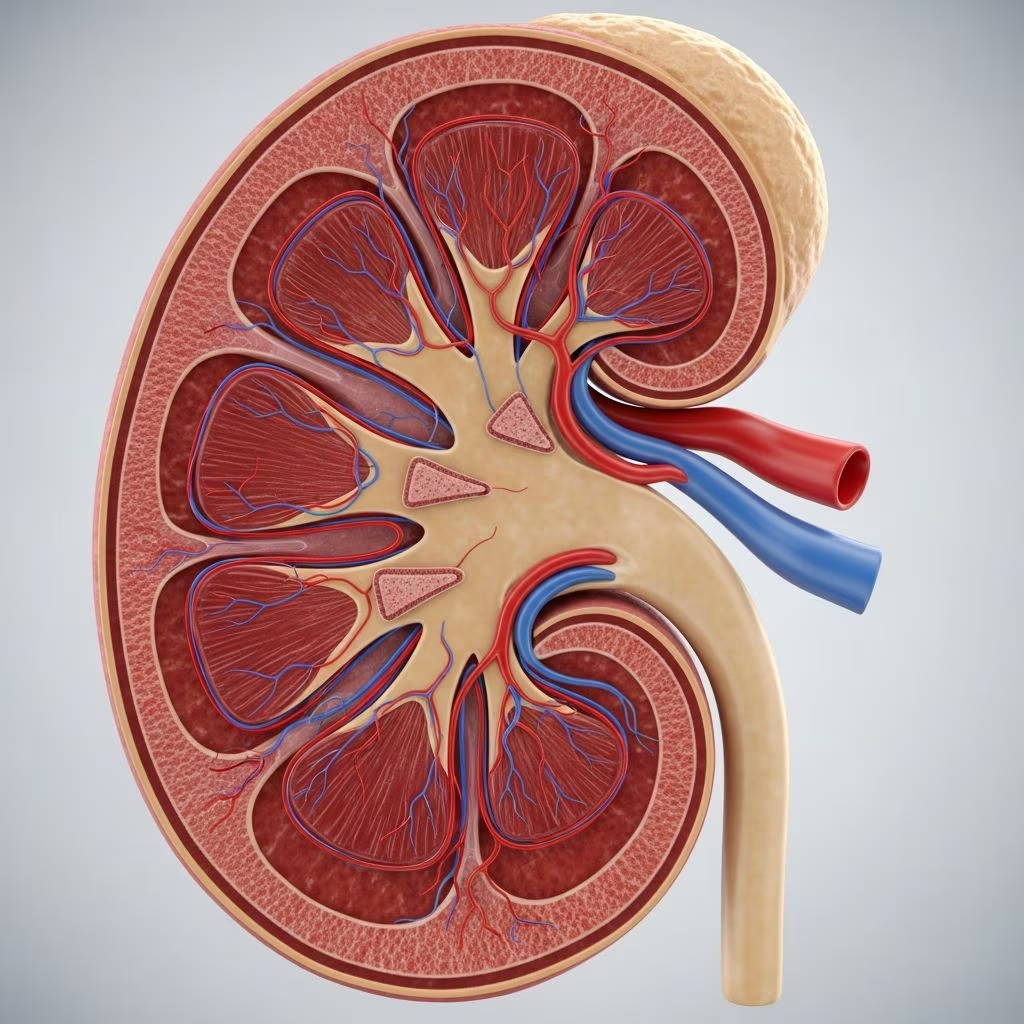
Cat kidneys perform critical tasks like filtering waste, balancing fluids, and producing hormones, but they face significant risks from chronic conditions that affect millions of felines worldwide. Understanding these organs’ intricacies empowers owners to detect issues early and improve outcomes.
The Vital Roles of Feline Kidneys
Kidneys in cats are compact powerhouses, each roughly the size of a grape, yet they process up to 20 times the cat’s body volume in blood daily. They regulate electrolytes, maintain blood pressure via renin production, and activate vitamin D for bone health. Unlike humans, cats evolved as desert hunters, leading to highly concentrated urine production that stresses renal tissues over time.
These organs also synthesize erythropoietin, stimulating red blood cell production. When function declines, anemia often follows, exacerbating fatigue in affected cats. Daily filtration exceeds 200 liters of fluid equivalent, underscoring their workload.
How Common Are Kidney Problems in Cats?
Chronic kidney disease (CKD) strikes **1 in 3 cats** over their lifetime, with prevalence climbing to **30-50%** in those aged 10 and older. Studies on screened populations reveal rates as high as 50% in regular cats and 68.8% in those with joint issues, far exceeding earlier estimates of 1-3% based solely on azotemia.
Prevalence rises sharply post-7 years: under 4 years it’s around 13%, jumping to 31% by 10-15 years and 32% beyond. Breeds like Maine Coon, Siamese, Abyssinian, Russian Blue, Burmese, and Persians show genetic vulnerabilities. Indoor cats dominate clinic cases (78%), likely due to longer lifespans and monitoring, not lifestyle causation.
| Age Group | CKD Prevalence | Source |
|---|---|---|
| <4 years | 13% | |
| 4-10 years | 24% | |
| 10-15 years | 31% | |
| >15 years | 32-50% |
Recognizing Early Warning Signs
- **Increased thirst and urination (polyuria/polydipsia)**: Tops lists at 85% and 78% of cases, as kidneys lose concentration ability.
- **Weight loss**: Affects 65%, often subtle at first.
- **Appetite drop and vomiting**: Seen in 54% and 38%, signaling toxin buildup.
- **Lethargy and bad breath**: Halitosis from uremia; energy loss common.
- **Poor coat and anemia**: Due to hormone deficits.
Owners might dismiss these as aging, but early detection via biomarkers like SDMA reveals stage I issues before azotemia.
Understanding CKD Stages in Cats
The International Renal Interest Society (IRIS) classifies CKD into four stages based on creatinine, SDMA, proteinuria, and blood pressure:
| Stage | Creatinine (μmol/L) | SDMA (μg/dL) | Key Features |
|---|---|---|---|
| I | <140 | >14 | Subtle signs; early biomarkers elevated. |
| II | 140-249 | 18-35 | Mild azotemia; 41% of cases, manageable. |
| III | 250-442 | 26-38 | Moderate symptoms; 36% prevalence. |
| IV | >442 | >38 | Severe; <10% function, poor prognosis. |
Stage IIb cats survive a median 1,151 days post-diagnosis, versus 778 for III and 103 for IV. Small, irregular kidneys on ultrasound signal advanced disease in 40%.
Diagnostic Approaches for Feline Kidneys
Blood tests measure creatinine, BUN, and SDMA—the latter rises early, outperforming traditional markers. Urinalysis checks concentration (specific gravity <1.035 flags issues), protein, and infections. Imaging like ultrasound detects hyperechogenicity (71%), small kidneys, or obstructions.
Advanced tools like RenalTech predict CKD risk two years ahead with 95% accuracy using WBC, urine pH, and protein—median onset age 15 years. Biopsies confirm etiology but are invasive.
Effective Management and Treatment Options
Therapy focuses on slowing progression:
- Renal diets: Low-protein, phosphorus-restricted formulas extend life.
- Fluid therapy: Subcutaneous fluids combat dehydration.
- Medications: ACE inhibitors for pressure, anti-nausea drugs, phosphate binders.
- Supplements: Omega-3s reduce inflammation.
Heavy cats fare better; diabetes oddly protects. Survival hinges on stage at diagnosis—early intervention doubles lifespan.
Prevention Strategies for Lifelong Kidney Health
Proactive steps include annual senior checkups post-7 years, dental care to curb bacteria spread, and toxin avoidance (lily plants, antifreeze). Hydration via fountains boosts intake; controlled phosphorus diets from middle age help. Genetic screening for at-risk breeds and weight management lower odds.
Environmental enrichment reduces stress, a progression accelerator. Tools like RenalTech enable preemptive action.
Frequently Asked Questions (FAQs)
What causes kidney disease in cats?
Genetic factors, toxins, infections, and age-related wear; no single cause dominates.
Can CKD be cured?
No, it’s irreversible, but management adds years.
How often should I test my senior cat?
Twice yearly for bloodwork and urinalysis post-10 years.
Is wet food better for kidney health?
Yes, higher moisture aids hydration and concentration.
What breeds are most at risk?
Siamese, Persians, Maine Coons.
Key Takeaways for Cat Owners
Monitor for thirst spikes and weight dips; seek vet care promptly. With vigilance, even CKD cats thrive longer.
References
- Prevalence and classification of chronic kidney disease in cats — NIH/PMC. 2015. https://pmc.ncbi.nlm.nih.gov/articles/PMC4414065/
- Chronic kidney disease in cats — Wikipedia (informed by primaries). 2023. https://en.wikipedia.org/wiki/Chronic_kidney_disease_in_cats
- Epidemiology of Chronic Kidney Disease (CKD) in Cats — NIH/PMC. 2024. https://pmc.ncbi.nlm.nih.gov/articles/PMC12734309/
- 6 Surprising Facts About Kidney Disease in Cats — Pet Health Network. 2023. https://www.pethealthnetwork.com/cat-health/cat-checkups-preventive-care/6-surprising-facts-about-kidney-disease-cats
- Creating brighter futures for cats with chronic kidney disease — AVMA. 2021-02-01. https://www.avma.org/javma-news/2021-02-01/creating-brighter-futures-cats-chronic-kidney-disease
- Survival of Cats with Kidney Disease — EveryCat Health Foundation. 2023. https://everycat.org/cat-health/survival-of-cats-with-kidney-disease/



