

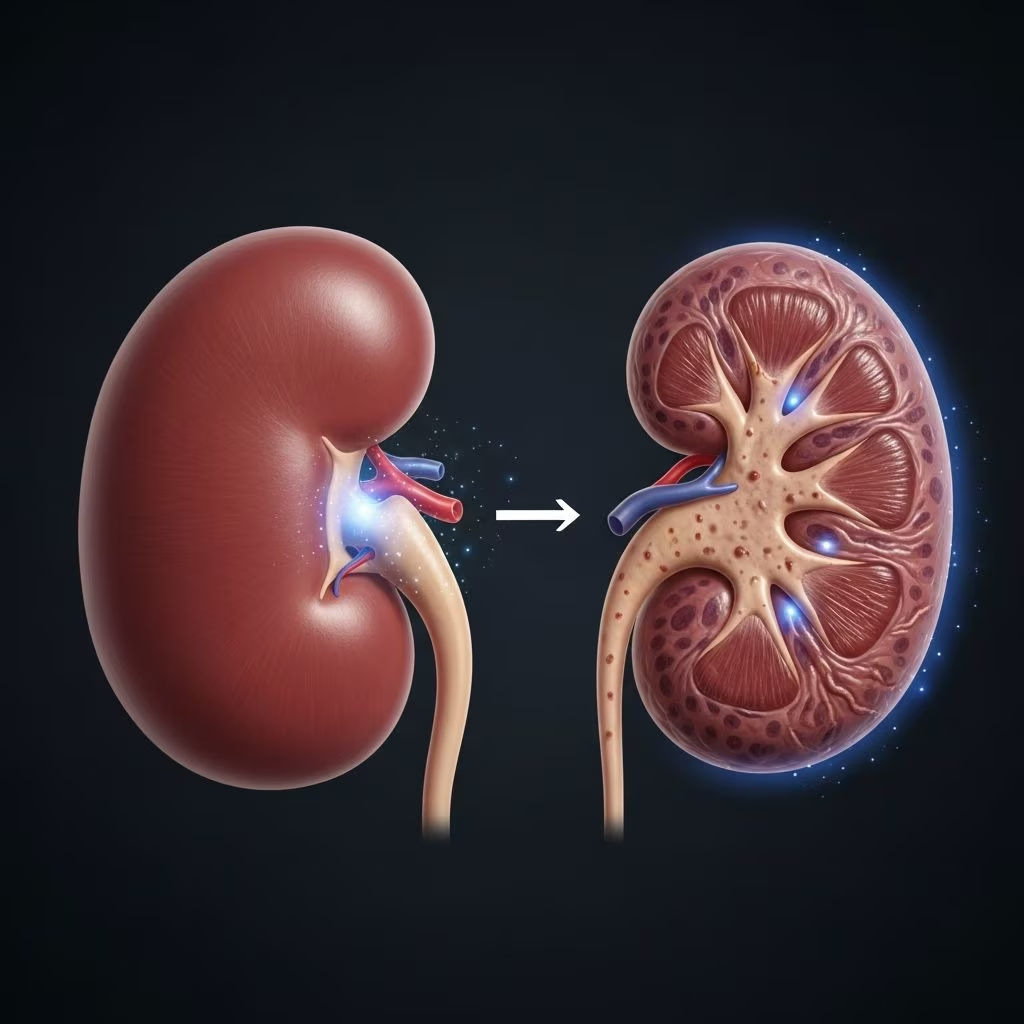
Understanding Cat Kidney Disease Stages
Chronic kidney disease (CKD) is one of the most common health conditions affecting cats, particularly as they age. Unlike acute kidney failure, which develops suddenly, chronic kidney disease progresses gradually over months or years. Understanding the different stages of kidney disease can help cat owners recognize early warning signs and work with their veterinarian to manage the condition effectively. The International Renal Interest Society (IRIS) has established a four-stage classification system that helps veterinarians assess the severity of kidney disease and determine the most appropriate treatment plan for each cat.
What Are the Early Warning Signs of Kidney Disease?
Recognizing the symptoms of kidney disease early can significantly impact your cat’s prognosis and quality of life. The kidneys are responsible for filtering waste products from the blood and eliminating them through urine, as well as regulating electrolytes, blood pressure, and red blood cell production. When kidney function declines, these critical processes become compromised.
The most common early signs of kidney disease in cats include:
- Increased thirst and urination — Cats may drink more water than usual and require more frequent trips to the litter box
- Weight loss — Gradual decline in body condition despite normal or increased appetite
- Poor appetite — Cats may become picky eaters or show decreased interest in food
- Lethargy and weakness — General lack of energy and reduced activity levels
- Bad breath — An unpleasant odor caused by uremic toxins building up in the bloodstream
- Dull or poor coat quality — Fur may appear unkempt or lack its normal shine
- Dehydration — Despite increased thirst, cats may become dehydrated
In later stages, additional symptoms may emerge, including vomiting, diarrhea, depression, and an arched back or stiff-legged gait indicating pain from kidney dysfunction. Because cats are naturally skilled at hiding illness, many owners don’t notice symptoms until the disease is fairly advanced, which is why regular veterinary checkups and blood work are essential.
Stage 1: Early Kidney Disease
Stage 1 kidney disease represents the earliest detectable stage of chronic kidney disease. At this stage, kidney function is mildly reduced, but clinical signs are usually not apparent. This stage is often discovered incidentally during routine blood work or wellness examinations, particularly in older cats.
During Stage 1:
- Blood tests show slightly elevated kidney values
- Clinical signs are minimal or absent
- Most cats appear healthy and behave normally
- Kidney function is still adequate for normal daily activities
- Early intervention can significantly slow disease progression
Management of Stage 1 kidney disease focuses on preventive care and monitoring. Veterinarians typically recommend:
- Annual blood and urine testing to monitor kidney function
- Blood pressure monitoring to detect hypertension early
- Dental care as needed, with IV fluid support to maintain hydration
- Omega-3 fatty acid supplementation (fish oil) to decrease inflammation
- Calcitriol therapy to replace active Vitamin D that the kidneys produce in reduced amounts
- Consideration of an abdominal X-ray to check for kidney stones
- Appropriate medication if high blood pressure or protein in urine is detected
Early detection and intervention at this stage can potentially prolong your cat’s lifespan by 2-3 years, particularly if dental disease is managed effectively. Maintaining excellent oral health helps prevent secondary infections that can accelerate kidney decline.
Stage 2: Mild Kidney Disease
Stage 2 kidney disease indicates that the disease has progressed, and kidney function has declined further. At this stage, some clinical signs may begin to appear, though they are often subtle. Cats may show increased thirst and urination, but other symptoms remain inconspicuous.
Key characteristics of Stage 2 include:
- Urine is no longer concentrated, resulting in increased urination volume
- Mild renal azotemia is present (elevated kidney values in blood)
- Some clinical signs may be noted, but cats often appear relatively normal
- Impaired urine-concentrating ability leads to polyuria (excessive urination) and polydipsia (excessive thirst)
- Early gastrointestinal symptoms may occasionally appear
Stage 2 management includes all Stage 1 recommendations plus additional interventions:
- Blood pressure, blood, and urine testing twice yearly instead of annually
- Transition to a kidney disease diet that is low in phosphorus and protein
- Supplementary potassium, which cats with kidney disease tend to lose excessively through urine
- Medication to decrease blood pressure within the kidneys and reduce proteinuria
- Increased monitoring for secondary complications
- More frequent veterinary visits to assess progression
Diet becomes increasingly important at this stage. A therapeutic kidney diet reduces the workload on remaining functional kidney tissue and helps control phosphorus and protein levels, which can further damage the kidneys if left unmanaged. Ensuring adequate hydration through increased water intake is also critical.
Stage 3: Moderate Kidney Disease
Stage 3 kidney disease represents moderate renal dysfunction where the disease is clearly progressing and clinical signs become more apparent. Many cats begin to show noticeable symptoms of illness during this stage, and owners typically recognize that something is wrong with their pet’s health.
Stage 3 characteristics include:
- GFR (glomerular filtration rate) has declined significantly
- Moderate renal azotemia is present with clearly elevated kidney values
- Many clinical signs are evident, and cats often appear to feel sick
- Weight loss and poor appetite become more pronounced
- Vomiting, bad breath, and gastrointestinal issues become common
- Lethargy and general malaise are noticeable
- Higher risk of secondary complications
Stage 3 management includes all previous stage recommendations plus additional supportive treatments:
- Blood testing every 3-6 months and urine testing at least annually
- Blood pressure monitoring to manage hypertension
- A probiotic supplement that helps trap nitrogen waste products in the intestine, reducing uremic toxins
- Phosphorus binder medication if phosphorus levels climb, protecting remaining kidney function
- Control of uremic symptoms through appropriate medications for nausea, vomiting, and gastrointestinal ulcers
- Continued adherence to kidney disease diet and therapeutic supplements
- More frequent veterinary monitoring and assessment
- Possible treatment for secondary anemia if red blood cell counts decline
Quality of life becomes a significant focus at this stage. Managing pain, nausea, and other uncomfortable symptoms becomes increasingly important for maintaining your cat’s wellbeing and appetite.
Stage 4: Advanced Kidney Disease
Stage 4 kidney disease represents the most advanced stage of chronic kidney disease, where kidney function is severely compromised. Cats in this stage have severe renal azotemia and face a high risk of uremic crises and systemic complications. This stage requires intensive medical management and frequent veterinary care.
Stage 4 characteristics include:
- Severe renal azotemia with markedly elevated kidney values
- A majority of clinical signs are noted, and cats often present in crisis
- Significant weight loss and poor nutritional status
- Severe gastrointestinal symptoms including vomiting and diarrhea
- Profound lethargy and weakness
- Severe dehydration despite increased water intake
- Secondary anemia is common, causing additional weakness and poor appetite
- High risk of systemic complications and life-threatening emergencies
Stage 4 management is the most comprehensive and includes all previous stage treatments plus intensive care:
- Blood pressure and blood testing every 3 months, urine testing at least twice yearly
- Injectable or oral medications to stimulate red blood cell production if anemia is present
- Erythropoietin injections or oral medications like Varenzin-CA1 to address secondary anemia
- Aggressive IV fluid therapy to maintain hydration and help flush uremic toxins
- Intensive management of all complications including nausea, vomiting, high blood pressure, and electrolyte imbalances
- Nutritional support through carefully managed diet or supplemental feeding
- Regular assessment of quality of life and discussion of palliative care options
- Pain management as needed
Many cats can maintain a reasonable quality of life for months or even years with appropriate Stage 4 care, though the disease continues to progress. However, frequent veterinary visits and intensive home care become necessary.
Diagnosis of Kidney Disease
Proper diagnosis is essential for staging kidney disease and determining the appropriate treatment plan. Your veterinarian will perform a comprehensive examination and recommend several diagnostic tests:
- Blood tests — Measure kidney function through serum creatinine, BUN (blood urea nitrogen), and phosphorus levels
- Urine tests — Evaluate urine concentration ability, detect protein in urine, and identify infections
- Blood pressure measurement — High blood pressure is common in cats with kidney disease
- X-rays — Can reveal kidney size, structure, and the presence of kidney stones or other abnormalities
- Ultrasound — Provides detailed imaging of kidney structure and function
- Kidney biopsy — May be recommended in some cases to determine the underlying cause of kidney disease
Treatment and Management Strategies
While chronic kidney disease cannot be cured, appropriate treatment can significantly slow progression and maintain quality of life. The primary goals of treatment include managing symptoms, slowing disease progression, maintaining hydration, correcting electrolyte imbalances, supporting nutrition, and controlling complications.
Hydration Management: Keeping your cat adequately hydrated is one of the most important aspects of kidney disease management. Strategies include providing wet food, using water fountains, leaving dripping faucets, and offering flavored water such as low-sodium broth. Subcutaneous fluid therapy may be recommended for cats that cannot maintain adequate hydration through oral intake.
Dietary Management: Therapeutic kidney diets are specifically formulated to be low in phosphorus and protein while being enriched with vitamin D and omega-3 fatty acids. These nutrients help reduce the workload on remaining kidney tissue and manage complications. Gradual dietary transitions are important for ensuring your cat accepts the new food.
Medications and Supplements: Various medications may be prescribed depending on your cat’s specific needs, including blood pressure medications, phosphorus binders, potassium supplements, antibiotics for infections, and medications to manage nausea and gastrointestinal issues.
Emerging Treatments: Newer treatment options are becoming available, including kidney transplantation, which has shown promising results in cats, and continuous renal replacement therapy, a form of dialysis that removes uremic toxins and normalizes electrolytes.
Acute vs. Chronic Kidney Failure
It’s important to distinguish between acute renal failure and chronic kidney disease. Acute renal failure develops suddenly, typically within days or weeks, and can often be reversed if treated quickly. Common causes include poisoning from toxic plants, pesticides, or medications; trauma; infections; and urethral blockages. Cats of any age can develop acute kidney failure.
Chronic kidney disease, by contrast, develops slowly and is irreversible but manageable. The four-stage classification system helps guide treatment at each level of progression.
Frequently Asked Questions
Q: Can kidney disease in cats be cured?
A: Unfortunately, chronic kidney disease cannot be cured. However, with early detection and appropriate management, progression can be slowed and quality of life can be maintained for months or years.
Q: How often should my cat with kidney disease have blood work?
A: Frequency depends on the stage. Stage 1 cats need annual testing, Stage 2 twice yearly, Stage 3 every 3-6 months, and Stage 4 every 3 months.
Q: What diet is best for cats with kidney disease?
A: Therapeutic kidney diets formulated to be low in phosphorus and protein while enriched with vitamin D and omega-3 fatty acids are recommended. Your veterinarian can recommend specific options.
Q: How long can cats live with kidney disease?
A: With appropriate care, cats can live months or years depending on the stage at diagnosis and individual factors. Early detection and consistent management can extend lifespan significantly.
Q: Are there new treatment options for cat kidney disease?
A: Yes, newer options include renal transplantation and continuous renal replacement therapy (a form of dialysis), which are being used successfully in some cases.
Q: What causes acute kidney failure in cats?
A: Common causes include toxic substances (plants, pesticides, medications), dehydration, urethral blockages, infections, trauma, and organ failure. If treated promptly, acute kidney failure can often be reversed.
References
- Kidney Disease in Cats: Signs, Causes, and Treatment — PetMD. 2024. https://www.petmd.com/cat/conditions/urinary/kidney-disease-cats
- Chronic Kidney Disease — Cornell University College of Veterinary Medicine. 2023. https://www.vet.cornell.edu/departments-centers-and-institutes/cornell-feline-health-center/health-information/feline-health-topics/chronic-kidney-disease
- Renal Dysfunction in Dogs and Cats – Urinary System — Merck Veterinary Manual. 2024. https://www.merckvetmanual.com/urinary-system/noninfectious-diseases-of-the-urinary-system-in-small-animals/renal-dysfunction-in-dogs-and-cats
- Chronic Kidney Disease in Cats — VCA Animal Hospitals. 2024. https://vcahospitals.com/know-your-pet/kidney-failure-chronic-in-cats
- Kidney Disease in Cats: Causes, Signs, and Treatment — Best Friends Animal Society. 2023. https://bestfriends.org/pet-care-resources/kidney-disease-cats-causes-signs-and-treatment
- Stages of Kidney Failure in Cats — Quail Hollow Veterinary Clinic. 2023. https://www.quailhollowvet.com/site/blog/2023/09/15/stages-kidney-failure-cats
- Diagnosing, Staging, Treating Chronic Kidney Disease in Pets — IDEXX Laboratories. 2024. https://www.idexx.com/files/iris-pocket-guide-2.pdf



