

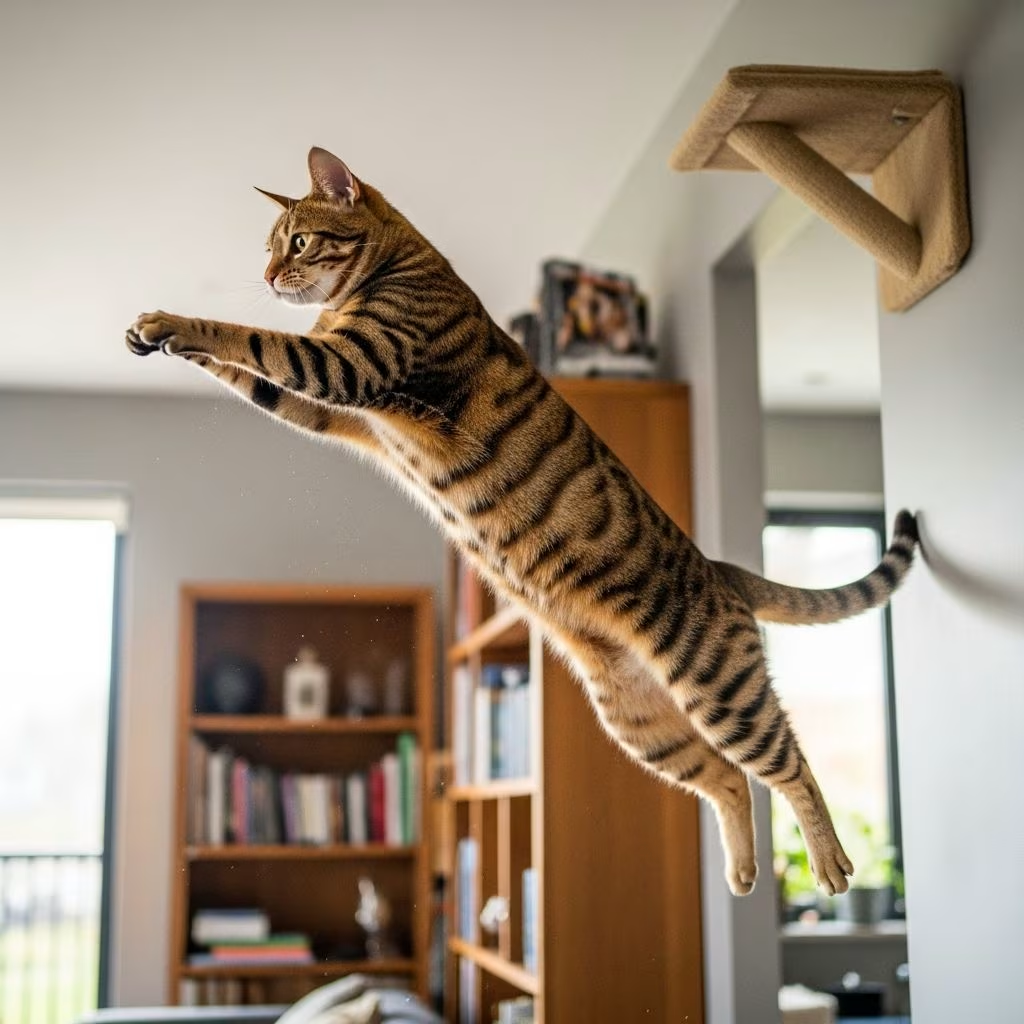
Domestic cats possess remarkable athleticism, capable of leaping several times their body height in a single bound. On average, a typical house cat can jump vertically between five and six times its shoulder height, often reaching 6 to 8 feet from a standstill.
The Anatomy of Feline Leaps
Cats’ jumping prowess stems from specialized physical adaptations honed through evolution as predators. Their hind limbs feature powerful muscles, including the quadriceps and gastrocnemius, which generate explosive force for propulsion. These muscles allow cats to crouch low, storing energy like a compressed spring before launching upward.
The spine plays a crucial role, offering exceptional flexibility with elastic discs between vertebrae and a loosely connected pelvis. This enables mid-air twists and adjustments. A long, muscular tail provides counterbalance, stabilizing the body during ascent and descent. Sensitive whiskers and paw pads help gauge distances, while the inner ear’s vestibular system ensures precise orientation via the righting reflex, allowing most cats to land on their feet even from significant heights.
Claws offer traction upon landing, preventing slips on varied surfaces. Front legs extend during jumps for stability, distributing impact evenly. These traits combine to make cats agile climbers and hunters, traits retained in modern pets despite domestication.
Average Jump Capabilities for House Cats
A standard domestic cat measures about 12 inches at the shoulder. Multiplying this by five to six yields jumps of 5 to 6 feet routinely, with many achieving 8 feet vertically without a run-up. Horizontally, cats cover similar or greater distances, essential for pouncing on prey.
In practical terms, this means cats effortlessly scale kitchen counters, bookshelves, or refrigerators. A 5-foot-6-inch human equivalent would leap 28 to 33 feet—highlighting feline superiority in relative terms.
| Cat Shoulder Height | Average Jump (5x Height) | Max Observed Jump |
|---|---|---|
| 12 inches | 5 feet | 8 feet |
| 10 inches (small cat) | 4 feet 2 inches | 6-7 feet |
| 14 inches (large cat) | 5 feet 10 inches | 8-10 feet |
This table illustrates relative capabilities based on size variations.
Breed-Specific Jumping Variations
Not all cats jump equally; breed genetics influence leg length, muscle mass, and body proportions. High-jumpers include:
- Savannah cats: Hybrid vigor allows leaps over 10 feet, owing to wild ancestry and elongated limbs.
- Bengal cats: Agile hunters reaching 8 feet vertically.
- Oriental Shorthair, Siamese, Cornish Rex, Devon Rex: Sleek builds and strong hindquarters enable 7-9 times height jumps.
- Maine Coon: Despite size, they clear 6-7 feet with powerful legs.
Standard mixed breeds average 6 feet, while heavier or brachycephalic types like Persians jump lower due to shorter legs and bulk.
Record-Breaking Feline Feats
No official Guinness record exists for vertical jumps, but documented feats impress. Waffle the Warrior Cat holds the longest jump record at 7 feet horizontally. Anecdotal videos show vertical leaps exceeding 6 feet, with claims up to 1.96 meters (about 6.4 feet) in controlled settings. Savannahs reportedly surpass 10 feet, though unverified.
These extremes showcase potential when motivation, like prey or play, aligns with peak fitness.
Factors Influencing Jump Performance
Several variables modulate a cat’s leaping ability:
- Age: Kittens jump shorter distances with less precision as coordination develops; seniors lose power from muscle atrophy or arthritis.
- Health: Obesity, joint issues, or neurological conditions reduce heights; fit cats perform best.
- Training/Environment: Regular exercise enhances muscle tone; lack of vertical spaces limits practice.
- Motivation: Hunger, toys, or threats boost jumps beyond norms.
Kittens improve rapidly, peaking in young adulthood before gradual decline.
Safety Concerns for High-Jumping Cats
Impressive as it is, jumping poses risks. Falls from excessive heights (over 2-3 stories) can cause injury despite the righting reflex, as terminal velocity increases with distance. Low body mass and limb spreading slow descent, but concrete surfaces amplify impact.
Common hazards include open windows without screens, high shelves hiding toxins, or fences leading to escapes. Cats can clear 6-foot fences easily, then climb over.
To mitigate:
- Install secure screens and window guards.
- Anchor furniture to walls.
- Provide safe perches like cat trees or wall shelves.
- Monitor weight and mobility in older cats.
Enhancing Your Cat’s Jumping Skills
Channel instincts safely with enrichment. Install multi-level cat trees, window perches, and interactive toys dangling from heights. Puzzle feeders on elevated platforms encourage leaps.
Training tips:
- Use treats or toys to lure gradual height increases.
- Incorporate laser pointers or feather wands for chase jumps.
- Avoid forcing; let curiosity drive practice.
Regular vet checkups ensure joint health, supporting lifelong agility.
Common Myths About Cat Jumping
Myths persist: Cats always land on feet? No—righting reflex fails from very low or high falls, or if unconscious. All cats jump equally high? Breed, age, and health vary outcomes.
FAQs
Can house cats jump a 6-foot fence?
Yes, average cats reach 6 feet vertically and use claws to scale the top.
How high can cats safely jump down from?
From 5-6 feet typically unharmed; higher risks injury on hard surfaces despite reflexes.
What’s the highest recorded cat jump?
Waffle’s 7-foot horizontal record; vertical claims exceed 6 feet, no official max.
Do older cats lose jumping ability?
Yes, due to reduced muscle and joint flexibility; enrichment helps maintain some skill.
Which breeds are best jumpers?
Savannahs (10+ feet), Bengals (8 feet), and Rex breeds excel.
References
- Your Amazing Cat: How they Jump High & Run Fast — Arm & Hammer. 2023. https://www.armandhammer.com/en/articles/how-cats-jump-high-run-fast
- How High Can Cats Jump? — Kinship. 2024. https://www.kinship.com/cat-behavior/how-high-can-cats-jump
- How High Can a Domestic Cat Actually Jump? — Cats.com. 2024. https://cats.com/how-high-can-a-domestic-cat-actually-jump
- The Incredible Jumping Ability of Cats — Oreate AI Blog. 2023. https://www.oreateai.com/blog/the-incredible-jumping-ability-of-cats/5a81c92722f8fb857abe27d3060b1b90
- Cat Jumps 1.96M High Explained – You Have Been Warned — YouTube. 2023. https://www.youtube.com/watch?v=7ZsAUMBMSKg



