

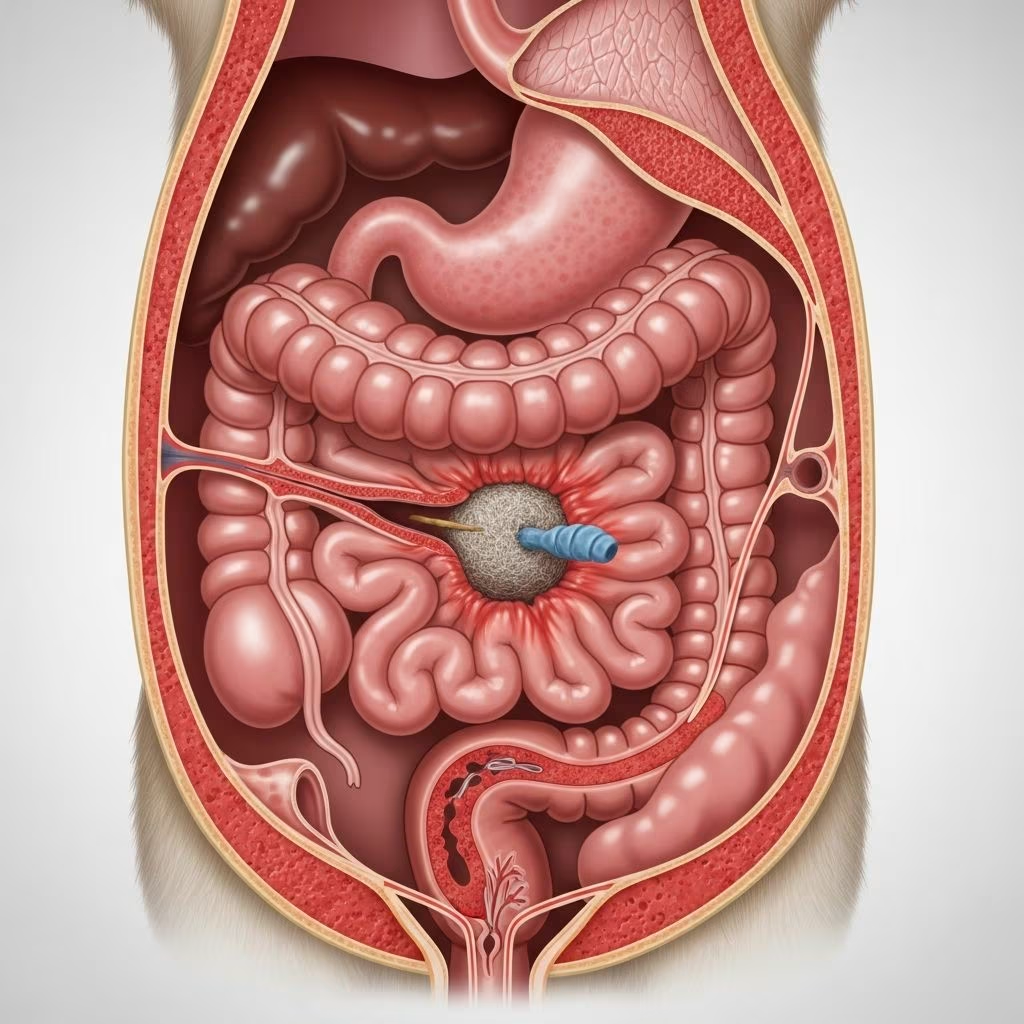
Cat intestinal blockage, also known as gastrointestinal (GI) obstruction, occurs when a foreign object or material prevents the normal passage of food and waste through the digestive tract. This condition disrupts the natural peristalsis process, where muscles push contents from the stomach through the intestines to the rectum. When blocked, contents back up, leading to vomiting, dehydration, and potentially fatal complications like intestinal rupture or sepsis.
Common in curious cats, especially kittens and young adults who chew on non-food items, GI blockages demand immediate veterinary attention. Untreated, they can cause tissue death (necrosis), perforation, and death within hours to days. This guide covers causes, symptoms, diagnosis, treatment, recovery, prevention, and FAQs to help cat owners respond effectively.
What Is Cat Intestinal Blockage?
The feline digestive system relies on smooth muscle contractions called peristalsis to move ingested material from the stomach to the small intestine, large intestine, colon, and out via the anus. An obstruction halts this, causing a backup of fluids, food, and gases. Blockages are classified as partial (some passage allowed), complete (no passage), or linear (e.g., string that bunches intestines like an accordion).
Partial blockages may allow minor flow but still cause inflammation and nutrient malabsorption. Complete ones prevent all transit, rapidly leading to distended bowels, pain, and toxicity from bacterial overgrowth. Linear foreign bodies are particularly dangerous, sawing through intestinal walls as the cat moves.
Without intervention, pressure builds, eroding the intestinal lining, causing leakage of bacteria into the bloodstream (peritonitis), shock, and multi-organ failure. Statistics from veterinary sources indicate high mortality if delayed beyond 24-48 hours.
Symptoms of Cat Intestinal Blockage
Symptoms often mimic other GI issues, but persistence and severity signal obstruction. Cats are brought to vets most commonly for vomiting (food, liquid, or bile) and anorexia (refusal to eat).
- Abdominal pain: Hunched posture, tenderness when touched, growling
- Diarrhea: Possibly bloody, from fluid leakage around blockage
- Constipation or straining: Tenesmus (straining without feces), small/dry stools
- Lethargy and weakness: Due to dehydration, pain, toxin buildup
- Behavioral changes: Hiding, aggression, vocalizing
- Other signs: Drooling (if string anchors tongue), visible object at anus, pawing face, cold extremities
Progression varies: proximal blockages (near stomach) cause frequent vomiting; distal ones (near colon) lead to diarrhea then obstipation. Dehydration signs include tacky gums, sunken eyes, and skin tenting. Emergency if vomiting persists >12 hours or abdomen swells.
Causes of Cat Intestinal Blockage
Over 80% of cases stem from foreign bodies, as cats explore with mouths. Common culprits:
- Linear objects: String, thread, yarn, ribbon, tinsel—bunch intestines
- Solid objects: Toys, rubber bands, hair ties, plastic pieces, bones
- Hairballs or trichobezoars: Severe matting obstructs
- Less common: Tumors, strictures, hernias, parasites, intussusception (telescoping intestine), severe constipation
Kittens and indoor cats chewing holiday decor or household items are at highest risk. Breeds like Persians (long fur) face hairball issues.
Diagnosis of Cat Intestinal Blockage
Vets start with history (recent ingestions?) and exam (palpate abdomen for masses/pain). Diagnostics confirm:
- Imaging: X-rays show gas patterns, fluid levels, radiopaque objects; ultrasound detects soft tissue masses, free fluid
- Bloodwork: Checks dehydration (high packed cell volume), electrolytes, organ function, infection
- Contrast studies: Barium tracks block location if unclear
- Endoscopy: Visualizes upper GI, sometimes retrieves objects
Findings guide urgency: linear bodies need immediate surgery.
Treatment for Cat Intestinal Blockage
Treatment depends on type/location. Surgery is most common for confirmed obstructions.
Non-Surgical Options
- Induced vomiting: Early, for gastric objects (risks aspiration)
- Supportive care: IV fluids, anti-nausea (maropitant), pain meds, monitoring for partial blocks
- Laxatives/enemas: Rarely, for soft impactions
Surgical Intervention
Exploratory laparotomy: Opens abdomen, inspects intestines, performs enterotomy (incision to remove object). Multiple incisions for linear bodies. Resects dead bowel if necrosed. Post-op: antibiotics, fluids.
Hospitalization: 1-3 days until eating, no vomiting, stable.
Recovery from Cat Intestinal Blockage
Post-surgery, cats need:
- Rest: 10-14 days confined, e-collar to prevent incision interference
- Medications: Pain relief, nausea control, antibiotics
- Diet: Bland, small frequent meals (e.g., Hill’s i/d therapeutic); feeding tube if anorexic
- Monitoring: Incision for infection (redness, discharge), appetite, stool/vomit
Full recovery: 2-4 weeks. Complications (5-10%): dehiscence, adhesions, short bowel syndrome.
Can Cats Pass Intestinal Blockages on Their Own?
Small partial blockages may pass with fluids/laxatives, monitored via serial X-rays. However, waiting risks perforation. Never assume—vet evaluation essential.
Preventing Cat Intestinal Blockage
Proactive steps reduce risk:
- Supervise: No strings, small toys unsupervised
- Cat-proof home: Secure trash, cords, decor
- Grooming: Brush longhairs, hairball remedies
- Diet: High-fiber food, avoid bones/stringy meats
- Enrichment: Puzzle feeders deter boredom chewing
Cost of Cat Intestinal Blockage Treatment
Varies: Diagnostics $500-1500, surgery $2000-6000+, hospitalization $1000+. Emergency after-hours higher (inferred from vet clinic blogs; consult local pricing).
Frequently Asked Questions (FAQs)
How long can a cat live with intestinal blockage?
Hours to days for complete blocks; partial may last longer but risks rupture.
Will a cat still poop with a blockage?
Possibly small amounts initially, then nothing.
What should I do if my cat swallowed string?
Emergency vet—cut string if visible, don’t pull.
Is cat intestinal blockage surgery expensive?
Yes, $3k-8k typically, but life-saving.
Can hairballs cause blockage?
Yes, severe ones mimic foreign bodies.
References
- Intestinal Blockage in Cats — PetMD. 2023. https://www.petmd.com/cat/conditions/digestive/c_ct_gastrointestinal_obstruction
- How to Spot Intestinal Obstruction in Cats — Kingstowne Cat Clinic. 2020-01-01. https://kingstownecatclinic.com/2020/01/how-to-spot-intestinal-obstruction-in-cats/
- Cat Intestinal Blockages: Causes, Symptoms & More — Hill’s Pet. 2024. https://www.hillspet.com/cat-care/healthcare/cat-intestinal-blockages
- Gastrointestinal Blockage in Cats — Vetster. 2024. https://vetster.com/en/conditions/cat/gastrointestinal-blockage-gi-foreign-body-obstruction-in-cats
- Cat Intestinal Blockage Surgery — Hope Center Vet. 2024-04-15. https://www.hopecentervet.com/site/blog/2024/04/15/cat-intestinal-blockage-surgery
- Intestinal Blockages in Cats & Dogs — Sage Veterinary. 2024. https://www.sageveterinary.com/blog/intestinal-blockages-in-cats-amp-dogs-what-to-know-amp-what-to-do



