

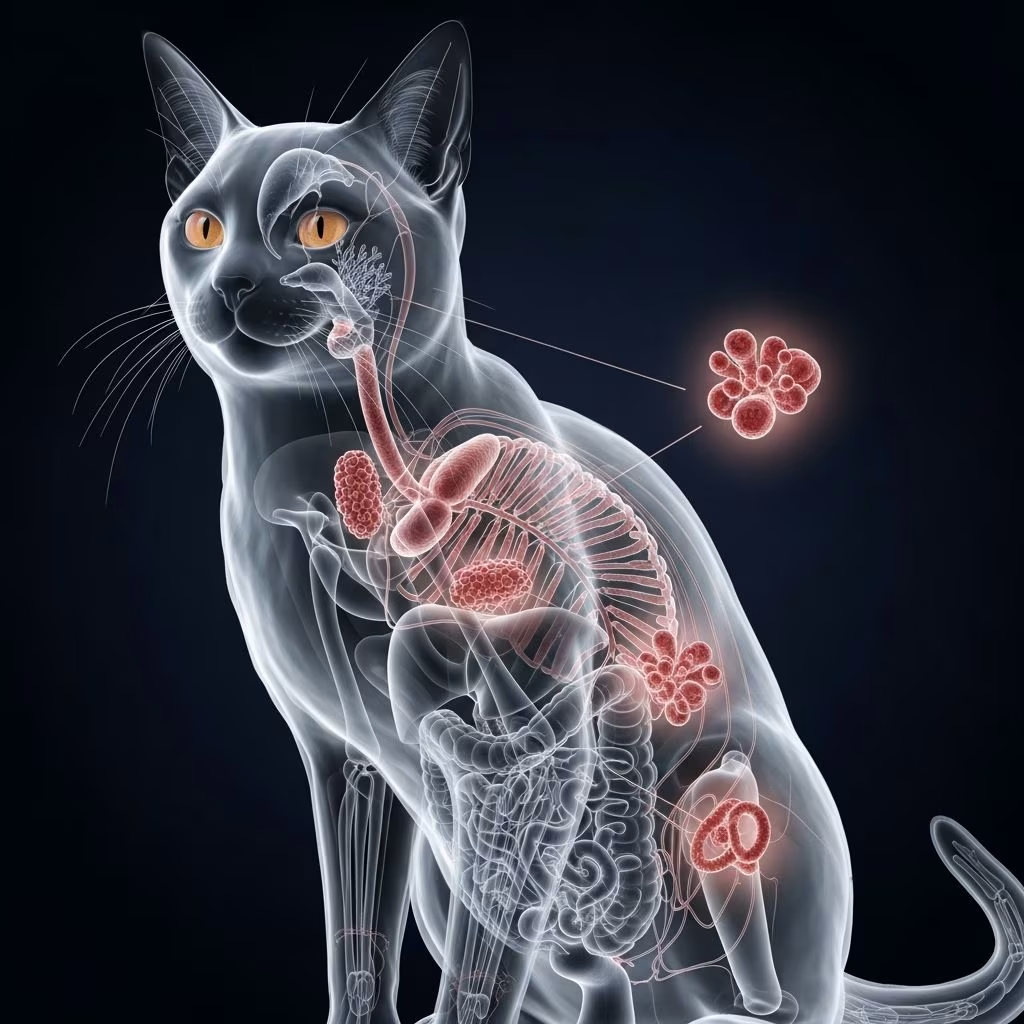
The immune system in cats serves as a vital defense mechanism, coordinating specialized cells, tissues, and organs to detect and eliminate harmful invaders like bacteria, viruses, parasites, and toxins. This network ensures cats remain protected from infections and environmental threats through rapid detection and targeted responses.
Core Components of Feline Defenses
At the heart of a cat’s immunity lies a interconnected array of organs and tissues that produce, store, and activate defensive cells. Bone marrow acts as the primary factory for white blood cells, including lymphocytes essential for targeted attacks. The thymus, located near the chest, matures T-lymphocytes, peaking in size during kittenhood before gradually reducing.
Lymph nodes, positioned in areas like the neck, armpits, and groin, function as filtration stations. They capture antigens—specific parts of pathogens triggering responses—and swell during active immune activity, signaling the body is combating a threat.
- Bone marrow: Generates B cells and other leukocytes.
- Thymus: Trains T cells for cellular defense.
- Lymph nodes: Trap and process antigens from lymph fluid.
- Spleen: Filters blood-borne pathogens in the abdomen.
The spleen plays a crucial role by scanning circulating blood for dangers, while gut-associated tissues in the intestines contribute to mucosal immunity, neutralizing threats ingested through food or water.
Key Immune Cells in Cats
Diverse white blood cells, or leukocytes, form the workforce of feline immunity. Lymphocytes divide into T cells, which orchestrate cellular attacks and recruit other defenders, and B cells, which produce antibodies to neutralize specific threats. Neutrophils target bacteria during inflammation, macrophages engulf debris and pathogens, and eosinophils combat parasites.
| Cell Type | Primary Role | Location |
|---|---|---|
| T-lymphocytes | Cellular immunity, killing infected cells | Thymus-matured, circulate body-wide |
| B-lymphocytes | Antibody production | Bone marrow origin, lymph nodes |
| Neutrophils | Bacterial destruction | Blood and tissues |
| Macrophages | Phagocytosis, antigen presentation | Tissues, lymph nodes |
| Eosinophils | Parasite and allergy response | Blood, mucosal areas |
Cytokines, protein messengers, facilitate communication among these cells, amplifying responses. Antibodies, or immunoglobulins, bind to invaders, marking them for destruction or blocking their entry into cells.
Innate Versus Adaptive Protection
Cats possess two layered defenses: innate, which provides immediate, broad-spectrum action, and adaptive, which builds precise, long-lasting memory. Innate responses activate within minutes via barriers like skin and mucous membranes, enzymes in saliva, and stomach acids that degrade pathogens on contact.
Phagocytes such as macrophages initiate innate cleanup by engulfing foreign material. This system reacts uniformly to any threat without prior exposure.
Adaptive immunity, slower to start but highly specific, involves T and B cells “learning” antigens. Upon recognition, B cells multiply into plasma cells churning out tailored antibodies, while T cells directly eliminate infected cells. Memory cells ensure faster, stronger reactions to repeat invaders, underpinning vaccination efficacy.
How Cats Distinguish Friend from Foe
A critical feature is self-recognition: every cat cell displays unique markers preventing immune attacks on healthy tissue. Antigens on pathogens lack these, triggering alarms. Lymph nodes host interactions where T cells scan for anomalies, directing full-scale responses if threats are confirmed.
In the lymph node’s cortex, B cells form germinal centers for antibody refinement, while paracortical zones handle T cell coordination. Medullary sinuses release activated cells into circulation.
Physical Barriers and Early Defenses
Beyond cells and organs, cats rely on frontline barriers. Skin blocks entry, respiratory mucus traps airborne particles, and gastrointestinal enzymes dismantle ingested microbes. The lymphatic network transports lymph—a clear fluid laden with immune components—linking these sites.
When breaches occur, signals summon reinforcements, swelling nodes and mobilizing blood cells to infection sites.
Supporting Feline Immune Health
Maintaining robust immunity involves balanced nutrition rich in antioxidants, regular veterinary checkups for early threat detection, and vaccinations mimicking adaptive memory. Kittens inherit temporary maternal antibodies via colostrum, transitioning to independent defenses as the thymus thrives.
Stress, poor diet, or age can impair responses, increasing disease susceptibility. Senior cats may experience thymus involution, reducing T cell efficiency.
Signs of Immune System Activity
Owners might notice palpable lymph nodes under the jaw or legs during mild infections, indicating active defense. Persistent swelling warrants veterinary evaluation for underlying issues like chronic infections or lymphoma.
Common Immune Challenges in Cats
Feline leukemia virus and immunodeficiency virus compromise defenses, leading to recurrent infections. Autoimmune disorders occur when self-tolerance fails, attacking the cat’s own tissues. Understanding these highlights the system’s delicate balance.
FAQs
What organs are central to a cat’s immune system?
Bone marrow, thymus, spleen, and lymph nodes form the core, producing and filtering immune elements.
How do T cells and B cells differ in cats?
T cells manage cellular attacks post-thymus maturation; B cells generate antibodies from bone marrow.
Why do cat lymph nodes swell?
Swelling, or lymphadenopathy, reflects immune cell accumulation fighting infections or antigens.
Can a cat’s immune system remember threats?
Yes, adaptive memory cells enable quicker responses to familiar pathogens via vaccines or prior exposures.
How does skin contribute to cat immunity?
As the largest barrier organ, skin prevents pathogen entry alongside producing antimicrobial peptides.
Advanced Insights into Feline Lymphoid Tissues
Beyond basics, Peyer’s patches in the gut and tonsils sample intestinal contents for threats, bolstering mucosal defenses. The spleen’s white pulp concentrates lymphocytes for blood surveillance.
Research shows cat lymphoid structures mirror mammals, with cortex for B cell proliferation and paracortex for T cell interactions, ensuring coordinated immunity.
References
- Structure and Function of the Immune System in Cats — PetPlace.com. 2023. https://www.petplace.com/article/cats/pet-health/structure-and-function-of-the-immune-system-in-cats
- Understanding Immune System Support for Cats — Hill’s Pet Nutrition. 2024-01-15. https://www.hillspet.com/cat-care/nutrition-feeding/understanding-immune-system-support-for-cats
- The Immune System of Cats — Merck Veterinary Manual. 2025. https://www.merckvetmanual.com/cat-owners/immune-disorders-of-cats/the-immune-system-of-cats
- IMMUNOLOGY OF THE CAT — National Center for Biotechnology Information (PMC). 2020-03-15. https://pmc.ncbi.nlm.nih.gov/articles/PMC7150114/
- The Feline Lymphatic System: Understanding Cat Lymph Nodes — ImpriMed. 2024. https://www.imprimedicine.com/blog/cat-lymph-nodes
- The Feline Immune System: A Delicate Balance — Catwatch Newsletter. 2023-06-01. https://www.catwatchnewsletter.com/health/disease/the-feline-immune-system-a-delicate-balance/
- The Canine and Feline Immune System — Manorswood Veterinary Clinic. 2024. https://manorswoodvet.co.za/the-canine-and-feline-immune-system/



