

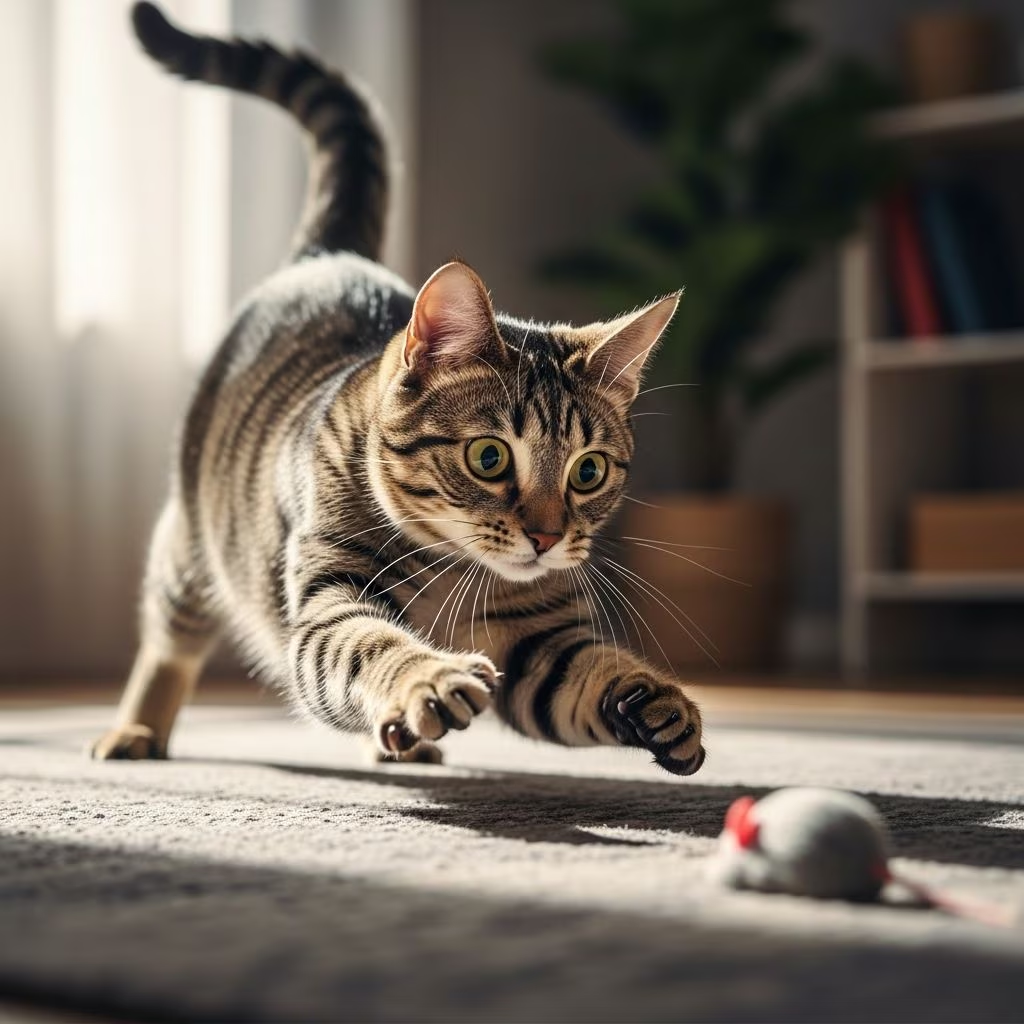
Cats exhibit stalking and pouncing as core components of their innate hunting drive, behaviors hardwired through evolution regardless of whether they need food for survival. These actions stem from solitary predatory origins, where success depended on stealth, precision, and explosive energy release.
The Evolutionary Roots of Feline Predation
Domestic cats descend from wild ancestors like the African wildcat, which honed ambush tactics to capture small prey efficiently. This genetic legacy means modern cats, even well-fed ones, engage in hunting sequences daily for stimulation rather than necessity. Research shows cats dedicate 3 to 10 hours daily to such activities, including observation, pursuit, and capture simulations.
Hunting motivation transcends hunger; it’s a rewarding process activating reward centers in the brain. Cats hunt proactively to avoid starvation risks in the wild, where each attempt has under a 50% success rate, prompting constant practice. Indoor environments don’t erase this; instead, play becomes a substitute outlet.
Breaking Down the Hunt: From Stalk to Strike
A typical feline hunt unfolds in distinct phases, each showcasing specialized adaptations.
- Detection: Cats rely on acute vision and hearing to spot movement, their eyes optimized for low light and motion sensitivity.
- Stalking: The cat crouches low, extending its head while moving silently, accelerating into a sprint as prey nears.
- Pounce: Tension builds before a sudden leap, front paws striking with claws extended for capture.
- Manipulation: Post-capture, cats may bat or ‘toy’ with prey due to injury fear or excess energy, a trait more common in domesticated felines.
- Kill and Consume: A neck bite severs the spine, though well-fed cats often abandon kills.
These stages mirror play with toys, where laser pointers or wand feathers trigger full sequences, providing mental and physical fulfillment.
How Personality Shapes a Cat’s Hunting Drive
Not all cats hunt equally; personality traits significantly influence propensity. A French study of over 2,000 cats using the Feline Five model—assessing neuroticism, extroversion, dominance, impulsiveness, and agreeableness—found extroverted cats, marked by intelligence and perseverance, brought home more prey. Shy, neurotic, or agreeable cats hunted less, often staying indoors.
| Personality Trait | Hunting Tendency | Reason |
|---|---|---|
| High Extroversion | High | Bolder exploration increases encounters |
| High Neuroticism | Low | Fear limits outdoor time |
| High Agreeableness | Low | Prefers human interaction over roaming |
Breeds tied to these traits may inherently hunt more, suggesting selective adoption for wildlife-sensitive areas. Care practices and prey availability also modulate behavior.
Indoor Cats: Channeling Instincts Without Prey
Domestic life amplifies the need for alternatives, as confined spaces limit natural outlets. Play replicates hunting, reducing stress, boredom, and destructiveness. Interactive sessions mimicking prey movement—erratic twitches or rolls—elicit stalking and pouncing, with hungrier cats showing intensified engagement.
Owners note stalkers favor hidden toys emerging slowly, while chasers pursue fast-rolling balls, tailoring to individual styles. Neutering doesn’t curb this drive, as it’s not hormone-linked.
Practical Enrichment Strategies for Hunter Cats
Enrich environments to satisfy instincts constructively.
- Interactive Toys: Feather wands, mechanical mice, or balls simulate fleeing prey, encouraging full hunts.
- Puzzle Feeders: Slow-release boards demand ‘hunting’ for kibble, boosting cognition.
- DIY Obstacles: Cardboard tunnels or elevated paths with dangling lures promote stalking.
- Scheduled Play: 15-20 minute sessions dawn and dusk match peak activity, using varied toys.
- Vertical Space: Shelves and trees enable ambush setups indoors.
Rotate items to maintain novelty, preventing habituation. These prevent issues like night zoomies or furniture scratching.
Balancing Pet Ownership with Wildlife Protection
Outdoor cats impact biodiversity, killing billions of birds and mammals yearly. Strategies include bell collars (mixed efficacy), indoor-only living with enrichment, or supervised access. Personality-aware adoptions favor low-hunting traits in sensitive ecosystems.
Well-fed cats kill for thrill, not sustenance, underscoring enrichment’s role in reducing outings.
Common Myths About Cat Hunting Debunked
- Myth: Feeding stops hunting. Reality: Full bellies don’t deter; excitement drives it.
- Myth: Only feral cats hunt. Reality: All cats retain instincts.
- Myth: Play is just kitten behavior. Reality: Adults need it lifelong.
FAQs
Why does my cat bring me dead animals?
This ‘gift’ mimics maternal teaching, sharing with ‘family.’ Praise gently to redirect.
Can I train my cat not to hunt?
No, it’s innate, but enrichment and access control manage it.
Is pouncing on me normal?
It signals unmet needs; increase play to redirect.
How often should I play with my cat?
Twice daily, 15 minutes, matching crepuscular peaks.
Do certain breeds hunt less?
Yes, less extroverted breeds may, per personality studies.
References
- The confident killer: Why some cats hunt more than others — Advanced Science News. 2023-10-04. https://www.advancedsciencenews.com/the-confident-killer-why-some-cats-hunt-more-than-others/
- The Psychology of Play: Why Cats Hunt, Even Indoors — CatCurio. 2024-01-15. https://catcurio.com/blogs/catlove/the-psychology-of-play-why-cats-hunt-even-indoors
- Cats and Their Hunting Behaviour — FOUR PAWS International. 2023-05-20. https://www.four-paws.org/our-stories/publications-guides/cats-and-their-hunting-behaviour
- Understanding the hunting behaviour of cats — International Cat Care. 2024-08-12. https://icatcare.org/articles/understanding-the-hunting-behaviour-of-cats
- Why do cats hunt? Hunting behaviour in cats — CAT’S LOVE. 2023-11-28. https://www.catslove.com/en/hunting-behaviour-in-cats
- Can I stop my cat from hunting? — BC SPCA. 2024-03-10. https://spca.bc.ca/faqs/can-i-stop-my-cat-from-hunting/
- How Cats Hunt: Feline Hunting Behavior Explained — Amy Shojai. 2023-07-19. https://amyshojai.com/how-cats-hunt/



