

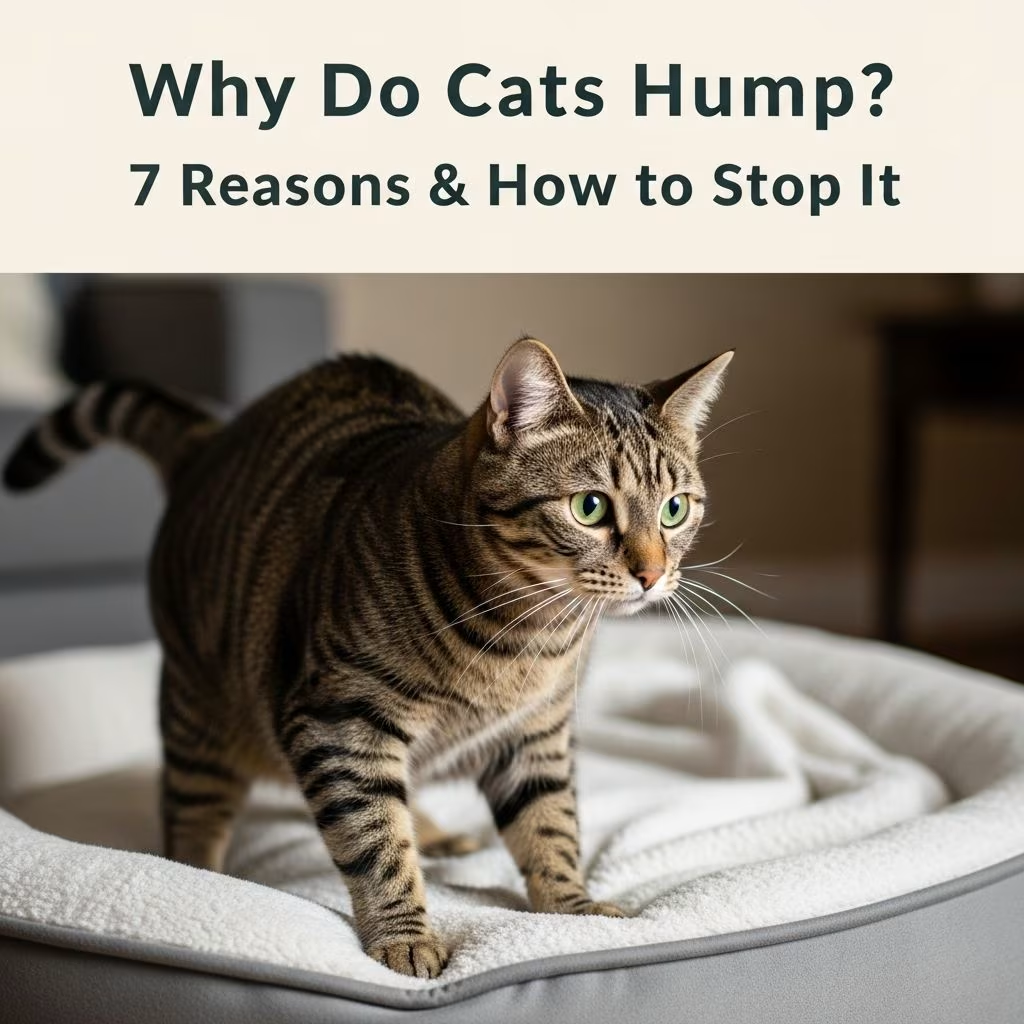
Cat humping, also known as mounting, is a surprising behavior that many pet owners observe in their felines, even after neutering. This action involves a cat thrusting its hips against objects, other cats, or even humans, often leaving owners embarrassed or confused. While it mimics sexual activity, humping in cats serves multiple purposes beyond reproduction, including dominance display, stress relief, and play.
Understanding the root causes is essential for addressing it effectively. Neutered cats may continue this habit due to lingering hormones, learned behaviors, or environmental triggers. This comprehensive guide covers the seven primary reasons for cat humping and provides actionable steps to curb it, drawing from veterinary insights and behavioral research.
What Is Cat Humping?
Cat humping refers to the rhythmic pelvic thrusting a cat performs while straddling an object, another animal, or a person’s leg or arm. It typically involves the cat gripping with its front paws, arching its back slightly, and moving its hindquarters forward and backward. This behavior can last from a few seconds to several minutes and may be accompanied by vocalizations like purring or growling.
Though commonly associated with intact males during mating, humping occurs across all sexes and sterilization statuses. Females in heat, intact males, and even neutered cats exhibit it. Importantly, in neutered cats, it signals non-sexual motivations, warranting investigation into medical or behavioral factors.
7 Reasons Why Cats Hump
Multiple factors drive cat humping. Here’s a breakdown of the seven most common reasons, supported by veterinary observations:
- Sexual Behavior: Intact cats hump primarily for reproduction. Unspayed females in heat attract males who mount to mate, while males practice on objects or subordinates.
- Residual Hormones Post-Neutering: After neutering, testosterone levels can linger for weeks or months, sustaining humping until fully cleared from the system.
- Learned or Habitual Behavior: Cats neutered after developing the habit may continue as a conditioned response, independent of hormones.
- Stress or Anxiety Relief: Humping acts as self-soothing during anxiety from household changes, new pets, or conflicts with other cats.
- Overstimulation from Play or Petting: Rough interactions excite cats excessively, channeling energy into mounting as an outlet.
- Territorial or Dominance Display: Cats assert control over space or rivals through humping, even post-neutering.
- Medical Issues: Conditions like urinary tract infections (FLUTD), skin allergies, or hormonal imbalances can trigger humping. Sudden onset requires veterinary evaluation.
Observe context: humping during play suggests overstimulation, while isolation indicates stress. Multi-cat homes often see inter-cat mounting from competition or territory disputes.
Why Do Neutered Cats Hump?
Neutering eliminates about 90% of sexual humping in males by removing testes, but 10-20% persist due to non-hormonal causes. Females show less post-spaying, but habits remain possible.
Key triggers include:
- Hormonal Lag: Full hormone dissipation takes 4-8 weeks; early neutering (before 5-6 months) prevents habit formation.
- Environmental Stress: Moves, new family members, or reduced outdoor access spike anxiety, prompting displacement behaviors like humping.
- Boredom and Under-Stimulation: Indoor cats lacking enrichment redirect pent-up energy sexually.
- Social Dynamics: In multi-pet homes, humping signals hierarchy or resource competition.
Recognize it as a symptom: persistent humping in neutered cats flags underlying issues needing address.
Medical Causes of Cat Humping
Before behavioral fixes, rule out health problems. Humping can stem from:
| Condition | Symptoms | Action |
|---|---|---|
| Lower Urinary Tract Disease (FLUTD) | Frequent urination, straining, blood in urine | Vet exam, urinalysis |
| Skin Allergies/Irritations | Excessive grooming, itching, humping fabrics | Dermatology check |
| Hormonal Imbalances | Sudden onset post-neuter, aggression | Blood tests |
| Neurological Issues | Tremors, disorientation with humping | Full neurological workup |
Veterinarians note FLUTD as a key culprit, especially with toileting changes. Anecdotal links exist to allergies prompting soothing thrusts on soft surfaces.
Consult a vet for new or intense humping; diagnostics ensure no treatable conditions are missed.
How to Stop Cat Humping: 7 Proven Tips
Managing humping requires identifying triggers then applying targeted strategies. Patience yields results over days to weeks.
- Veterinary Checkup: First step: exclude medical causes.
- Environmental Enrichment: Add cat trees, shelves, scratching posts, and puzzle feeders for mental/physical outlets. Vertical space reduces stress.
- Scheduled Play Sessions: 3-5 minute sessions thrice daily with wand toys like DaBird. Redirect mid-hump to toys.
- Reduce Overstimulation: Limit rough petting; watch body language (tail flicking, ears back).
- Pheromone Therapy: Feliway diffusers calm anxiety-related humping.
- Positive Reinforcement Training: Reward non-humping behaviors with treats; ignore or gently distract during episodes. Never punish— it heightens stress.
- Professional Help: If persistent, consult a certified feline behaviorist for customized plans.
Consistency matters: track incidents in a journal to spot patterns. Extra attention during transitions (e.g., new pets) prevents neediness-driven humping.
Why Do Cats Hump Other Cats?
Inter-cat humping often reflects social hierarchy. Neutered males mount siblings or housemates to assert dominance, especially post-changes like new arrivals. It may signal stress, resource rivalry, or play escalation.
In brother pairs, persistent mounting warrants space expansion and separate resources (litter boxes, beds). Monitor for fights; separate if aggressive. Enrichment and play diffuse tensions.
Why Do Cats Hump Their Owners?
Owner-directed humping stems from overstimulation, affection-seeking, or stress. During petting, excited cats mount legs/arms. New routines or isolation amplify it as attention bids.
Counter by pausing interactions at early signs, offering toys instead. Increase quality time via grooming brushes or lap sessions to fulfill needs positively.
Why Do Female Cats Hump?
Females hump for heat cycles (intact), dominance, or stress relief. Spayed females rarely do so hormonally but may from habits or anxiety. Same strategies apply: enrich, de-stress.
FAQs
Q: Why does my neutered cat still hump?
A: Common causes include residual hormones, stress, learned habits, or overstimulation. Vet check first, then enrich environment.
Q: Is cat humping normal?
A: Occasional humping is normal, especially intact cats. Frequent or sudden in neutered cats signals issues.
Q: Should I punish my cat for humping?
A: No—punishment increases stress, worsening it. Use redirection and positive reinforcement.
Q: How long after neutering does humping stop?
A: Usually 4-8 weeks for hormones to clear; behavioral persistence needs management.
Q: Can humping indicate illness?
A: Yes, especially FLUTD or skin issues. Consult vet for new behaviors.
References
- Cat Humping: Reasons Why a Neutered Cat Still Mounts — Dial A Vet. 2023. https://www.dialavet.com/blog/cat-humping-reasons-why-a-neutered-cat-still-mounts
- Managing Humping Behaviour in Cats — Veterinary Practice. 2023. https://www.veterinary-practice.com/article/managing-humping-behaviour-in-cats
- Why does my male cat hump my other male cat? — Cats.com. 2023. https://cats.com/community/behavior/two-brothers
- Humping Problem and Common Causes — TheCatSite. 2005. https://thecatsite.com/threads/humping-problem-and-common-causes.77896/



