

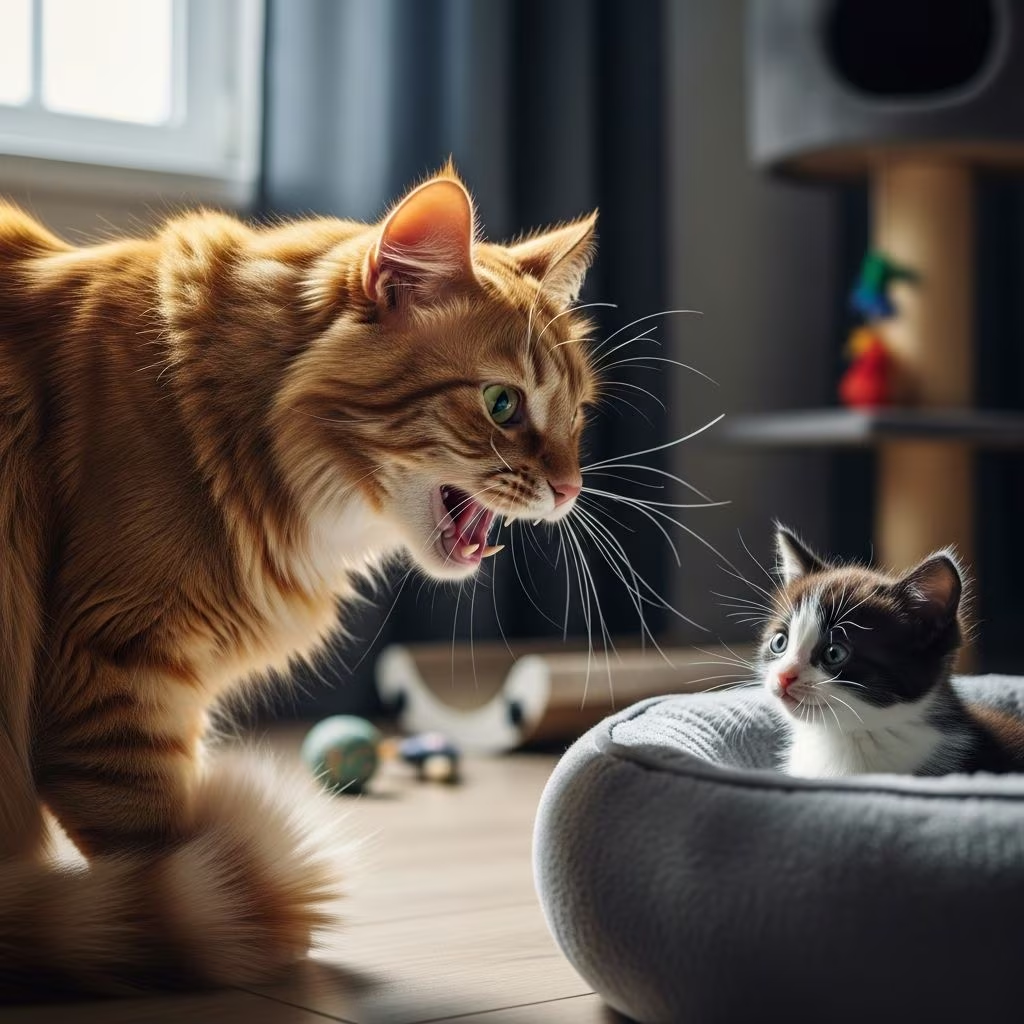
Introducing a new kitten to a resident cat often triggers hissing as a natural response to territorial changes and social adjustments. This behavior typically diminishes within days to weeks with proper management, leading to eventual acceptance.
Understanding the Roots of Hissing Behavior
Hissing serves as a feline warning signal, communicating discomfort or boundaries without physical escalation. When a kitten enters the home, the older cat perceives it as an intruder disrupting their established domain.
Several factors contribute to this reaction:
- Territorial Instincts: Cats bond deeply with their environment, viewing new arrivals as threats to resources like food bowls, resting spots, and litter areas.
- Resource Competition: The resident cat anticipates sharing attention, playtime, and essentials, sparking defensive posturing.
- Energy Mismatch: Kittens’ boundless playfulness overwhelms calmer adults, prompting irritation.
- Social Hierarchy Shifts: Older cats assert dominance to maintain status, using vocalizations to set rules.
Gender and similarity in appearance can intensify rivalry, with same-sex pairs or look-alikes more prone to tension. Health concerns or routine disruptions may exacerbate responses, warranting veterinary checks if sudden.
Expected Timeline for Adjustment
Most cats reduce hissing within 3-7 days of controlled introductions, with full tolerance emerging in 2-4 weeks. Progress varies by age, personality, and preparation—energetic matches adjust faster than mismatched pairs.
| Phase | Duration | Typical Behaviors |
|---|---|---|
| Initial Shock | 1-3 days | Frequent hissing, growling, avoidance |
| Curiosity Building | 4-10 days | Reduced vocalizations, distant observation |
| Acceptance | 2-4 weeks | Relaxed proximity, mutual grooming |
| Full Bonding | 1-3 months | Play together, shared sleeping |
Persistent aggression beyond a month signals intervention needs, such as professional behaviorists.
Signs Your Cat is Warming to the Kitten
Monitor body language for positive shifts indicating reduced stress and growing tolerance.
- Decreased hissing frequency, replaced by sniffing or ear twitching.
- Relaxed tail positions—no lashing or puffing.
- Curious approaches without swatting.
- Shared spaces without territorial marking.
- Initiating gentle play or proximity resting.
Conversely, ongoing stress shows as overgrooming, appetite loss, or spraying—promptly address these.
Step-by-Step Guide to Smooth Introductions
Prevent escalation through gradual exposure, mimicking natural feline socialization.
- Pre-Arrival Prep: Create kitten zones with separate essentials to avoid immediate competition.
- Scent Swapping: Exchange bedding daily for 3-5 days to familiarize odors safely.
- Visual Teasers: Use baby gates for supervised viewings, 5-10 minutes daily.
- Supervised Meets: Short sessions in neutral areas, intervening only if attacks occur.
- Positive Associations: Feed meals across barriers, progressing to side-by-side.
Maintain resident cat routines—extra play and treats reinforce security.
Daily Management Strategies for Peace
Support coexistence with consistent practices:
- Provide ample vertical spaces like shelves for escape routes.
- Distribute resources widely to minimize guarding.
- Use pheromone diffusers to calm tensions.
- Enrich environments with individual toys and perches.
- Schedule undivided attention for the older cat daily.
Allow mild hierarchy establishment—light swats teach boundaries without harm.
Nutrition and Treats to Encourage Bonding
High-quality, similar diets fed together build positive links. Reward calm interactions with small portions of cooked meats like chicken or fish, avoiding overfeeding.
Consider breed-temperament matches: High-energy adults pair best with playful kittens, while sedate ones suit mellow adoptees.
When to Seek Professional Help
If hissing evolves to biting, chasing, or injury after 4 weeks, consult vets for medical rules-outs or certified behaviorists. Extreme cases may need medication or rehoming considerations.
Common Myths About Cat-Kitten Dynamics
- Myth: Hissing Means Hate. Reality: It’s communication, not malice.
- Myth: Immediate Friendship is Normal. Reality: Patience yields stronger bonds.
- Myth: Older Cats Never Adapt. Reality: Most do with guidance.
FAQs
Why does my cat hiss at the new kitten constantly?
Hissing expresses territorial defense or uncertainty; it fades as familiarity grows.
How long until my cat accepts the kitten?
Typically 1-4 weeks, depending on introduction quality.
Should I punish hissing?
No—punishment heightens stress; use rewards for calm.
What if the kitten hisses back?
Normal reciprocity; separate briefly and retry gradually.
Can age gaps cause permanent issues?
Not usually—proper steps bridge most differences.
References
- Why is your cat hissing at a new kitten? Causes and solutions — Untamed. 2023. https://untamed.com/blogs/cat-care/cat-hissing-at-new-kitten
- Signs Your Cat is Accepting the New Kitten — No More Hissing! — DVM Central. 2024. https://www.dvmcentral.com/blogs/signs-your-cat-is-accepting-the-new-kitten
- Understanding Why Your Older Cat Hisses at Kittens — Cattree.uk. 2023. https://cattree.uk/understanding-why-your-older-cat-hisses-at-kittens/
- Why Do Cats Hiss at Kittens? A Veterinarian Explains — Cats.com. 2024. https://cats.com/cat-hissing-at-new-kitten



