

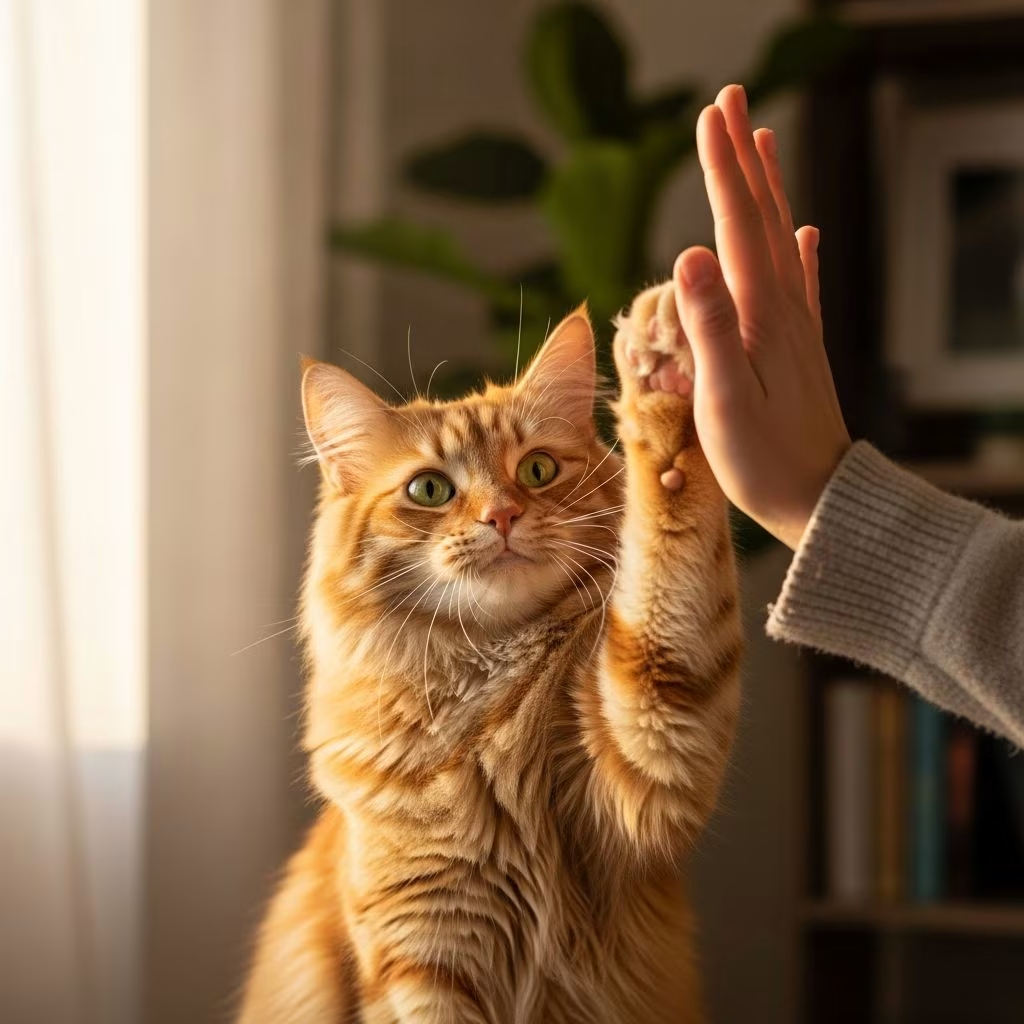
Cats high-fiving their owners has become a viral sensation, blending feline independence with moments of surprising cooperation. This simple trick not only entertains but also fosters deeper connections between pets and people. From step-by-step training guides to heartwarming examples, this article dives into everything you need to know about getting your cat to slap paws with you.
Why Teach Your Cat to High Five?
Training a cat to high five goes beyond mere amusement; it taps into their natural curiosity and desire for interaction. Cats respond well to positive reinforcement, where rewards like treats encourage desired behaviors. This method strengthens trust and provides mental stimulation, helping to prevent boredom-related issues like excessive scratching or meowing.
Behaviorally, cats may not grasp the human celebratory meaning of a high five, but they pick up on the positive energy and enthusiasm from their owners. The joy is mutual—your excitement reinforces their participation, creating a cycle of happiness. Regular short sessions keep cats engaged without overwhelming them, as repeated requests can lead to disinterest.
Understanding Feline Learning Basics
Cats learn through operant conditioning, a process where behaviors are shaped by consequences like rewards or lack thereof. Positive reinforcement—adding something desirable, such as treats—makes actions more likely to repeat. Unlike punishment, which can erode trust, this approach builds confidence.
Cats explore with paws, making paw-lifting a natural starting point for tricks. Tools like clickers help by marking exact moments of success, bridging the gap before delivering a treat. Sessions should last 5-10 minutes, ideally when your cat is hungry but not frustrated, to maximize focus.
Step-by-Step Guide: Target Stick Method
This beginner-friendly technique uses a stick to guide your cat’s paw.
- Charge the Clicker: Click and immediately give a treat 10-20 times. Your cat learns the sound signals rewards.
- Introduce the Target: Hold the stick near their nose. Click and treat when they touch it with their nose or paw.
- Raise the Target: Gradually lift the stick to paw height. Reward paw touches only.
- Transition to Hand: Replace the stick with your open palm at the same height. Say “high five” and reward contact.
- Fade Rewards: Offer treats intermittently to solidify the behavior without dependency.
Practice daily for 1-2 weeks; most cats master it quickly with consistency.
Alternative: Sticky Note or Cup Technique
For cats preferring tactile cues, try these variations.
| Method | Steps | Best For |
|---|---|---|
| Cup Method | 1. Place treat in cup, cover paw-side up. 2. Reward paw on cup. 3. Hold cup on your hand in high-five position. 4. Remove treat, then cup. | Cats motivated by food scents |
| Sticky Note | 1. Cover treat with note on floor. 2. Reward pawing note. 3. Move note to your hand, raise gradually. 4. Turn hand upright, fade note. | Visual or curious cats |
Both methods leverage a cat’s pawing instinct, evolving it into a precise high five.
Tips for Training Success
- Choose High-Value Rewards: Use tuna, chicken, or favorite treats over kibble.
- Timing is Key: Reward within 1-2 seconds of the paw lift.
- Keep Sessions Short: End on a high note to maintain enthusiasm.
- Enrich Environment: Play beforehand to burn energy, improving focus.
- Be Patient: Kittens learn faster; adults may take longer but retain better.
Avoid forcing paws or using punishment—these create fear and setbacks.
Common Challenges and Fixes
Not every cat high-fives on the first try. Here’s how to troubleshoot:
- Ignores Hand: Start closer, use stronger-smelling treats.
- Paws Too Low: Lure higher gradually; don’t rush.
- Bites or Scratches: Stop immediately, rebuild trust with gentle petting.
- Loses Interest: Vary rewards (toys, praise) and train when hungry.
- Overexcited: Provide play outlets first to calm excess energy.
If progress stalls, regress one step and rebuild.
Benefits Beyond the Trick
High five training enhances overall behavior. Cats gain confidence, reducing destructive habits. It mimics natural hunting sequences, satisfying instincts. Owners report stronger bonds, with cats seeking interaction more often.
Expand to other tricks like “sit” or “jump” once mastered—cats generalize training quickly.
Celebrate with Cat High Five Highlights
Nothing captures the charm like visual examples. Imagine a fluffy tabby leaping for a perfect paw slap, or a sleek Siamese delivering a sassy high five mid-yawn. These moments, often shared as GIFs, showcase diverse breeds: Persians with dainty taps, Maine Coons with powerhouse paws, and rescues proving any cat can learn.
Picture a sequence: owner extends hand, cat pauses dramatically, then smack!—pure glee ensues. Viral clips feature cats high-fiving to music, during games, or even with dogs, amplifying the fun. These inspire training, proving everyday cats achieve celebrity-level cuteness.
Science of Cat High Fives
Operant conditioning underpins success. B.F. Skinner’s principles show reinforcement shapes voluntary behaviors. Positive addition (treats) boosts repetition; cats choose participation, unlike reflexive conditioning.
Cats absorb human emotions as “energy sponges,” mirroring joy even if not fully comprehending the gesture. Brief enthusiasm spikes mirror their play style—intense but short-lived.
Advanced Variations
Level up with “double high five” (both paws) or “high ten” (paws on both hands). Chain to “wave” by adding a side paw flick. Use verbal cues like “up top!” for flair.
Group training for multi-cat homes builds harmony. Film progress for social sharing, boosting motivation.
FAQs
Can Any Cat Learn to High Five?
Yes, most cats can with patience. Age, breed, and personality influence speed, but positive methods work universally.
How Long Does It Take?
1-4 weeks with daily 5-minute sessions. Kittens: days; seniors: longer but doable.
What If My Cat Won’t Cooperate?
Check hunger, environment, rewards. Ensure no pain; consult a vet if needed.
Do Cats Enjoy High Fiving?
They thrive on the interaction and rewards, sensing owner happiness.
Can I Train Without Treats?
Yes, use praise or toys, but treats speed results. Mix later.
Final Thoughts on Paw-some Bonds
Mastering the cat high five transforms routine into celebration. It’s a gateway to endless tricks, laughter, and love. Start small, stay positive, and watch your cat’s paw meet yours in triumphant sync.
References
- Do Cats Understand the Meaning of High Fives? — Sparklecat.com. Accessed 2026. https://www.sparklecat.com/special/do-cats-understand-the-meaning-of-high-fives
- National High Five Day – How to Teach Your Cat to High Five — Hartz.com. Accessed 2026. https://www.hartz.com/national-high-five-day-is-april-21st-how-to-teach-your-cat-to-high-five/
- How to Teach Cat to High Five: The Step-By-Step Guide — Catster.com. Accessed 2026. https://www.catster.com/cat-health-care/how-to-teach-cat-to-high-five/
- How to Teach a Cat to High-Five — Kinship.com. Accessed 2026. https://www.kinship.com/uk/cat-behaviour/how-to-teach-a-cat-to-high-five
- I Taught My Cat How to High Five! — YouTube/Neuro Transmissions. 2018-05-06. https://www.youtube.com/watch?v=YSQ8RtYQHm4
- Cat Training: Teaching Your Cat to High-Five — HumaneColorado.org. Accessed 2026. https://humanecolorado.org/resources/cat-training-teaching-your-cat-to-high-five/



