

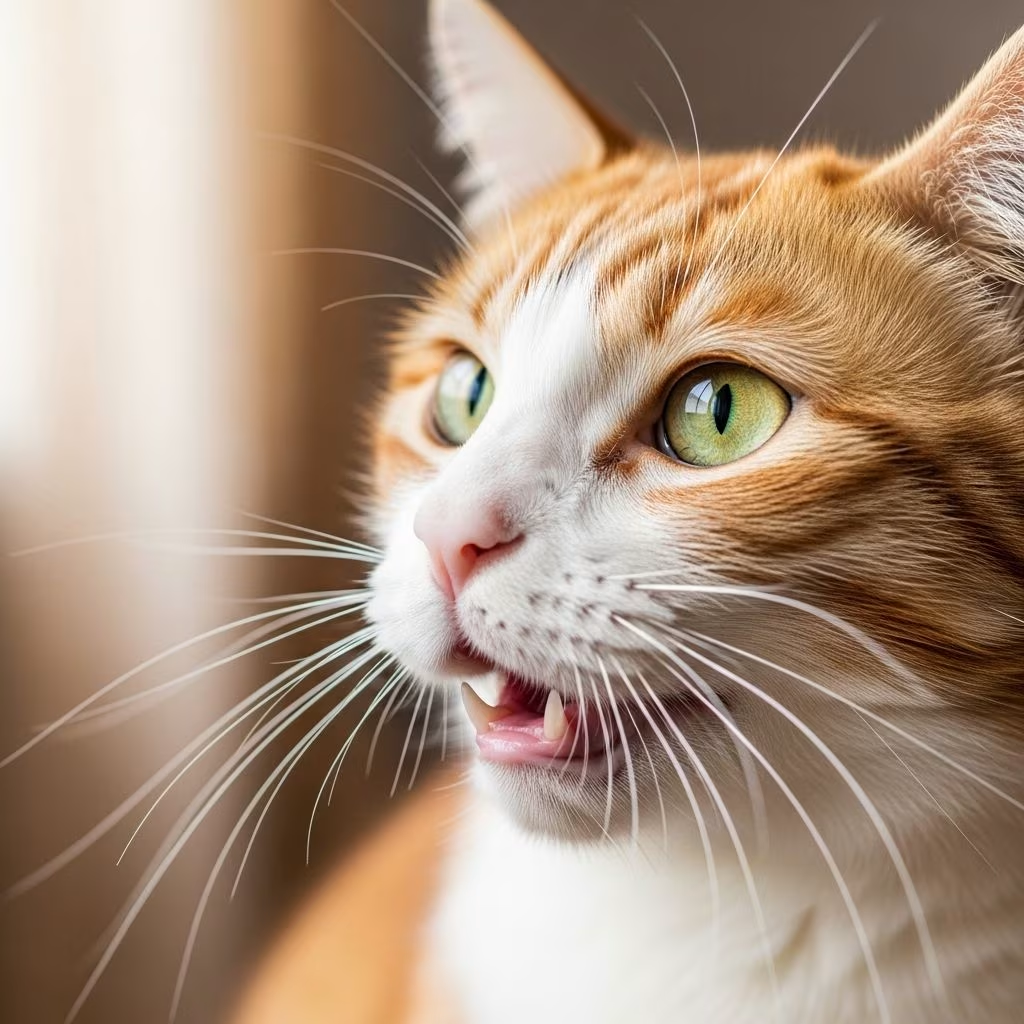
Female cats in heat produce a range of distinctive vocalizations, primarily loud and persistent meowing or yowling, to attract mates. These instinctual sounds, often described as caterwauling, can last from a few days to two weeks and vary by individual cat.
The Biology Behind Feline Estrus Cycles
Cats are seasonally polyestrous, meaning unspayed females experience multiple heat periods annually, typically from early spring to fall in regions with distinct seasons. Each cycle lasts 4-10 days if mating does not occur, triggered by rising daylight hours that stimulate hormonal shifts, particularly increased estrogen levels.
During estrus, the reproductive phase, ovarian follicles mature, preparing the cat for ovulation, which is induced by mating. This biological imperative drives vocal and behavioral changes to signal availability to males, ensuring species propagation even in low-density populations.
Primary Sounds of Cats in Heat
The hallmark sound is a prolonged, high-pitched meow or yowl, far louder and more insistent than everyday communication. Owners often liken it to screaming or wailing, audible across neighborhoods.
- Loud Meowing: Repetitive, escalating calls that intensify at night.
- Caterwauling: A drawn-out whine specific to unspayed females seeking mates.
- Yowling: Deep, howling tones mimicking distress to draw distant toms.
Some cats intersperse quieter vocalizations, like frequent normal meows or trills, reflecting heightened talkativeness. Purring may increase during affectionate moments or cease amid agitation.
Variations in Vocal Behavior Across Cats
Not every female cat vocalizes dramatically during heat. While most amplify their calls, quieter individuals rely more on scent marking.
| Behavior Type | Description | Prevalence |
|---|---|---|
| Loud Vocalizers | Persistent yowling and meowing | High (most common) |
| Quiet Vocalizers | Subtle increases or no change | Moderate |
| Silent Indicators | Pheromone rubbing without noise | Low |
Factors influencing volume include breed, age, environment, and prior cycles. Siamese cats, known for chattiness, often exhibit extreme vocalization, while others remain subdued.
Accompanying Body Language Signals
Vocalizations pair with physical cues amplifying the mating invitation. Recognizing these helps owners distinguish heat from distress.
- Raised hindquarters with tail deflection exposes vulva.
- Frantic rolling and rubbing spreads pheromones.
- Head-butting and kneading mimic mating postures.
- Increased affection or sudden aggression toward touch.
These actions, termed lordosis, can trigger spontaneously from petting the lower back, even without males present, underscoring hormonal dominance.
Why Cats Vocalize So Persistently in Heat
Evolutionary pressures explain the intensity: wild females must alert males kilometers away across territories. Domestic settings amplify the effect, as indoor cats lack natural outlets, leading to non-stop calling.
Hormones like estrogen heighten sensitivity, making silence unlikely until cycle resolution or mating. Unsuccessful heats restart promptly, perpetuating noise.
Strategies to Manage Heat-Related Noise
No non-surgical method silences a cat in heat reliably, as vocalizing is hardwired. Distractions like interactive toys or puzzle feeders offer temporary relief by expending energy.
Environmental enrichments, such as vertical spaces or pheromone diffusers, may soothe mildly, but effects vary. Confinement risks stress escalation.
The Role of Spaying in Eliminating Heat Cycles
Ovariohysterectomy (spaying) removes ovaries and uterus, halting estrus permanently. Ideal before first heat (4-6 months), it prevents noise, roaming, and cancers.
Key Benefits of Spaying
- Eliminates heat vocalizations and behaviors.
- Prevents uterine infections and mammary tumors.
- Reduces unwanted litters and shelter overcrowding.
- Lowers aggression and spraying in some cats.
Vets may delay procedures during active heat due to vascularity, but post-heat timing ensures success. Recovery spans 10-14 days with restricted activity.
Health Risks of Unmanaged Heat Cycles
Repeated heats elevate pyometra risk, a life-threatening uterine infection common in older unspayed cats. Mammary adenocarcinoma odds rise 7-fold without early spaying. Behavioral stress contributes to obesity from reduced activity.
Comparing Heat Sounds to Other Cat Vocalizations
Distinguishing heat calls from distress prevents unnecessary vet visits.
| Sound | Context | Duration/Tone |
|---|---|---|
| Heat Yowl | Estrus attraction | Prolonged, rhythmic, high-pitched |
| Pain Meow | Injury/illness | Sharp, irregular, low-pitched |
| Attention Seek | Hunger/boredom | Short, repetitive, varied pitch |
| Anxiety Howl | Stress/disorientation | Intermittent, mournful |
Sudden vocal shifts always merit veterinary evaluation to rule out pain or cognitive issues in seniors.
FAQs About Cat Heat Sounds
What does a cat in heat sound like?
A mix of loud, insistent meows, yowls, and caterwauls resembling screams or whines, often continuous day and night.
How long do cats stay in heat and vocalize?
Typically 7-10 days per cycle, multiple times yearly without spaying or pregnancy.
Do male cats make heat sounds?
No, males vocalize during mating pursuits but lack true heat cycles; yowling signals territory or response to females.
Can I calm my cat’s heat meowing without spaying?
Limited success with play, comfort, or isolation, but instincts prevail until cycle ends.
Is it too late to spay an adult cat that yowls in heat?
Never; benefits persist, though cancer risks accumulate with age.
Audio Examples and Observation Tips
Search platforms host recordings of heat vocalizations, depicting raw intensity (e.g., persistent howling loops). Observe timing: peaks nocturnally, easing post-mating simulation or cycle end.
Track patterns via notes or apps to predict cycles and consult vets timely.
References
- Cat Noises and What They Mean — PetMD. 2023-10-15. https://www.petmd.com/cat/general-health/cat-noises
- Spaying in Cats — American Veterinary Medical Association (AVMA). 2024-02-01. https://www.avma.org/resources-tools/pet-owners/petcare/spaying-cats
- Feline Reproduction — Merck Veterinary Manual. 2025-01-10. https://www.merckvetmanual.com/cat-owners/disorders-affecting-multiple-body-systems-of-cats/reproductive-disorders-of-cats
- Behavioral Changes in Estrus — Journal of Feline Medicine and Surgery. 2022-05-20. https://journals.sagepub.com/doi/full/10.1177/1098612X221099999
- Pyometra Prevention — Cornell University College of Veterinary Medicine. 2024-08-12. https://www.vet.cornell.edu/departments-centers-and-institutes/cornell-feline-health-center/health-information/feline-health-topics/pyometra-managed-and-unmanaged
(Word count: 1678)



