

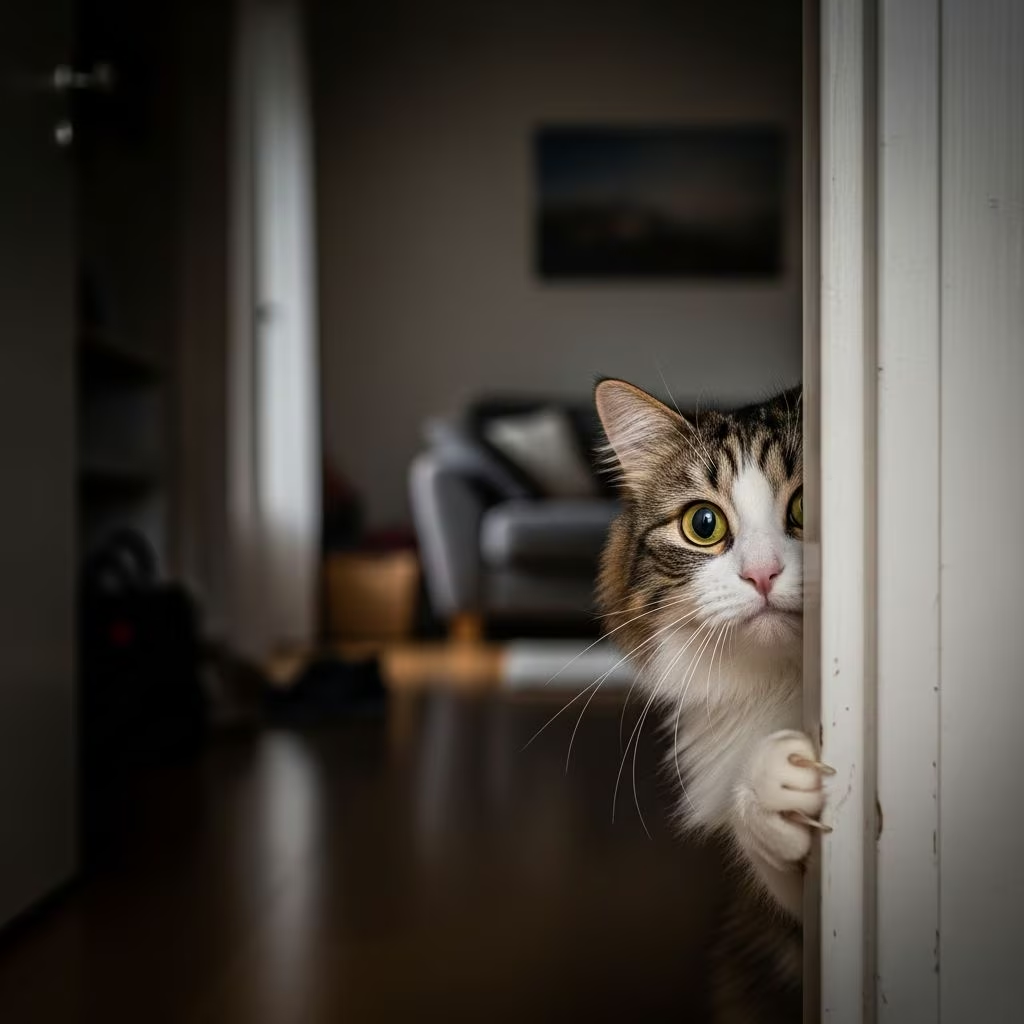
Help! My Cat Hates Visitors: Understanding and Managing Your Cat’s Anxiety
If your cat transforms into a hissing, defensive furball whenever guests arrive, you’re not alone. Many cat owners struggle with their feline companions’ negative reactions to visitors. The good news is that with understanding, patience, and the right training techniques, you can help your cat become more comfortable around guests. Whether your cat hides, displays aggression, or shows signs of extreme stress, there are proven strategies to address these behaviors and create a more harmonious environment for both your pet and your visitors.
Why Do Cats Dislike Visitors?
Understanding the root causes of your cat’s aversion to visitors is the first step toward addressing the problem. Cats aren’t simply antisocial by nature; their reactions are typically rooted in legitimate behavioral and emotional concerns.
Territorial Instincts
Cats are hardwired to defend their territory from unfamiliar animals and people. This instinct dates back to their wild ancestors, who needed to protect limited resources such as food, water, and shelter. When visitors enter your home, they’re essentially entering your cat’s domain, which can trigger a strong defensive response. Your cat perceives the intrusion as a potential threat to their established environment and resources.
Stranger Danger and Unpredictability
Unlike dogs, who often thrive on social interaction with new people, cats are more selective about who they allow into their trusted circle. Strangers represent unpredictability—they bring unfamiliar scents, different vocal tones, and unpredictable behaviors that can make cats deeply uneasy. What looks like antisocial behavior is often a protective mechanism against the unknown.
Stress from Environmental Changes
Visitors often bring significant changes to your cat’s carefully managed environment. Loud conversations, sudden movements, children running around, and unfamiliar scents can overwhelm your cat’s sensitive senses. What appears to humans as a normal social gathering can feel like controlled chaos to your feline companion, triggering a stress response that manifests as defensive behavior.
Recognizing Your Cat’s Stress Signals
Before your cat reaches the point of hissing, swatting, or attempting to bite, they typically display warning signs. Learning to recognize these signals allows you to intervene before the situation escalates.
When a visitor appears nearby and peers at your cat with interest, your cat may interpret this as an ambush. If the visitor reaches toward your cat, it might push your feline friend over the threshold of being able to stay calm. The resulting defensive display can include a puffed-up appearance, growling sounds, hissing, swatting with paws, scratching with claws, and dashing away.
Early warning signs include dilated pupils, flattened ears, tail tucking, crouching in preparation to flee, or excessive grooming and pacing. By recognizing these signals, you can guide your cat to safety before they feel forced to escalate their defensive behaviors.
Creating a Safe Space for Your Cat
One of the most effective strategies for managing visitor-related stress is providing your cat with a designated safe space where they can retreat when feeling overwhelmed.
Setting Up the Perfect Refuge
Choose a quiet room away from the main living area where visitors typically gather. This room should be fully stocked with everything your cat needs:
– A cozy bed or hiding spot- A scratching post for stress relief- A litter box placed away from food and water bowls- Fresh water and food- Toys for mental stimulation
Using Calming Tools
Consider using cat calming sprays or pheromone diffusers such as Feliway to promote relaxation in the safe space. These products mimic natural feline pheromones and can significantly reduce anxiety. Keep the door to the safe room slightly ajar so your cat can choose whether to come out and interact or remain in their refuge.
This approach ensures your cat never feels forced into interactions, dramatically reducing the likelihood of defensive behavior and allowing your feline to regulate their own comfort level.
Educating Your Visitors
Not every guest understands cat behavior or respects feline boundaries. Providing clear guidelines ensures your cat’s comfort is prioritized during visits.
Key Visitor Guidelines
– Ask visitors not to stare directly at your cat, as prolonged eye contact may feel threatening- Suggest they sit calmly and allow your cat to approach on their own terms- Teach children to respect feline boundaries—no chasing, grabbing, or loud vocalizations- Encourage guests to offer treats on the floor rather than attempting to hand-feed or touch immediately- Request that visitors avoid sudden movements or loud noises
By establishing these guidelines before guests arrive, you create a framework that respects your cat’s needs while allowing for potential positive interactions.
Gradual Desensitization: The Key to Long-Term Success
Desensitization involves exposing your cat to visitors in a slow, controlled manner so they learn that strangers are not inherent threats. This process takes time and consistency but can produce remarkable results.
Steps for Effective Desensitization
– Start small: Begin with brief, low-stimulation visits. Ask visitors to sit quietly without approaching or directly acknowledging your cat- Use positive reinforcement: Reward your cat with treats or praise when they remain calm in the visitor’s presence- Gradually increase exposure: Over subsequent visits, extend the duration, involve more people, or have guests move around more freely- Monitor progress: Keep detailed notes on your cat’s reactions to identify triggers and celebrate improvements- Build associations: Over time, your cat will associate visitors with positive outcomes rather than stress
This gradual approach respects your cat’s emotional capacity and allows them to develop confidence in manageable increments.
Counter-Conditioning: Pairing Visitors with Positive Experiences
Counter-conditioning is a powerful technique where you pair something your cat absolutely loves with the arrival of visitors. If your cat believes people are scary, this method can fundamentally shift their emotional response.
Implementing Counter-Conditioning
Identify what your cat loves most—whether it’s high-value treats, playing with a feather wand toy, being brushed, or enjoying catnip. When a visitor arrives, keep the intensity of the experience low by having the visitor sit far away from your cat while you engage in the beloved activity. This creates a powerful positive association.
Pick a cue word that signals the visitor to quietly leave the room or home as you stop the activity. This is crucial because you want your cat to understand that the arrival of the visitor makes the good thing happen. When the visitor leaves, all positive attention should also stop. Repeating this regularly can transform your cat’s emotional response to visitors, as they begin to associate the arrival of guests with enjoyable experiences.
Managing Redirected Aggression and Resource Guarding
Sometimes, a cat’s aggressive behavior toward visitors stems from redirected aggression or resource guarding rather than direct fear. This occurs when your cat is frightened or aroused by an unrelated trigger—perhaps a loud sound—and redirects that aggression toward the nearest available target, which happens to be the visitor.
Prevention Strategies
To minimize these behaviors:
– Feed pets separately during visits to prevent resource guarding over food- Remove high-value toys or chews that could spark competition- Ensure each pet has access to their own essentials, such as separate water bowls or sleeping spots- Try to identify what specifically frightens or arouses your cat before redirected aggression occurs
When to Seek Professional Help
While many cases of visitor anxiety can be successfully managed with the strategies outlined above, some situations warrant professional intervention.
Signs You Need Expert Support
– Severe aggression: Biting, scratching, or lunging at visitors- Chronic stress behaviors: Persistent hiding, vocalization, or pacing that doesn’t improve with calming strategies- Health-related concerns: Stress-induced medical issues, such as over-grooming leading to hair loss or inappropriate urination/defecation- Long-standing problems: Issues that have persisted over multiple family visits or worsened over time- Impact on quality of life: Your cat appears anxious or unhappy even when visitors leave
A veterinary behaviorist can assess your specific situation, identify underlying causes, create a tailored behavior modification plan, and recommend medication if necessary to reduce your cat’s baseline anxiety and make behavior modification efforts more effective.
Pre-Visit Preparation Strategies
Preparing your home and cat before visitors arrive can significantly reduce stress and prevent behavioral problems.
Introduction to Guest Scents
If possible, introduce your cat to the scent of your family members before their visit. Ask guests to send a shirt or scarf with their scent and place it near your cat’s bed. Create positive associations by offering treats or play when your cat interacts with the item. This pre-exposure can ease future in-person interactions.
Environmental Preparation
– Ensure the safe room is prepared and accessible- Have calming products available and activated- Brief your visitors on expectations and guidelines before they arrive- Plan activities that keep your cat positively occupied during visits- Keep the environment as calm as possible during the visit
Real-World Success Stories
Understanding that other cat owners have successfully navigated similar challenges can provide hope and inspiration.
Case Study: Luna’s Journey
Luna, a previously shy cat, initially hid immediately when visitors arrived. Her owners created a safe room with a bed, litter tray, food, and pheromone diffuser. Visitors were instructed not to approach Luna but to leave treats near her hiding spot. Gradual desensitization was introduced with quiet guests sitting in the living room while Luna observed from a distance. After three months, Luna no longer hid immediately. She still kept her distance but would cautiously observe visitors without aggression. By the six-month mark, she began approaching trusted guests for sniffing and occasional pats.
Case Study: Jasper’s Behavioral Improvement
Jasper initially displayed redirected aggression during visits. His owners exercised him before guests arrived and introduced him on a lead. Baby gates separated him from cats during initial visitor arrival, and puzzle feeders were given to the cats to distract them. Within weeks, Jasper stopped redirecting aggression onto the cats. While still wary of strangers, he used his safe perch to watch visitors instead of lashing out.
Frequently Asked Questions
Q: How long does it typically take for a cat to become comfortable with visitors?
A: The timeline varies depending on your cat’s age, past experiences, and temperament. Some cats show improvement within weeks, while others may take several months. Consistency with training techniques is more important than speed.
Q: Can medication help my cat feel less anxious about visitors?
A: Yes, in some cases, veterinary behaviorists may prescribe anti-anxiety medication to help reduce your cat’s baseline anxiety, making behavior modification efforts more effective. Consult your veterinarian to determine if medication is appropriate for your situation.
Q: What if my cat has never been socialized as a kitten?
A: Adult cats can still learn to become more comfortable with visitors through desensitization and counter-conditioning. Progress may be slower than with kittens, but many adult cats show significant improvement with patience and consistent training.
Q: Should I force my cat to interact with visitors?
A: Never force interaction. Forcing your cat to engage with visitors will increase fear and aggression. Always allow your cat to approach visitors on their own terms and provide an escape route to the safe space.
Q: Are certain cat breeds more prone to disliking visitors?
A: Individual temperament varies more than breed tendencies. However, some cats are naturally more reserved or independent. Regardless of breed, the training strategies outlined in this article can help any cat become more comfortable with visitors.
Q: What should I do if my cat attacks a visitor?
A: Immediately guide your cat to the safe room or use a towel to create a barrier between your cat and the guest. Keep a heavy towel handy for quick coverage if your guest is in danger. After the incident, consult a veterinary behaviorist to address the underlying causes and prevent future attacks.
References
- Does Your Cat Hate Visitors? Training Tips for Aggression & Anxiety — Pet Care Shed. 2025. https://petcareshed.com.au/blogs/pet-supplies/cat-hates-visitors-training-anxiety-aggression
- Help! My Cat Hates Visitors! — Chewy Education. 2025. https://www.chewy.com/education/cat/training-and-behavior/help-my-cat-hates-visitors
- Help! My Family is Visiting for the Holidays and My Cat Hates Them! — Veterinary Behavior Minnesota. 2025. https://vetbehaviormn.com/help-my-family-is-visiting-for-the-holidays-and-my-cat-hates-them/
- Cat Behavior Problems Aggression Towards Visitors — VCA Hospitals. 2025. https://vcahospitals.com/know-your-pet/cat-behavior-problems-aggression-towards-visitors



