

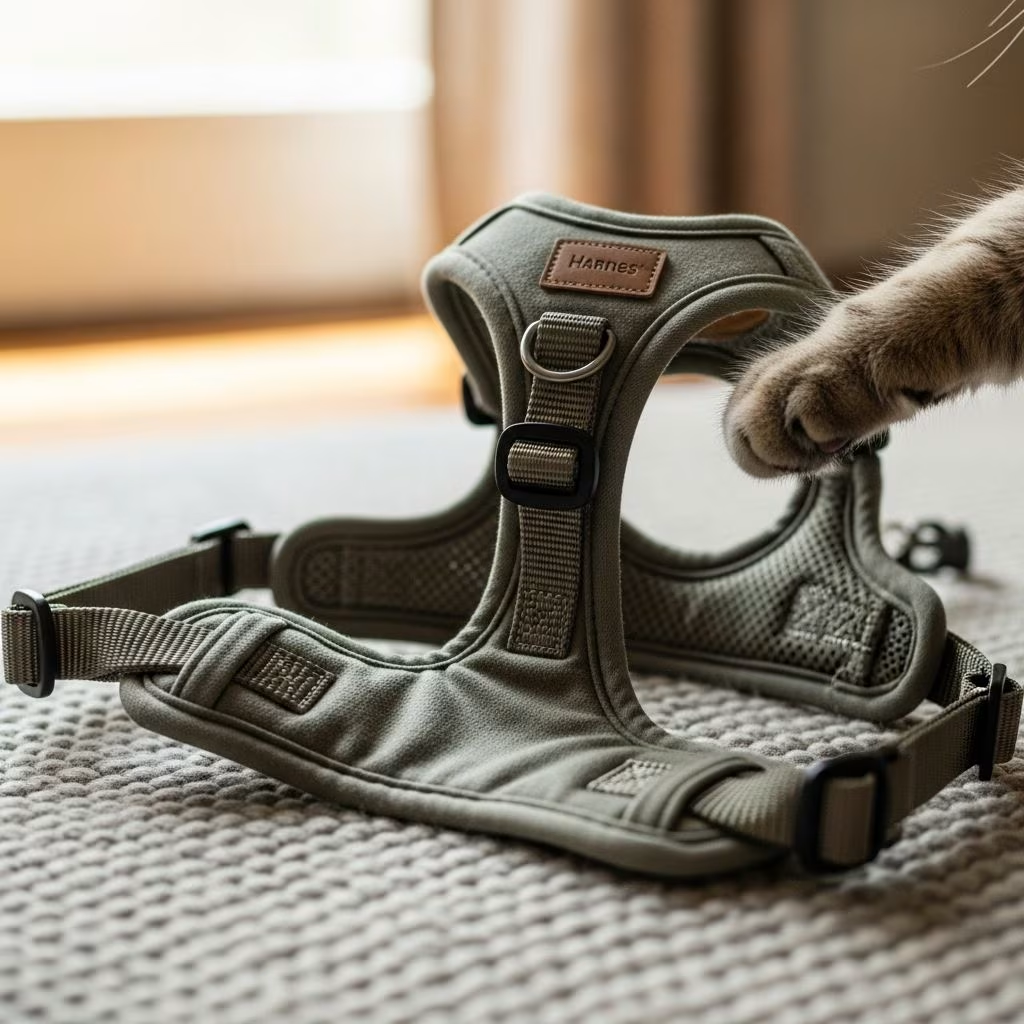
Walking your cat outdoors can open up new worlds of exploration, exercise, and bonding, but it requires the right equipment and preparation. A well-chosen and properly fitted harness ensures safety while minimizing stress for your cat. This guide covers everything from selection to advanced training techniques, drawing on proven methods to help your pet adapt comfortably.
Why Choose a Harness Over a Collar?
Traditional collars pose risks during walks because they can slip off easily or cause choking if your cat pulls or gets caught. Harnesses distribute pressure across the chest and shoulders, preventing injury to the delicate neck area. They are especially crucial for cats with breakaway collars designed to release under tension, which are unsuitable for leashing.
Benefits include enhanced security, better control, and reduced strain. For indoor-outdoor cats or those transitioning to harness use, starting young yields the best results, though adults can learn with patience.
Types of Cat Harnesses: Finding the Perfect Match
Several harness styles cater to different cat sizes, temperaments, and activity levels. Understanding their features helps you pick one that balances comfort and security.
- Vest-Style Harnesses: These wrap around like a snug vest, offering full coverage and escape resistance. Ideal for Houdini-like cats due to less wiggle room. Breathable fabrics prevent overheating, and they suit larger or active felines well.
- H-Style Harnesses: Feature two loops connected by a central strap around the neck and belly. Adjustable for custom fits, but some designs risk neck pressure during pulls—opt for models with ergonomic adjusters.
- Step-In Harnesses: User-friendly for seniors or less flexible cats; guide front paws in, then secure. Great for beginners but may allow escapes if not tightened properly.
For large cats, prioritize breathable, secure large-sized options like vests or H-styles. Adults benefit from medium/large lightweight designs with flexibility.
Sizing Your Cat’s Harness Correctly
A poor fit compromises safety and comfort. Measure your cat’s neck and chest girth with a soft tape—add space for growth in kittens. The golden rule: two fingers should fit between the harness and skin for snugness without pinching.
| Harness Size | Neck (inches) | Chest Girth (inches) | Best For |
|---|---|---|---|
| XXS | 6-8 | 10-13 | Kittens |
| XS/S | 8-10 | 13-16 | Small adults |
| M/L | 10-13 | 16-22 | Large adults |
Adjust all straps—neck, belly, and back—for even distribution. Test by gently tugging; the harness shouldn’t shift excessively.
Step-by-Step Guide to Fitting Different Harnesses
Fitting a Vest Harness
- Lay it flat and let your cat investigate.
- Drape over the back, smaller strap behind neck, larger behind front legs.
- Secure neck loop first, then leg straps with Velcro or buckles.
- Adjust until two-finger fit; ensure no rubbing.
Fitting an H-Style Harness
- Pre-adjust loops to estimated size.
- Buckle smaller around neck, larger around belly.
- Fine-tune back strap so loops align without pulling.
Fitting a Step-In Harness
- Guide front paws through openings.
- Slip front over head and clip back buckle.
- Adjust for comfort, rewarding calm behavior.
Always supervise initial wear indoors. If your cat freezes or flops, it’s normal—progress slowly with treats.
Comprehensive Harness Training Program
Training builds positive associations over days or weeks. Rush it, and your cat may resist forever.
Phase 1: Introduction (Days 1-3)
- Place harness nearby for sniffing; sprinkle catnip or treats around it.
- Gently touch and lift it over them without fastening—praise lavishly.
Phase 2: Wearing Indoors (Days 4-7)
- Fasten loosely for 5-10 minutes; stay nearby, offering play or food.
- Gradually extend time, attaching a dragging leash (supervised).
Phase 3: Leash Introduction (Week 2)
- Clip leash; let cat drag it indoors while you follow loosely—no pulling.
- Practice ‘follow me’ with treats, maintaining slack to avoid backward slips.
Phase 4: Outdoor Ventures (Week 3+)
- Start in a secure yard; hold leash behind cat at back level for control.
- Short sessions (5 mins), building to walks. Always allow retreat options.
Key tip: Position yourself behind with slack leash to prevent escapes—taut lines give leverage to wriggle out.
Safety Protocols for Harness Walks
No harness is foolproof; cats’ flexible spines enable escapes. Mitigate risks:
- Microchip and ID: Essential if they bolt—update details.
- Leash Management: 4-6 ft non-retractable; avoid tension.
- Environment Check: Quiet areas first; watch for traffic, dogs, hazards.
- GPS Trackers: For escape artists, embed in harness pockets.
- Post-Walk: Remove harness immediately to prevent snags indoors.
Breathable, adjustable models with no-choke designs enhance safety.
Common Challenges and Fixes
| Issue | Solution |
|---|---|
| Cat backs out | Tighter fit, vest style, back-positioned handler. |
| Freezing/Flopping | Short sessions, high-value rewards, patience. |
| Neck Strain | Avoid H-styles if pulling; check adjustments. |
| Resistance to Wear |
Enhancing the Experience: Gear and Tips
Pair harness with a sturdy leash, treats, and carriers for transport. For travel, add portable bowls and beds. Kittens train fastest, but seniors succeed with gentle step-ins.
Frequently Asked Questions (FAQs)
Can all cats be harness trained?
Most can with patience; shy cats need slower pacing. Consult vets for health issues.
How tight should a harness be?
Snug with two-finger gap—no shifting, no discomfort.
Is outdoor walking stressful for cats?
Potentially, so train gradually and respect their pace. Many thrive outdoors.
What if my cat escapes the harness?
Prevent with proper fit and handling; microchip ensures recovery.
Best harness for kittens?
Adjustable vest or step-in in XXS, lightweight.
Advanced Tips for Confident Walkers
Once mastered, vary routes, introduce gentle commands like ‘stop’ with treats. Monitor for fatigue—cats tire faster than dogs. Regular vet checks confirm harness compatibility.
References
- A Step-by-Step Guide to Cat Harness Training — KittyCatGO. 2023. https://kittycatgo.com/cat-harness-training-guide/
- How to Put on a Cat Harness the Right Way — Your Cat Backpack. 2023. https://yourcatbackpack.com/blogs/cat-backpack-tips-and-advice/put-on-cat-harness-correct-way
- Cat harness and lead — Cats Protection. 2024-02-17. https://www.cats.org.uk/cats-blog/should-i-walk-my-cat-on-a-harness-and-lead
- The Ultimate Guide to Cat and Dog Harnesses — AMM Pouree. 2023. https://www.ammpoure.com/blogs/smart-purchase/the-ultimate-guide-to-cat-and-dog-harnesses-comfort-safety-control
- The Ultimate Guide to Cat Harness Training for Beginners — Rabbitgoo. 2023. https://www.rabbitgoo.com/blogs/news/harness-train-cat
- Cat Harnesses – Your Ultimate Guide — Chumka’s Corner. 2023. https://www.chumkascorner.com/cat-harnesses-your-ultimate-guide/



