

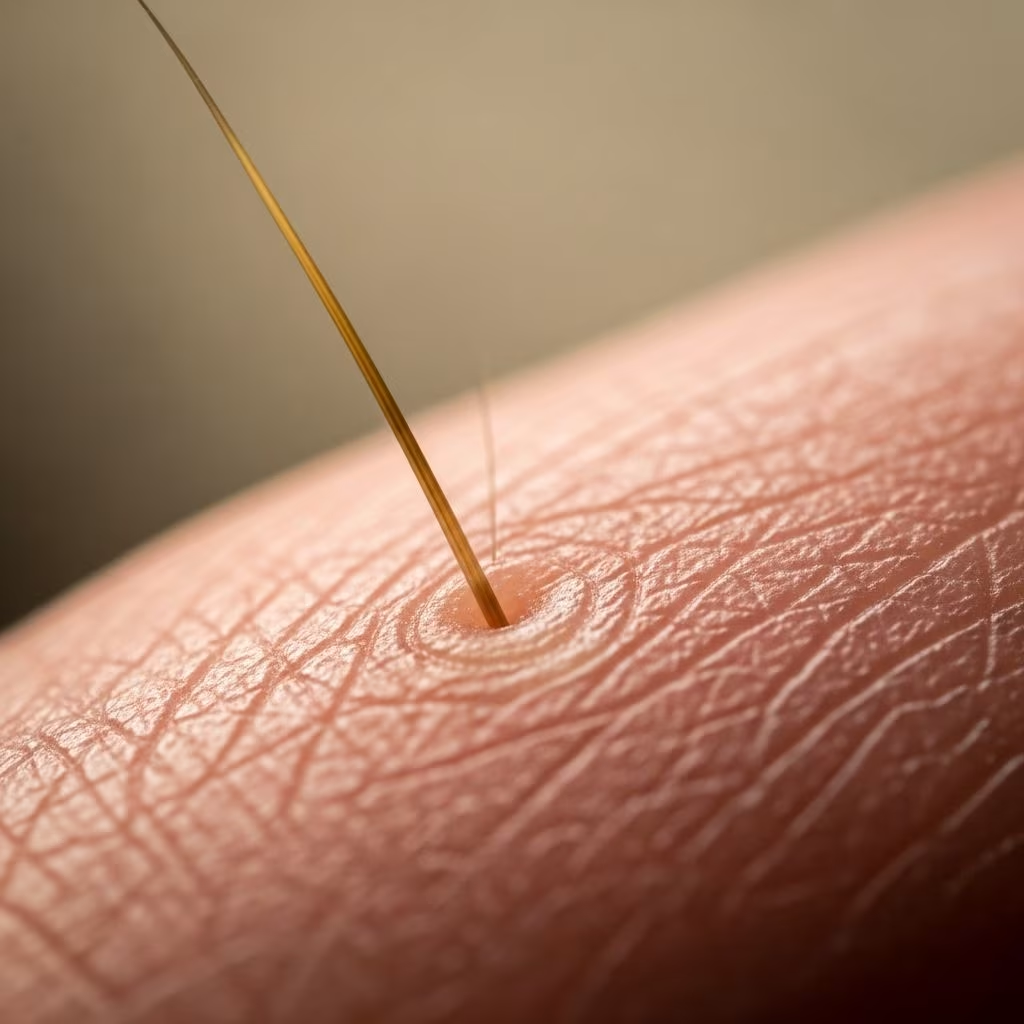
The question of whether cat hair can pierce or penetrate human skin has fascinated both pet owners and medical professionals for years. While the hair itself may seem too delicate to cause significant injury, evidence suggests that under specific circumstances, cat hair and other animal hair fragments can indeed embed themselves in the skin, sometimes causing complications. Understanding the mechanics of this phenomenon, the conditions that enable it, and appropriate preventive measures can help cat owners protect themselves from these potential injuries.
The Mechanism Behind Hair Penetration into Skin
Hair penetration occurs through a combination of factors related to both the hair’s physical properties and skin vulnerability. When hair enters the skin, it typically does so as a result of mechanical force or friction rather than the hair itself being naturally sharp enough to cut through skin like a blade. The process often involves hair becoming embedded in areas where the skin is thin, sensitive, or already compromised by minor abrasions.
The physical characteristics of hair make certain types more likely to penetrate than others. Coarse, short, and thick hair strands pose a greater risk compared to fine or long hair, as their structural rigidity allows them to maintain a pointed or tapered shape that can more easily lodge into skin tissues. When these hair fragments become embedded, the body’s natural immune response activates, recognizing the hair as a foreign object and attempting to expel it, which can lead to inflammation and irritation.
Direct Trauma from Cat Claws Versus Hair Splinters
It is important to distinguish between two separate phenomena involving cats and skin injury: trauma from cat claws and potential hair splinter injuries. Cat claws are demonstrably capable of creating punctures in human skin, particularly when cats engage in kneading behavior on clothed individuals. These punctures can form distinctive grouped marks and may create entry points for bacterial infection if not properly cleaned.
However, the actual hair itself presents a different consideration. Direct penetration of individual cat hair shafts into the epidermis (outer skin layer) is less common than penetration from coarser animal hairs, such as those from dogs. Cat hair tends to be finer and more flexible, which reduces its ability to penetrate intact skin. Nevertheless, when thin clothing or pre-existing skin damage is present, even delicate cat hair can potentially become embedded.
Clinical Evidence of Hair-Induced Skin Conditions
Medical literature documents several conditions related to hair penetration and embedding in human skin. These conditions provide insight into how animal hair, including potentially cat hair, can affect skin health:
- Cutaneous Pili Migrans: This condition occurs when a hair fragment embeds itself in the skin and migrates through the epidermal layer, often leaving a visible dark line or track. Affected individuals typically report localized pain and may notice the visible track on the skin surface. Dermoscopy examination can reveal the embedded hair fragments within the superficial skin layers.
- Interdigital Pilonidal Sinus: Also referred to as barber’s disease, this condition develops when hair penetrates areas of the body not typically covered in hair, such as the plantar surface of the foot. The immune system’s response to the foreign hair creates a small channel or sinus tract that can become infected if not properly treated.
- Felis Punctatis: A trauma-associated condition specifically caused by cat claw penetration during kneading behavior, resulting in distinctive grouped skin punctures. This condition differs from hair splinters but represents feline-related skin injury.
Risk Factors and Vulnerable Populations
Certain individuals face elevated risk of experiencing cat hair or feline-related skin injuries. Pet groomers, veterinary professionals, and individuals who frequently handle cats are more likely to encounter situations where hair splinters can develop. Additionally, people who permit cats to engage in kneading behavior on exposed or thinly clothed skin face increased risk of claw-related punctures that might introduce hair fragments into the skin.
Specific anatomical locations present higher vulnerability. Feet and hands are common sites for hair splinter development, as these areas experience regular friction and pressure that can drive hair fragments into the skin. The plantar surface of the foot, in particular, appears susceptible to both hair splinters and pilonidal sinus formation due to the constant pressure and friction experienced during walking and standing.
Symptoms and Identification of Embedded Cat Hair
Recognizing when cat hair has penetrated the skin requires awareness of specific symptoms and visual indicators:
- Localized pain or tenderness in the affected area, which may worsen with pressure or movement
- Visible erythema (redness) or inflammation surrounding the embedded hair
- A dark line visible on the skin surface, particularly in cases of cutaneous pili migrans
- Swelling or edema in the region where the hair has embedded
- In some cases, the hair itself may be visible protruding slightly from the skin
- Signs of infection including pus, increased warmth, or systemic symptoms in severe cases
Dermoscopy, a non-invasive imaging technique, can help healthcare providers identify hair fragments embedded in the skin and determine the appropriate removal approach.
Removal Techniques and Treatment Approaches
Proper removal of embedded cat hair or other animal hair fragments requires both care and appropriate tools to prevent complications:
| Removal Method | Best Use Case | Considerations |
|---|---|---|
| Tweezers | Hair partially visible at the surface | Sterilize tools first; grasp hair close to the skin and pull at the angle of penetration |
| Sterilized Needle | Deeply embedded hair fragments | Gently lift or separate the skin to expose the hair; may require multiple attempts |
| Combination Approach | Partially embedded or stubborn hairs | Use needle to expose and lift, then tweezers to extract; immediate pain relief typically follows successful removal |
| Medical Professional Removal | Hair near sensitive areas or deep embedding | Recommended for facial, periocular, or deeply embedded fragments to prevent complications |
Following successful removal, proper wound care is essential. The area should be thoroughly cleaned with soap and water, dried gently, and treated with topical antibiotic ointment such as mupirocin 2% to prevent secondary bacterial infection. A sterile bandage should cover the wound until it heals completely.
Prevention Strategies for Cat Owners
While complete prevention may not be possible for those living with cats, several practical strategies can significantly reduce the risk of hair-related injuries:
- Nail Maintenance: Regular trimming of cat claws reduces the depth and severity of punctures during kneading behavior. Keeping the sharp curved tip of each nail trimmed short prevents cats from penetrating deeply into skin or clothing.
- Nail Guards: Commercial nail guards designed for cats provide a barrier that dulls the points of claws, reducing penetration capability.
- Clothing Selection: Wearing thicker, more substantial clothing while cats knead provides physical protection. Studies show that skin punctures are more likely to occur when wearing thin shirts compared to thick garments.
- Behavior Management: Training cats to knead on designated blankets or cushions rather than directly on human skin minimizes exposure to claw trauma.
- Immediate Wound Care: Clean any scratches or punctures immediately with soap and water to reduce infection risk and remove hair fragments.
- Hygiene Practices: Individuals who work with cats professionally should maintain rigorous hand hygiene and consider protective equipment during grooming or handling.
When to Seek Medical Attention
While many minor hair splinters resolve without intervention, certain situations warrant professional medical evaluation. Consult a healthcare provider if:
- The embedded hair is located near the eye or other sensitive facial areas
- The hair fragment is too deeply embedded for safe home removal
- Signs of infection develop, including increased redness, warmth, swelling, or pus discharge
- You experience systemic symptoms such as fever or lymph node enlargement
- A dark line begins appearing on the skin, suggesting cutaneous pili migrans
- Pain persists or worsens despite removal attempts
- The condition does not resolve within two to three weeks
Understanding Infection Risks
While uncomplicated hair splinters typically heal without serious consequences, the risk of secondary bacterial infection exists, particularly if the wound is not kept clean or if removal causes additional skin trauma. Bacteria can enter through the wound channel created by the embedded hair, potentially leading to localized or systemic infection.
Cats may also transmit specific zoonotic infections through skin punctures or wounds. For instance, sporotrichosis, a fungal infection, has been documented as transmissible through kneading-related punctures and scratches. Additionally, Bartonellosis (cat scratch fever) can result from feline scratches or bites that create breaks in the skin barrier.
The Distinction Between Cat Hair and Claw Injuries
Understanding the difference between injuries caused by cat claws and those from hair splinters helps individuals respond appropriately. Cat claw punctures are clearly visible, often create grouped marks, and occur during recognizable events such as kneading or scratching. These punctures may introduce hair fragments into the wound but result primarily from mechanical trauma created by the sharp claw tips.
Hair splinter injuries, by contrast, may develop more gradually and can occur without obvious traumatic events. The individual hair fragment may be difficult to visualize without magnification, and symptoms may develop hours or days after the initial embedding occurs.
Frequently Asked Questions
Q: Is cat hair naturally sharp enough to pierce skin?
A: Cat hair is generally too fine and flexible to pierce intact skin on its own. However, under conditions of mechanical force, friction, or pre-existing skin damage, cat hair can become embedded, particularly if it combines with pressure from other activities.
Q: How common are hair splinters from cat exposure?
A: Hair splinters are considered uncommon in the general population but may occur more frequently among pet groomers and professionals who handle cats regularly. The actual incidence from cat hair specifically is lower than from coarser animal hairs like dog hair.
Q: Can cat hair cause serious infection?
A: While uncomplicated hair splinters usually heal without serious complications, secondary bacterial infection is possible if the wound is not kept clean or if cat scratches transmit zoonotic pathogens. Proper wound care and prompt removal of embedded hair minimize infection risk.
Q: How long does it take for an embedded hair to cause problems?
A: Symptoms can develop within hours or over several days, depending on the depth of embedding and individual immune response. Pain relief is typically immediate following successful removal.
Q: Should I use tweezers or a needle to remove embedded cat hair?
A: The choice depends on how deeply embedded the hair is. Partially visible hairs often respond well to tweezers, while deeper fragments may require a sterilized needle to gently lift or expose before extraction. When in doubt, seek professional medical removal.
Conclusion: Balancing Pet Companionship with Safety
While cat hair can potentially penetrate human skin under specific circumstances, this occurrence remains relatively uncommon compared to injuries from other sources. Cat owners can enjoy the companionship of their pets while taking reasonable precautions to minimize injury risk. Regular claw maintenance, appropriate clothing choices, and prompt wound care address the primary concerns associated with feline-related skin injuries. Understanding the symptoms of embedded hair and knowing when to seek medical attention ensures that if such injuries do occur, they receive appropriate treatment before complications develop. By combining preventive measures with proper wound management, cat owners can maintain safe, healthy relationships with their feline companions.
References
- Felis Punctatis: Cat Claw-induced Punctures — National Institutes of Health, National Center for Biotechnology Information. 2018. https://pmc.ncbi.nlm.nih.gov/articles/PMC5805320/
- Can Dog Hair Pierce Human Skin? Info, Treatment & Prevention — Dogster. https://www.dogster.com/lifestyle/can-dog-hair-pierce-human-skin
- Not So Uncommon Cause of Foot Pain: Cutaneous Hair Splinter — National Institutes of Health, National Center for Biotechnology Information. 2022. https://pmc.ncbi.nlm.nih.gov/articles/PMC9149401/
- Hair Splinters: The Hidden Hazard in Pet Grooming — Retro Stylist Wear. https://retrostylistwear.com/blogs/news/hair-splinters-the-hidden-hazard-in-pet-grooming
- Hair Splinter: Definition, Causes, Removal, and When to See a Doctor — Healthline. https://www.healthline.com/health/hair-splinter
- Hidden Agony: Foot Pain Linked to Pet Hair Splinter — Cureus. https://www.cureus.com/articles/263882-hidden-agony-foot-pain-linked-to-pet-hair-splinter



