

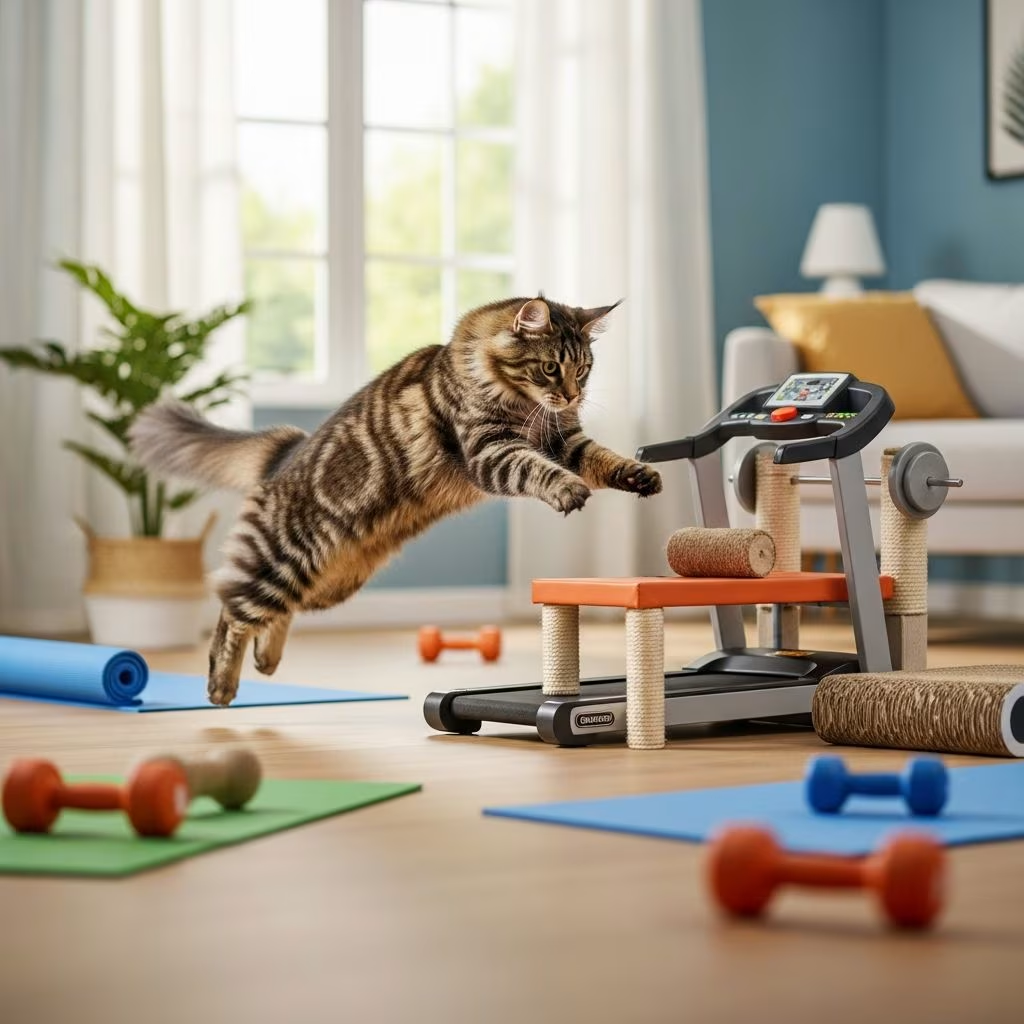
Online pet parents are increasingly showcasing elaborate home gyms for their cats, complete with exercise wheels, trampolines, treadmills, and climbing posts. These setups mimic the viral TikTok trends where cats trot on oversized hamster wheels or bounce on mini trampolines, captivating viewers with their athletic prowess. But does your cat truly need a dedicated gym, or can simpler methods suffice for keeping them fit and healthy?
This comprehensive guide dives into the world of cat gyms, exploring their benefits, specific equipment options, and practical tips from veterinary experts. Whether your cat is an indoor-only lounger prone to weight gain or an active explorer needing more stimulation, understanding these tools can transform their daily routine. We’ll cover everything from assessing your cat’s exercise needs to setting up safe, engaging play areas that promote physical and mental wellbeing.
Kitty Cardio: Why Exercise Matters for Cats
Cats are obligate carnivores with naturally slow metabolisms, making them susceptible to obesity if not sufficiently active. If your cat is already slim, enjoys outdoor roaming, and engages in frequent play, additional structured exercise might not be necessary. However, sedentary indoor cats, those without outdoor access, or those scoring high on body condition score (BSC) charts—where a score above 5/9 indicates overweight—benefit greatly from intentional activity.
“Cats are cursed with a particularly slow metabolism,” explains veterinary nurse Becky. Simply reducing calories won’t yield quick weight loss; instead, boosting activity accelerates metabolic rate. Research supports this: short bursts of activity align with cats’ natural hunting patterns, characterized by intense 10-20 minute sessions followed by rest. Studies show that just 10 minutes of daily play can match the efficacy of diet restriction for weight management.
- Daily Recommendation: Start with one 10-minute play session per day, progressing to two as fitness improves.
- Session Tips: Keep interactions short and engaging; stop when interest wanes to avoid frustration.
- Benefits: Burns calories, builds muscle, enhances cardiovascular health, and prevents boredom-related behaviors like aggression or destructiveness.
Indoor cats, in particular, miss out on natural exploration, walking 2-6 miles daily in the wild. Without outlets, pent-up energy manifests as stress, elevated cortisol levels, weakened immunity, and unwanted behaviors. Regular play fulfills predatory instincts, reducing these risks while strengthening the cat-human bond.
Assessing Your Cat’s Fitness Needs
Before investing in gym equipment, evaluate your cat’s current activity. Use the Body Condition Score (BSC) system: feel for ribs (should be palpable without excess fat), check waist visibility from above, and assess abdominal tuck. Overweight cats (BSC 6-9/9) require intervention.
| BSC Score | Description | Action Needed |
|---|---|---|
| 1-3/9 | Underweight | Increase calories, vet check |
| 4-5/9 | Ideal | Maintain with play |
| 6-9/9 | Overweight/Obese | Diet + exercise plan |
For obese cats, combine play with veterinary-approved diet tweaks. Experts recommend interactive toys over passive feeders to maximize calorie burn.
Cat Exercise Wheels: A Popular Choice
Cat exercise wheels, often called cat wheels, are oversized hamster wheels designed for feline jogging. Quiet, durable models allow cats to run at speeds up to 20 mph, providing an excellent cardio outlet. “Cat wheels can provide a really good outlet for felines to burn off excess energy and calories, and keep them physically and mentally active,” says Becky.
Pros include self-paced exercise, mental stimulation from chasing imaginary prey, and space efficiency for apartments. However, success varies: not all cats take to them immediately.
- Training Tips: Lure with treats or toys onto the wheel; reward small steps. Limit initial sessions to 10-20 minutes.
- Safety: Choose models with smooth, paw-friendly surfaces and stable bases. Supervise to prevent falls.
- Cost: Ranges from £100-£500; start with affordable options or secondhand.
Many owners report cats using wheels nocturnally, aligning with crepuscular (dawn/dusk) activity peaks. Pair with laser pointers or feather wands for encouragement.
Trampolines for Cats: Fun Exploration
Mini trampolines—low-profile fitness rebounders—are emerging as playful novelties rather than intense workout tools. Unlike human trampolines, these provide gentle bounce suitable for cats’ quadrupedal balance and center of gravity.
“Some cats might enjoy the experience of exploring a trampoline but I wouldn’t expect them to do much up-and-down bouncing,” notes Becky. Curious cats climb aboard to bat at toys or treats scattered atop.
- Engagement Ideas: Toss ping-pong balls or treats to prompt jumping; use as a platform for hide-and-seek.
- Safety Precautions: Supervise closely—paws can snag edges, or the frame might tip. Opt for stable, low models under 30cm high.
- Alternatives: If unused, repurpose as a scratching base or vantage point.
While not high-impact, trampolines foster agility and confidence, ideal for kittens or timid adults.
Trees, Shelves, and Climbing Equipment: Vertical Workouts
Cats’ love for heights makes vertical spaces prime for exercise. Cat trees, wall shelves, and climbing posts encourage stretching, jumping, and clawing—natural behaviors that tone muscles.
“Providing your cat with a range of towers, posts and platforms can be a simple and effective way of encouraging them to move around your home,” advises Becky. Wall-mounted shelves spaced 20-40cm apart challenge jumping ability without requiring much floor space.
- Setup Guide: Install staggered shelves leading to high perches; add sisal ropes for scratching integration.
- Budget Hacks: Source secondhand cat trees via marketplaces; DIY shelves with plywood and brackets.
- Activity Boost: Lead ‘courses’ with fishing rod toys or treat trails to simulate hunting paths.
Multi-level setups not only exercise but reduce stress by offering territory control, vital for multi-cat homes.
DIY Cat Gym Ideas on a Budget
No need for expensive gear—a home gym starts with household items. Cardboard boxes stacked into tunnels, window perches for bird-watching, and laser chasers provide free fun. Invest in durable wand toys for interactive sessions.
- Suspend strings from door frames for swatting.
- Create obstacle courses with cushions and chairs.
- Use treat-dispensing balls to promote foraging.
Consistency trumps equipment: 5-15 minutes of play, 2-3 times daily, completes the ‘hunt cycle’—stalk, pounce, capture—satisfying instincts.
Safety First: Gym Guidelines
Always supervise equipment use. Secure installations prevent falls; check for pinch points. Monitor for fatigue signs like panting or disinterest. Consult vets for overweight cats before intense routines.
Frequently Asked Questions (FAQs)
Q: How often should I exercise my indoor cat?
A: Aim for 10-15 minutes of interactive play, 2-3 times daily, adjusting based on enthusiasm and fitness level.
Q: Will my cat use an exercise wheel?
A: Many do with patient training, but individual temperament varies; trial periods help.
Q: Are trampolines safe for cats?
A: Mini ones are, with supervision to avoid paw injuries or tipping.
Q: What’s the best climbing setup for apartments?
A: Wall shelves and modular cat trees maximize vertical space efficiently.
Q: Can play alone prevent obesity?
A: Combined with diet, yes—10 minutes daily rivals calorie restriction efficacy.
The Verdict: Does Your Cat Need a Gym?
Not really. Simple toys and daily play provide ample exercise. Gym equipment enhances options for high-energy cats, but prioritize safety and enjoyment. Active cats are healthier, happier, and better bonded companions.
References
- Association of Pet Obesity Prevention Guidelines for Weight Management in Dogs and Cats — Association for Pet Obesity Prevention. 2023-10-01. https://petobesityprevention.org/pet-weight-check
- Exercise in Pet Cats: A Tool for Weight Loss? — Journal of Feline Medicine and Surgery. 2022-05-15. https://journals.sagepub.com/doi/10.1177/1098612X221089123
- Why Cats Need Daily Play: Benefits & Expert Tips — Kinship. 2024-01-10. https://www.kinship.com/uk/cat-behaviour/why-cats-need-play-daily
- Does Your Cat Need a Gym? — Kinship UK. 2024-03-20. https://www.kinship.com/uk/cat-health/cat-gyms
- Feline Activity Levels and Obesity Prevention — American Veterinary Medical Association. 2023-11-05. https://www.avma.org/resources-tools/pet-owners/petcare/feline-obesity



