

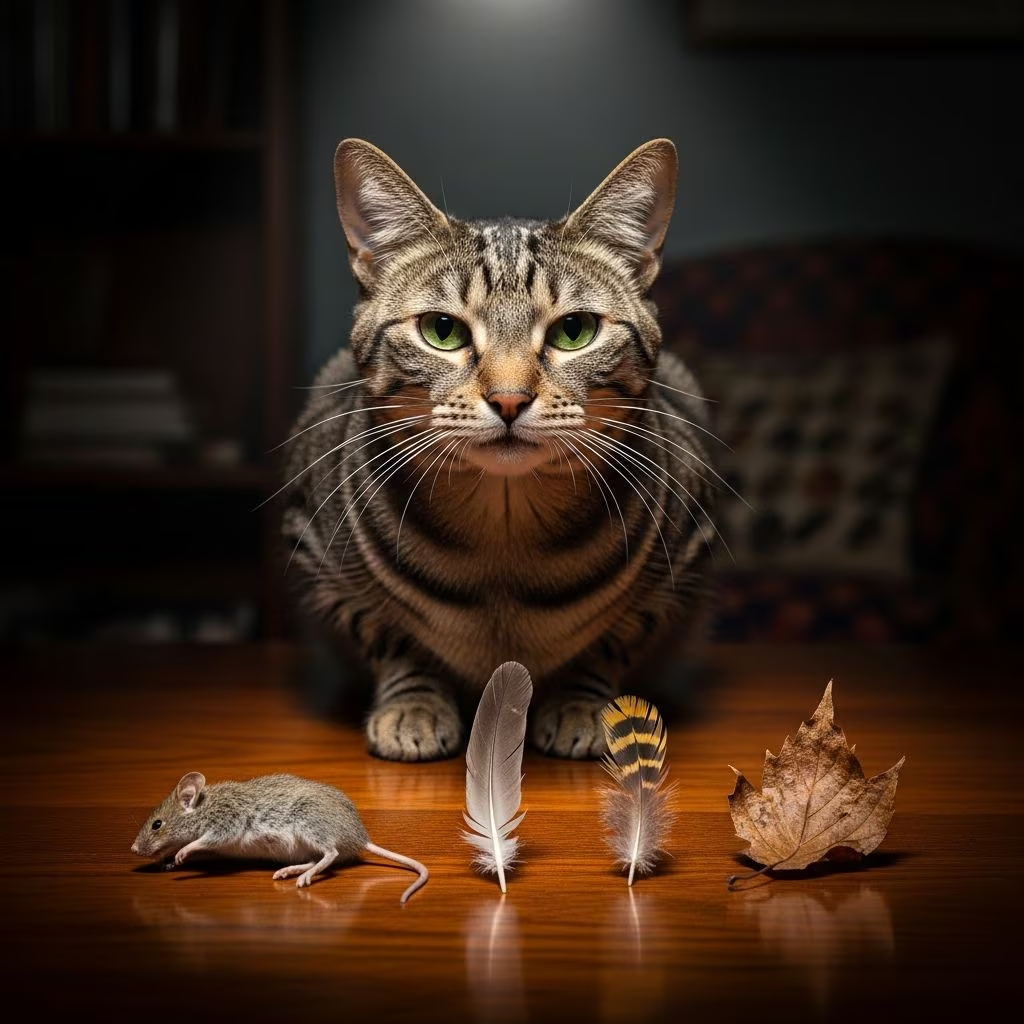
Cats often surprise their owners by dropping dead animals like mice, birds, or insects at the doorstep or inside the home. This behavior stems from deep-seated hunting instincts that persist even in well-fed domestic cats.
The Primal Roots of Feline Hunting
Domestic cats descend from wild ancestors who relied on hunting for survival. Even today, this drive remains strong, compelling cats to stalk, chase, and capture prey regardless of food availability. Veterinary experts note that this isn’t about hunger but an evolutionary compulsion to express predatory skills.
In natural settings, cats hone these abilities from kittenhood. Mother cats introduce prey to teach young ones essential survival techniques, transitioning from observation to participation. House cats may extend this role to humans, perceiving owners as family members needing guidance.
Maternal Teaching in Action
One primary explanation links this habit to parental behavior. Wild queens deliver disabled or deceased prey to their litters, allowing practice in handling food and initiating hunts. Urban ecologist Emmanuelle Baudry from Paris-Saclay University explains that pet cats might view humans as inept kittens requiring similar instruction.
- Queens start with dead prey for safe consumption.
- Progress to live captures for skill-building.
- Domestic cats replicate this with owners.
This theory gains support from observations where cats drop “gifts” near sleeping humans or children, mimicking nursery scenarios.
Family Sharing and Social Bonds
Cats form colonies in the wild, sharing catches to strengthen group ties. Your pet likely includes you in this “colony,” offering kills as contributions to the household. This act signifies trust and inclusion, viewing humans as dependent pack members unable to hunt independently.
Behavioral studies highlight how such sharing reinforces affection. Cats observe human reactions, interpreting attention—positive or negative—as approval, encouraging repetition.
Safety and Territory Claims
Predators face risks while consuming kills outdoors, so wild cats transport prey to secure dens. Homes represent ultimate safety for pets, prompting them to relocate catches inside. This instinct protects spoils from rivals or weather.
Additionally, displaying prey asserts dominance. A 2023 study in Ecology and Evolution found bold, aggressive cats bring more kills home, signaling territorial control to potential threats.
| Reason | Wild Origin | Domestic Parallel |
|---|---|---|
| Maternal Teaching | Prey for kittens | Gifts to owners |
| Sharing | Colony food distribution | Household offerings |
| Safety | Den transport | Home delivery |
| Territory | Dominance displays | Indoor trophies |
Personality Influences on Gifting
Not all cats gift equally. Research correlates higher prey returns with outgoing, assertive traits. Shy or sociable felines present fewer items, prioritizing human interaction over conquest boasts.
Females, especially those who’ve raised litters, exhibit stronger tendencies, echoing maternal drives. Neutered status has minimal impact, as instincts transcend reproduction.
Beyond the macabre: Toys and Objects
Indoor cats substitute prey with toys, socks, or plants, fulfilling the same urge. These “kills” prompt play invitations, associating human engagement with success. Outdoor hunters mix real and faux items, broadening gift repertoires.
- Toys mimic prey movement.
- Household objects simulate captures.
- Both seek owner participation.
Health Risks and Precautions
Dead animals carry parasites, bacteria, or diseases like toxoplasmosis. The CDC warns of zoonotic transmission risks, urging prompt disposal with gloves.
Preventive steps include:
- Bell collars to alert prey (effectiveness debated).
- Indoor living for minimal exposure.
- Enriching environments with toys to redirect energy.
Veterinarians from the American Veterinary Medical Association recommend routine deworming and flea control to mitigate secondary infections.
Responding Without Discouragement
Thank your cat calmly to acknowledge efforts without reinforcing unwanted repeats. Praise verbally or with treats for non-prey behaviors. Deter access via screens or leashes during peak hunting.
Seasonal and Age Patterns
Spring and summer spike gifts due to abundant prey. Juveniles experiment more, maturing into selective hunters. Seniors may reduce activity but retain symbolic offerings.
FAQs
Should I punish my cat for bringing dead animals?
No—punishment confuses instincts. Redirect positively instead.
Do all cats do this?
Common in outdoor cats; indoor ones adapt to toys.
Is it a sign of hunger?
Rarely—fed cats hunt for instinct, not sustenance.
How to stop it humanely?
Supervise outdoors, provide alternatives, consider indoor lifestyle.
Does gender matter?
Females more often due to maternal echoes.
Embracing Feline Nature
These presents reveal cats’ wild heritage amid domestication. Appreciating them fosters deeper bonds, honoring instincts that make cats unique companions. Observe patterns to tailor responses, enhancing mutual understanding.
References
- Why do cats bring home dead animals? — Live Science. 2023. https://www.livescience.com/animals/domestic-cats/why-do-cats-bring-home-dead-animals
- About Toxoplasmosis — Centers for Disease Control and Prevention (CDC). 2024-02-05. https://www.cdc.gov/parasites/toxoplasmosis/index.html
- Pet Care Resources — American Veterinary Medical Association (AVMA). 2025. https://www.avma.org/resources-tools/pet-owners/petcare
- Why Do Cats Bring You Dead Animals? — Cats.com. 2024. https://cats.com/why-do-cats-bring-you-dead-animals
- Why Do Cats Bring Their Owners ‘Gifts’ of Dead Animals? — Purina. 2023. https://www.purina.com/articles/cat/behavior/understanding-cats/why-do-cats-bring-you-dead-animals



