

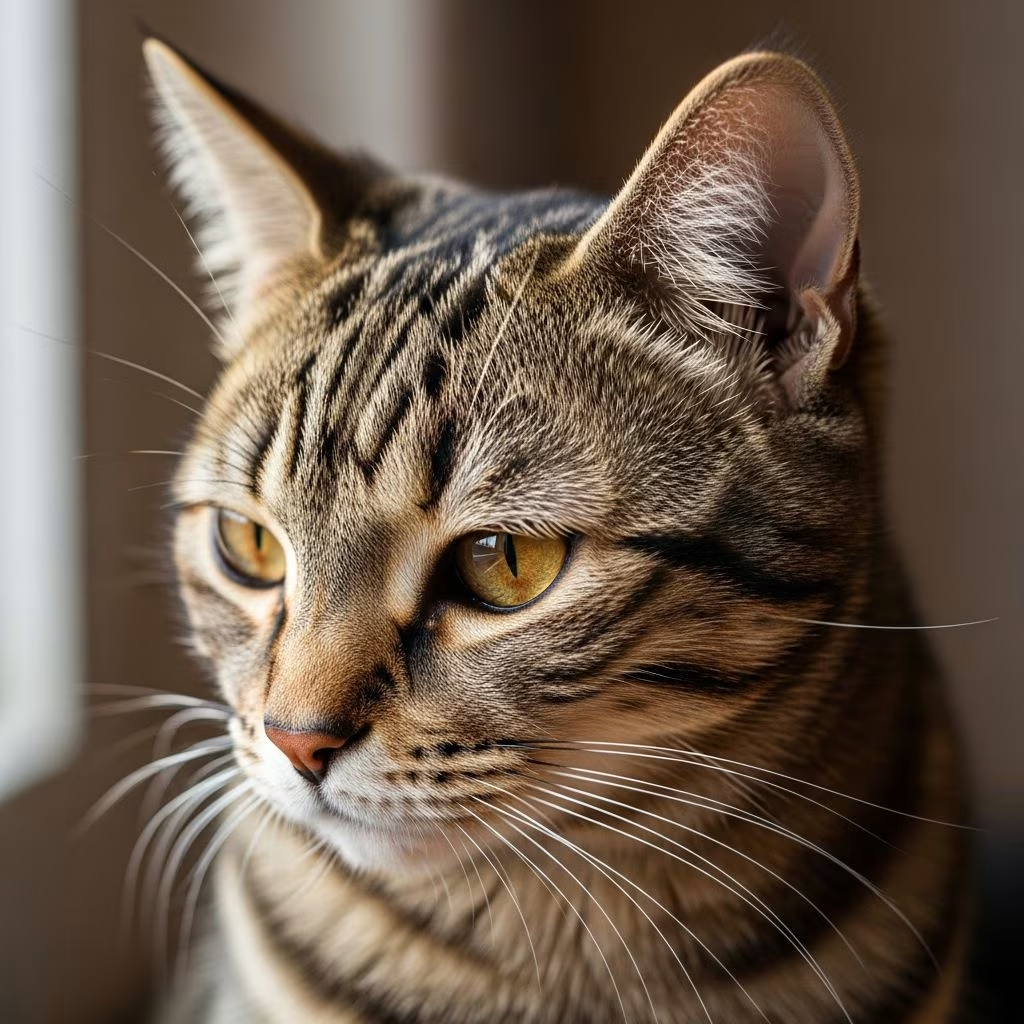
Felines possess a sophisticated visual communication system where direct stares carry profound implications, often leading cats to avert their eyes from peers to maintain harmony or sidestep disputes.
The Instinctive Power of a Cat’s Stare
In the wild, cats rely on sharp eyesight for survival, using prolonged gazes as tools for dominance or warning. Domestic cats retain this trait, viewing steady eye contact with another feline as a potential challenge to their territory or status. This behavior stems from their solitary hunter ancestry, where confrontations could mean injury.
When two cats meet, the one who first breaks eye contact typically signals submission, de-escalating tension. Persistent staring escalates risks, sometimes culminating in swipes or fights. Observant owners notice this during introductions: averted gazes indicate caution rather than disinterest.
Reasons Cats Sidestep Peer Eye Contact
Cats employ non-verbal cues meticulously, with gaze avoidance serving multiple purposes in social encounters.
- Preserving Peace: Averting eyes conveys ‘no threat here,’ allowing safe passage without altercation. Relaxed cats use this to foster coexistence in multi-cat homes.
- Asserting Boundaries: Bold felines might hold the gaze briefly to claim space, but most prefer avoidance to prevent energy-draining conflicts.
- Expressing Disinterest: Quick glances followed by looking away show a cat has no intent to engage, conserving energy for essential activities like napping or hunting play.
- Reacting to Fear: Threatened cats widen eyes, crouch, or flee while avoiding direct stares, body language amplifying their unease.
These patterns highlight cats’ preference for low-conflict interactions, prioritizing self-preservation over bold posturing.
Gaze Dynamics Between Cats and Humans
Unlike inter-cat dynamics, felines often gaze comfortably at trusted humans, revealing a unique bond. This stems from kittens learning to view owners as non-threatening providers during weaning.
| Context | Cat Response to Human Gaze | Interpretation |
|---|---|---|
| Direct Stare from Owner | Slow blink or approach | Trust and affection |
| Stare from Stranger | Aversion or tension | Caution or fear |
| Neutral Observation | Curious gaze-following | Interest in human cues |
Research confirms cats respond positively to human slow blinks—half-closures followed by narrowing—mirroring it back as a sign of relaxation. In one study, cats blinked more at owners performing this gesture, even approaching unfamiliar people who did so.
Deciphering Stare Types in Felines
Not all cat stares signal the same intent; context and accompaniments provide clues.
- Soft, Blinking Gaze: Directed at humans, this affectionate ‘kitty kiss’ indicates safety and love. Reciprocate with a slow blink to strengthen rapport.
- Hard, Unblinking Stare: Fixed on another animal or person, paired with flattened ears or arched back, warns of impending aggression. Give space immediately.
- Curious Side-Glance: Fleeting looks while following human movements show attentiveness, as cats track gazes to locate food or toys.
Understanding these nuances helps owners interpret and respond appropriately, enhancing household harmony.
Multi-Cat Households: Navigating Gaze Cues
In homes with multiple felines, gaze avoidance often predicts smooth relationships. Cats that play, groom, and rest together rarely lock eyes challengingly, indicating mutual respect.
Signs of trouble include:
- Prolonged stares without blinks.
- Resource guarding with direct looks.
- Swollen tails or sideways stances during encounters.
To ease tensions, provide ample resources—litter boxes, beds, feeding stations—one per cat plus extra. Vertical spaces like shelves reduce forced proximity, minimizing stare-downs.
Training Cats Through Positive Gaze Interactions
Owners can leverage gaze knowledge to build trust. Start with slow blinks from a distance, gradually closing in as the cat reciprocates. Reward approaches with treats or play, associating human eyes with positivity.
Avoid:
- Staring contests, which mimic threats.
- Sudden direct looks at skittish cats.
- Ignoring body language like ear twitches.
Consistent gentle interactions teach cats that human gazes signal care, not confrontation.
Breed Variations in Eye Communication
While universal, gaze behaviors vary by breed temperament. Siamese and Abyssinians, being vocal and social, hold human gazes longer, blending curiosity with affection. Independent breeds like Persians avert quicker, preferring peripheral observation.
Age influences too: Kittens experiment with stares playfully, adults refine to subtle signals, seniors may squint more due to vision changes.
Health Indicators in Feline Gazes
Unusual staring patterns can flag issues. Excessive blinking or wide-eyed stares might indicate pain, stress, or vision impairment. Consult vets if paired with lethargy, appetite loss, or discharge.
For instance, dilated pupils during daylight suggest hypertension or neurological concerns, warranting prompt checks.
FAQs on Cat Eye Contact
Why does my cat stare at me but not my other pet?
Your cat views you as a safe caregiver, not a rival, allowing relaxed gazing. Pets trigger territorial instincts, prompting avoidance.
Is slow blinking safe with all cats?
Yes for most, especially familiars; feral or highly stressed cats may misinterpret. Observe reactions first.
What if my cats stare intensely at each other?
Separate them; this signals brewing conflict. Reintroduce slowly with positive associations.
Can I teach my cat to make more eye contact?
Gently encourage via slow blinks and rewards, but respect natural limits—force risks fear.
Does tail position affect gaze meaning?
Yes; puffed tails with stares amplify threats, relaxed swishes indicate benign curiosity.
Evolving Research on Feline Visual Cues
Studies like those on slow blinks reveal cats’ emotional intelligence, paralleling canine-human bonds but uniquely subtle. Future work may decode head turns—left for anxiety, right for calm—further enriching communication.
Owners armed with this knowledge foster deeper connections, turning everyday glances into bridges of understanding.
References
- Why Don’t Cats Make Eye Contact With Other Cats? 4 Vet-Reviewed Reasons — Catster. 2023-10-15. https://www.catster.com/cat-behavior/why-dont-cats-make-eye-contact-with-other-cats/
- The role of cat eye narrowing movements in cat–human communication — National Institutes of Health (PMC). 2020-10-01. https://pmc.ncbi.nlm.nih.gov/articles/PMC7536207/
- Why Does My Cat Stare at Me? 6 Reasons Cats Stare and What To Do — PetMD. 2024-05-20. https://www.petmd.com/cat/behavior/why-does-my-cat-stare-at-me
- Look at Me – Cats Communicate with Gaze — The Feline Purrspective. 2022-08-12. https://www.felinepurrspective.com/look-at-me-cats-communicate-with-gaze/
- Conflict Between Cats — Ohio State University Indoor Pet Initiative. 2023-11-05. https://indoorpet.osu.edu/cats/problemsolving/conflict
- 10 Serious Warning Signs When Introducing Cats — Cats.com. 2024-02-14. https://cats.com/warning-signs-when-introducing-cats



