

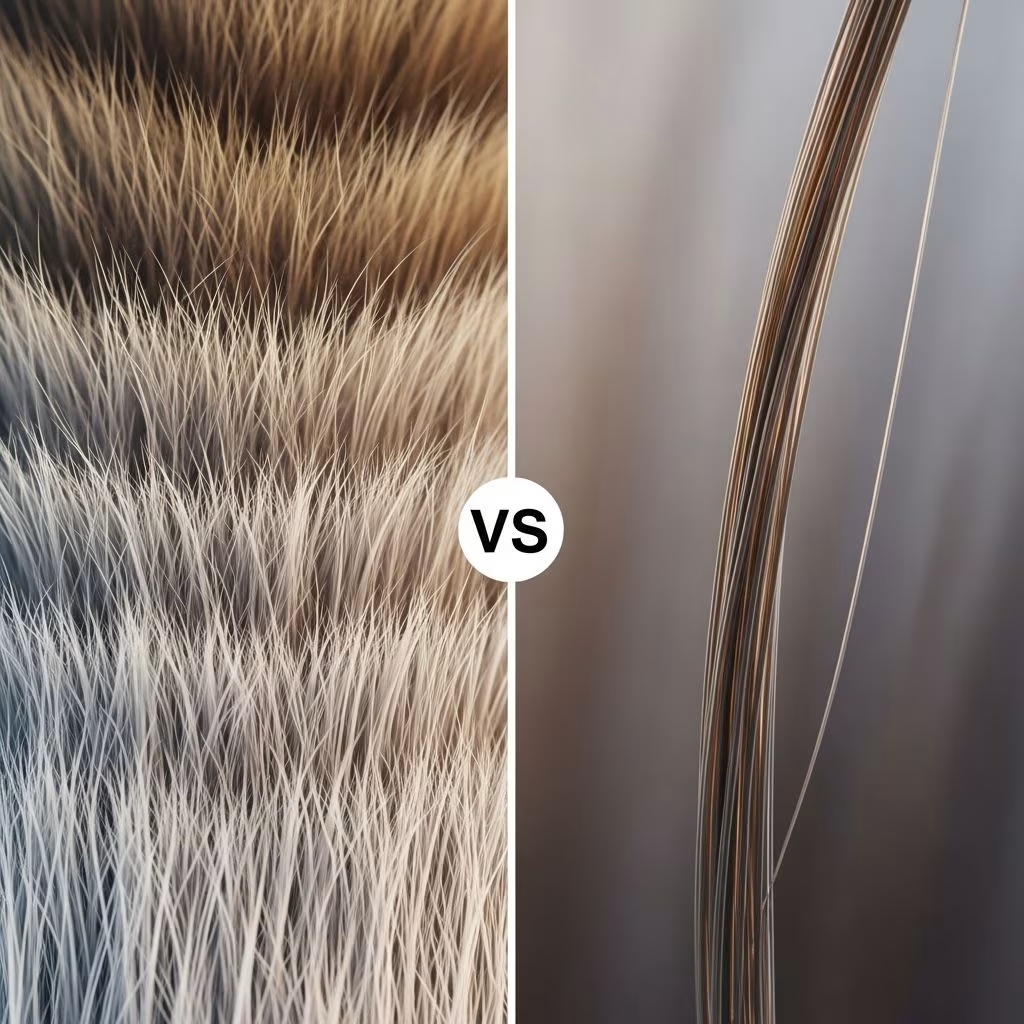
If you’ve ever wondered whether your cat has fur or hair, you’re not alone. Pet owners frequently use these terms interchangeably, but there’s actually more complexity to your feline companion’s coat than most people realize. Beyond the basic distinction between fur and hair lies a fascinating world of hair types, each serving specific biological functions that contribute to your cat’s survival, comfort, and appearance.
Terminology: Fur Versus Hair in Felines
The distinction between fur and hair is more nuanced than many realize. All mammals, including humans, possess hair as a biological feature. The terminology differs based on density and coverage patterns. Fur typically describes thick, densely packed body hair found on animals like cats, dogs, and rabbits, while hair often refers to the sparse body hair humans possess. For cats specifically, the collective covering is called fur, though individual strands are technically hair. Think of it this way: a single cat hair on your black sweater is just one strand, but the complete covering on your cat’s body is its fur.
Additionally, cat owners and breeders use the term “coat” to describe the overall appearance and texture of a cat’s fur. You might hear references to “long-haired cats” or “short-haired cats,” which describes coat length rather than distinguishing between fundamentally different substances. Whether you choose to say fur, hair, or coat, all three terms are technically correct when describing your feline’s covering.
The Biological Foundation of Cat Hair
Cat hair originates from the epidermis, the outermost layer of skin. The structure and characteristics of each hair strand depend heavily on its location on the body and its proximity to specialized muscles beneath the skin. When temperature drops or a cat experiences fear, tiny muscles attached to hair follicles contract, causing the hair to stand on end—a defensive mechanism that makes cats appear larger to potential threats. This physiological response demonstrates how intricately connected a cat’s hair system is to its nervous and muscular systems.
The Multi-Layered Coat System
Rather than having a simple single-layer coat, most cats possess a sophisticated multi-layered hair system. Some cats maintain two distinct layers (double coats), while others have three layers (triple coats). This layering system provides insulation, water resistance, and protection. Understanding these layers helps explain why some cats shed more than others, why matting occurs, and why regular grooming remains essential for feline health and comfort.
Down Hair: The Insulating Foundation
The innermost layer consists of down hair, the softest and finest hair in a cat’s coat. This downy layer functions primarily as insulation, trapping warm air close to the skin and maintaining body temperature in varying environmental conditions. Down hair presents challenges for cat owners because it mats more easily than other hair types and resists a cat’s natural grooming efforts. If you’ve discovered stubborn mats in your cat’s fur, they likely originated from tangled down hair.
An interesting characteristic of down hair involves pigmentation. This layer contains less pigment than other hair types, which explains why brushing a black cat might reveal gray or white hairs in your brush. The down coat is simply less densely pigmented, creating this visual surprise for many cat owners.
Awn Hair: The Visible Middle Layer
The middle layer consists of awn hair, which is coarser and darker than down hair, particularly at the tips. This hair type comprises most of what people visually recognize as a cat’s coat. Awn hairs are longer than down hairs but typically shorter than guard hairs, creating the intermediate layer in a multi-layered system. The ratio of awn hair to other coat types varies significantly between breeds, contributing to the diverse textures and appearances among different feline varieties.
Guard Hair: The Protective Outer Shield
The outermost layer of a cat’s coat consists of guard hairs, which are the longest and most strongly pigmented hairs in the feline coat system. Guard hairs serve multiple protective functions, including water resistance and environmental defense. When cats encounter water, guard hairs repel moisture, causing water to bead up on the coat’s surface rather than penetrating to the inner layers. Additionally, guard hairs display the most dramatic responses to a cat’s emotional and physical state, standing on end when a cat feels threatened or anxious.
Special Hair Types Beyond the Standard Coat
Vellus Hair: The Fine Exception
Some cats, particularly hairless or nearly hairless breeds like the Sphynx, possess vellus hair instead of traditional multi-layered coats. Vellus hair consists of sporadic, baby-fine strands that are barely visible to the naked eye. Interestingly, humans also possess vellus hair on various parts of their bodies, making this hair type a shared biological feature between felines and humans. Despite their reputation as “hairless,” these breeds technically have hair—it’s simply extremely sparse and fine.
Vibrissae: Sensory Whiskers
Perhaps the most specialized hair type on a cat’s body is the vibrissa, commonly known as whiskers. These long, thick, tactile hairs originate from the sides of the muzzle, above the eyes, and along the hind legs. Whiskers serve critical sensory functions, allowing cats to measure openings and navigate in complete darkness. The extreme sensitivity of whiskers provides essential feedback about a cat’s environment and can also indicate emotional states. When a cat feels confident and content, whiskers typically point forward; when anxious or threatened, they may pull backward.
Breed Variation and Coat Composition
The specific combination and ratio of hair types varies considerably across different cat breeds. Some cats possess more down hair, resulting in an exceptionally soft texture that feels luxurious to the touch. Others have different proportions of guard and awn hair, creating unique tactile experiences. For instance, the Manx breed exhibits guard hairs that are longer than awn hairs, which differs from more typical proportions seen in other breeds. These variations explain why some cats feel dramatically different when you pet them, even though all cats technically possess the same basic hair types.
Color Changes and Environmental Factors
Temperature’s Impact on Coat Color
Certain cat breeds, particularly Siamese and Himalayan varieties, exhibit temperature-dependent color patterns. The extremities of these cats—feet, tail, ears, and face—maintain cooler skin temperatures than the body’s core. This temperature variation influences melanin production, resulting in the characteristic darker “points” on a lighter-colored body. Beyond breed-specific patterns, external temperature changes can also affect coat color throughout the year. Many cats develop darker coats during winter months and lighter coats in summer, demonstrating the influence of environmental temperature on pigmentation.
Nutritional Influences on Hair Pigmentation
Diet plays a crucial role in maintaining proper coat color and health. The amino acid tyrosine is essential for melanin production, the dark pigment responsible for coat coloration. If a cat’s diet lacks adequate tyrosine, a black cat might gradually shift to a reddish-brown hue. Similarly, copper deficiency or zinc excess can cause dark hair to fade or lighten. Before assuming your cat’s color change is normal, consult a veterinarian, as alterations in hair color can sometimes indicate underlying health issues affecting the kidneys, liver, or thyroid.
Coat Maintenance and Common Issues
Matting and Grooming Challenges
The down coat’s tendency to mat without regular grooming represents one of the primary challenges cat owners face. Long-haired cats particularly require consistent brushing to prevent mats from forming in the soft undercoat. Regular grooming not only maintains your cat’s appearance but also prevents skin irritation, improves circulation, and provides an opportunity to check for health issues.
Shedding and Hair Loss Patterns
Understanding your cat’s hair types explains why shedding patterns vary. The softer down hair sheds more readily and creates the fine strands that accumulate on furniture and clothing. Guard hairs, being more firmly rooted and coarser, shed less frequently. Seasonal shedding typically increases during spring and fall as cats transition between seasonal coats.
Cat Allergies and Hair-Related Sensitivities
While many people assume cat hair causes allergies, the actual culprit involves protein particles found in feline saliva. When cats groom themselves, saliva dries onto their fur, forming dander flakes that contain allergenic proteins. These dander particles accumulate on furniture, bedding, drapes, and circulate through the air, triggering allergic reactions in sensitive individuals. Interestingly, the distinction between fur and hair becomes irrelevant when discussing allergies—the allergen source remains consistent regardless of terminology.
Comparative Hair Structure Across Coat Types
| Hair Type | Location | Characteristics | Primary Function |
|---|---|---|---|
| Down | Innermost layer | Soft, fine, less pigmented, prone to matting | Insulation and warmth |
| Awn | Middle layer | Coarser, darker at tips, intermediate length | Visible coat and protection |
| Guard | Outer layer | Longest, strongly pigmented, water-resistant | Environmental protection and response |
| Vellus | Sparse coverage | Baby-fine, barely visible | Minimal insulation |
| Vibrissae (Whiskers) | Muzzle, eyes, hind legs | Long, thick, highly sensitive | Sensory detection and navigation |
Frequently Asked Questions
Is there a real difference between cat fur and cat hair?
Technically, fur and hair refer to the same biological substance. All mammals possess hair; the term “fur” conventionally describes thick body hair found on animals like cats. Using “hair” to describe a single strand and “fur” to describe the collective coat is the most practical distinction for everyday conversation.
Why does my cat’s hair look different colors in different lighting?
The multiple layers of hair in your cat’s coat contain varying pigmentation levels. Down hair contains less pigment than guard hair, which can create color variations depending on which layer is most visible. Additionally, the angle of light and how it interacts with the hair’s surface can highlight different colors.
Do all cats have the same coat structure?
No, coat composition varies significantly by breed and individual cat. Some cats have predominantly down hair, making them exceptionally soft. Others have different proportions of awn and guard hair, creating unique textures. Hairless breeds possess vellus hair instead of traditional multi-layered coats.
Why do whiskers fall out, and will they grow back?
Whiskers, like all hair, naturally cycle through growth and shedding phases. When whiskers fall out, they will regrow, though the process takes time. It’s important not to trim whiskers, as they provide essential sensory information that cats rely on for navigation and spatial awareness.
Can diet really change my cat’s coat color?
Yes, nutrition significantly impacts coat color and health. The amino acid tyrosine is essential for producing melanin, the pigment responsible for dark coloration. Deficiencies in tyrosine, copper, or excesses of zinc can alter coat color. If you notice unexpected color changes, consult your veterinarian to rule out nutritional deficiencies or underlying health conditions.
References
- Types of Cat Hair — PetHelpful. https://pethelpful.com/pet-news/types-of-cat-hair
- Cat Hair and Cat Fur: What’s the Difference? — Kitty Nook. https://kittynook.com/blogs/kittynookcorner/cat-hair-and-cat-fur-whats-the-difference
- The Hair of the Cat — Armarkat. https://www.armarkat.com/blog/the-hair-of-the-cat/



