

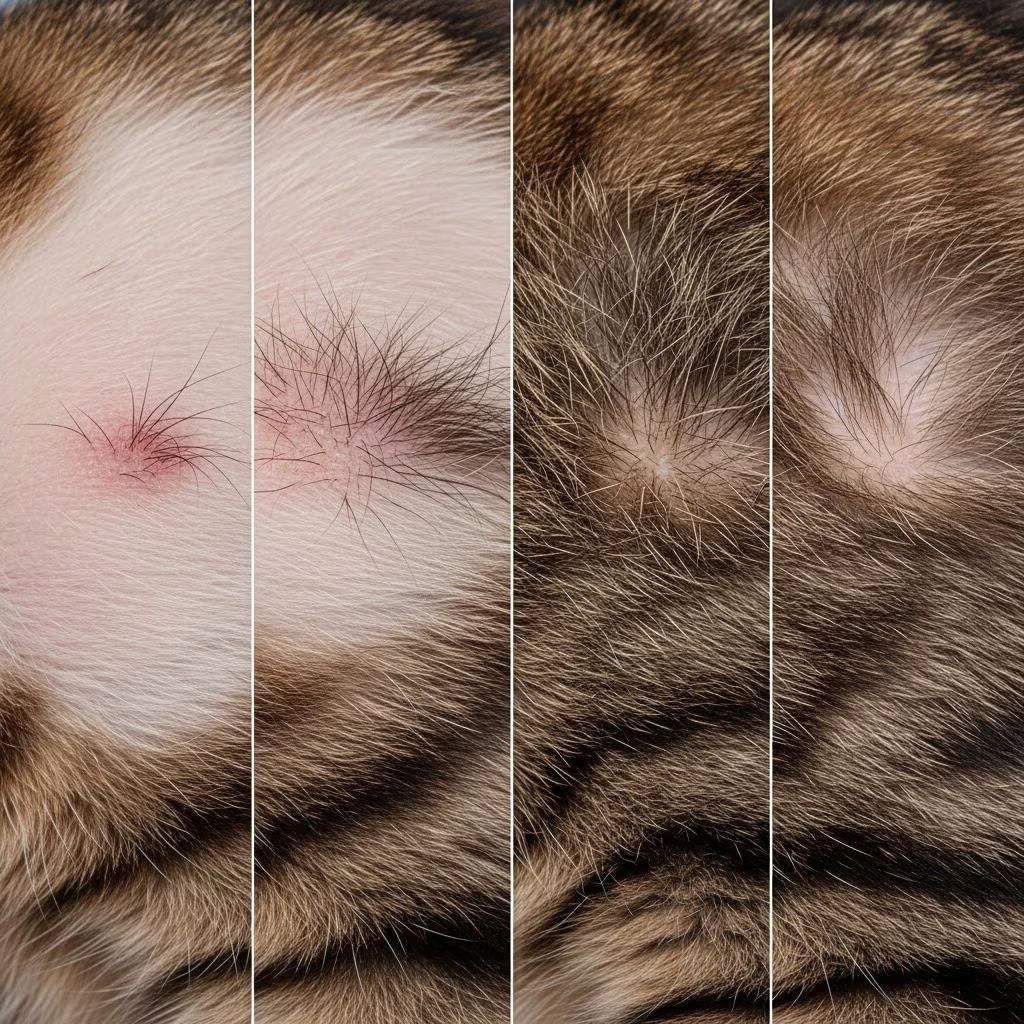
Cat fur regrowth follows a structured biological process influenced by natural cycles, health status, and environmental factors. Understanding this helps owners support their pets through shaving, shedding, or recovery periods, typically seeing initial growth in 4-6 weeks and full coverage in 3-18 months depending on circumstances.
The Biological Cycle of Feline Hair Growth
Feline hair develops through distinct phases that repeat throughout a cat’s life, ensuring continuous renewal. This cycle differs from human hair, featuring shorter active growth periods suited to seasonal adaptations.
- Anagen Phase: Active growth where the follicle produces new hair shafts, lasting several months based on breed and location.
- Catagen Phase: Transition period signaling the end of growth, with the follicle shrinking; this brief stage prepares for rest.
- Telogen Phase: Resting period where hair remains anchored but inactive, typically 2-3 months.
- Exogen Phase: Shedding occurs as old hairs release, allowing new ones to emerge.
These stages operate asynchronously across follicles, meaning not all hairs shed simultaneously, which maintains coat coverage. Indoor cats may experience disrupted cycles due to artificial lighting and temperature, leading to year-round shedding.
Factors Influencing Regrowth Speed and Quality
Several variables determine how quickly and evenly cat fur returns after loss. Genetics play a primary role, with long-haired breeds like Persians requiring more time than short-haired ones.
| Factor | Impact on Regrowth | Examples |
|---|---|---|
| Breed & Genetics | Short-haired: 3-6 months; Long-haired: 6-18 months | Rex breeds prone to slower regrowth |
| Age | Kittens faster (under 12 months); Seniors slower | Adult transition at 6-12 months |
| Health & Stress | Illness delays by months; Optimal health speeds up | Hormonal issues extend timeline |
| Nutrition | Protein-rich diet promotes faster growth | Deficiencies cause dry, brittle fur |
| Season & Light | Spring/fall shedding peaks; Indoor disruption | April/May heavy shed |
Shaving or clipping often catches follicles in resting phases, delaying visible regrowth by 6 months or more if most hairs are telogen-dominant. Conversely, natural shedding aligns with anagen starts, yielding quicker results.
Regrowth Timelines After Common Scenarios
Expectations vary by cause of hair loss. Post-shave, soft fuzz appears in 1-2 weeks, with noticeable length by 1 month at 0.6-1.3 cm monthly growth.
- After Grooming/Shaving: Initial growth in 2-4 weeks; full coat 3-6 months for short hair, up to 18 months for long.
- Seasonal Shedding: Peaks April/October, lasts 6-8 weeks; new coat fills in 1-3 months.
- Kitten Coat Transition: Starts 6-12 months; fluffier kitten fur replaced by glossier adult coat in 2-4 months.
- Post-Illness or Stress: 4-6 weeks for new hairs, 2-6 months for density; vet check recommended.
For shaved areas, patience is key—cats’ double coat (guard hairs and undercoat) regrows in layers, with undercoat first.
Signs of Normal vs. Problematic Regrowth
Healthy regrowth shows uniform fuzz progressing to sleek fur without bald patches persisting beyond 3 months. Monitor for irregularities indicating issues.
- Normal: Even sprouting, mild itch from new growth, seasonal timing.
- Problematic: Patchy baldness, scaly skin, excessive scratching, slowed growth over 6 months.
Breeds like Rexes may permanently alter post-shave due to curly structure. Persistent problems warrant veterinary evaluation for parasites, allergies, or endocrine disorders.
Practical Tips to Accelerate and Support Regrowth
Proactive care optimizes the hair cycle, reducing timelines and enhancing coat quality.
- Regular Brushing: Removes dead hair, distributes oils; daily during sheds prevents matting.
- Nutrient-Dense Diet: High-protein foods with omega-3s, biotin; supports follicle health.
- Supplements if Needed: Omega fatty acids for shine, reduced shedding in 3-8 weeks.
- Environmental Stability: Natural light exposure mimics seasons; avoid extreme temps.
- Hydration & Low-Stress: Fresh water, playtime minimize telogen triggers.
Grooming tools like slicker brushes aid exogen, while diet tweaks can yield shinier fur in weeks.
Breed-Specific Regrowth Expectations
Coat type dictates timelines profoundly.
- Short-Haired (e.g., Domestic Shorthair): Quickest, 2-4 months full regrowth.
- Long-Haired (e.g., Maine Coon): 6-12+ months; prone to mats.
- Wirehaired/Curly (e.g., Devon Rex): Variable, sometimes incomplete.
- Hairless (e.g., Sphynx): Minimal fur, focus on skin health.
Genetic predispositions mean some breeds regrow awl hairs (intermediate) before guard hairs.
FAQs on Cat Fur Regrowth
Will my cat’s shaved fur grow back completely?
Yes, in healthy cats, full regrowth occurs within 3-18 months, though texture may vary slightly by breed.
How fast does cat hair grow per month?
Average 1/4 to 1/2 inch (0.6-1.3 cm), similar to human scalp rate.
Why is my cat’s hair not growing back after surgery?
Anesthesia/stress shifts follicles to telogen; expect 2-6 months, consult vet if longer.
Does diet affect fur regrowth?
Absolutely—nutrient deficiencies delay growth; prioritize quality kibble/wet food.
Can supplements speed up regrowth?
Some show thicker fur in 5-8 weeks, but evidence varies; vet-approved only.
Long-Term Coat Maintenance Strategies
Beyond regrowth, sustain health through routines. Annual vet checks catch issues early. Seasonal grooming peaks in spring/fall reduce hairballs, which strain during high metabolism.
For multi-cat homes, shared tools spread oils effectively. Track individual timelines via photos to spot anomalies early.
Understanding these dynamics empowers owners to foster resilience, turning potential concerns into manageable care aspects.
References
- All About Kitten Shedding — Pet Direct NZ. 2023. https://petdirect.co.nz/blog/all-about-kitten-shedding
- Why Cat Hair May Not Grow Back — Cats Pajamas Grooming. 2024. https://catspajamasgrooming.ca/cat-trimming/
- The Journey of Cat Hair: How Long Does It Take to Grow Back? — Orea Teai. 2024. https://www.oreateai.com/blog/the-journey-of-cat-hair-how-long-does-it-take-to-grow-back/2b906afbdbc18d6772b76e5b045698d0
- How Long Does Cat Hair Take To Grow Back — Bailey Brush. 2023. https://baileybrush.com/blogs/bailey-blog/how-long-does-cat-hair-take-to-grow-back
- Cats and Shedding – What to Expect — Cats Love. 2024. https://www.catslove.com/en/shedding-season-in-cats
- The Hair Cycle in Dogs and Cats: Care Tips — MPLabo. 2023. https://www.mplabo.com/en/emag/the-hair-cycle-in-dogs-and-cats/
- The Science Behind Cat Hair Growth: Best Supplements — La Petite Labs. 2024. https://lapetitelabs.com/pages/cat-hair-growth-supplements



