

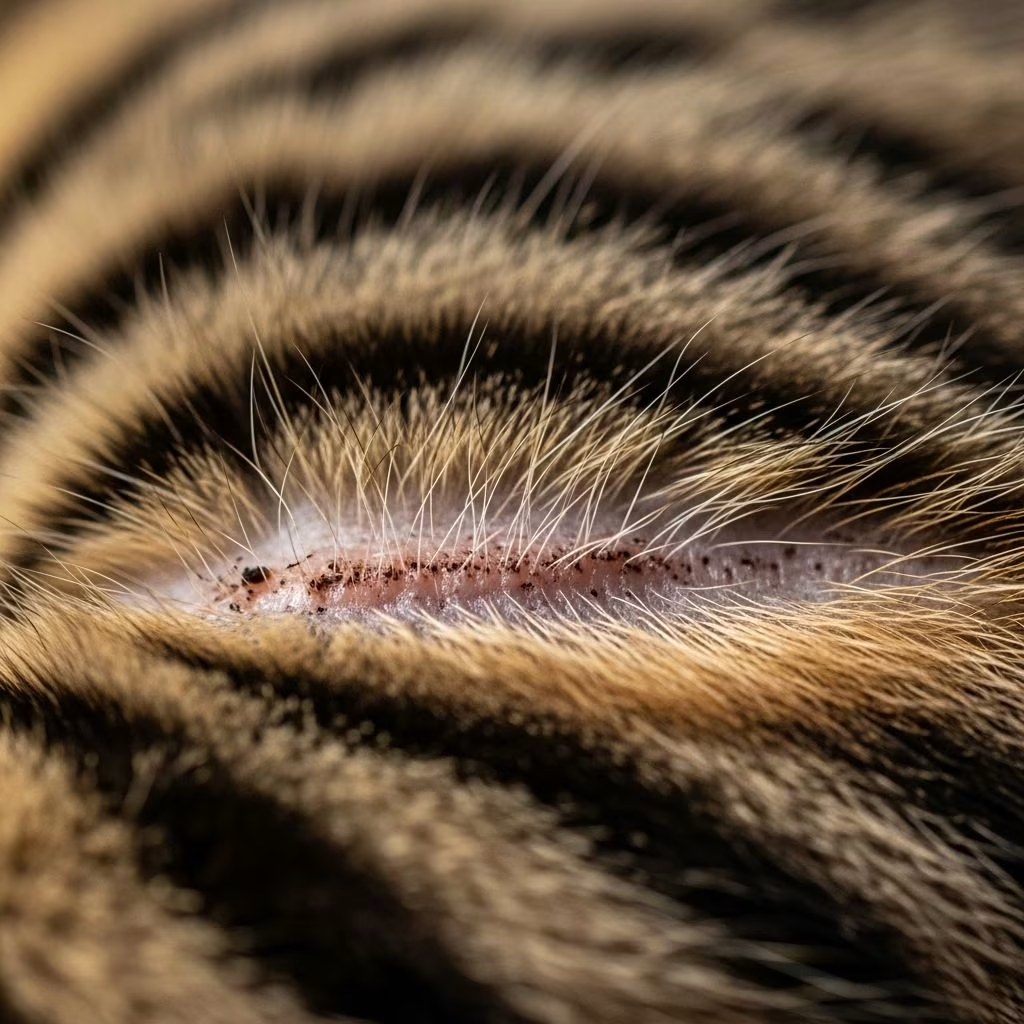
Cats often experience skin injuries from fights, accidents, or medical procedures, leading to scars where fur may or may not regrow. While many superficial wounds heal with full hair restoration, deeper scars can result in permanent bald patches due to damage to hair follicles. Understanding the biology of feline skin healing helps predict outcomes and guide interventions for better cosmetic and functional recovery.
The Science Behind Feline Skin and Hair Structure
Cat skin consists of the epidermis, dermis, and hypodermis, with hair follicles embedded primarily in the dermis. These follicles cycle through growth (anagen), regression (catagen), and resting (telogen) phases, producing fur continuously. Scars form when injury disrupts this dermal layer, replacing normal tissue with dense collagen bands that lack follicles, glands, or vascular support needed for hair growth.
In cats, healing tends to prioritize speed over perfection, often resulting in contracted wounds with thicker scars compared to dogs. This rapid contraction stems from fewer tertiary blood vessels in feline trunk skin, slowing granulation but accelerating closure through myofibroblast activity.
Stages of Wound Healing in Cats and Fur Implications
Feline wound healing follows four phases: hemostasis, inflammation, proliferation, and remodeling. Each stage influences whether fur regrows.
- Hemostasis: Blood clots form immediately, stopping bleeding but setting the stage for inflammation.
- Inflammation: Immune cells clear debris; excessive inflammation can damage follicles, preventing regrowth.
- Proliferation: Granulation tissue forms, with new vessels and fibroblasts producing collagen. Follicle regeneration is possible here if damage is superficial.
- Remodeling: Collagen reorganizes over months; deep scars mature into avascular tissue, inhibiting hair follicles.
Superficial wounds (epidermis only) typically regrow fur within 4-6 weeks as follicles remain intact. Full-thickness injuries penetrating the dermis often leave bald scars because new tissue forms without follicles. Studies show cats heal slower in epithelialization but faster in contraction, leading to larger scars with less hair.
Factors Affecting Fur Regrowth Over Scars
Several variables determine if fur returns:
| Factor | Impact on Regrowth | Examples |
|---|---|---|
| Wound Depth | Shallow: High regrowth chance; Deep: Low | Surface scratches vs. surgical incisions |
| Location | High-mobility areas scar more; Low-mobility better | Legs/ flanks vs. head |
| Age & Health | Young/healthy: Better; Older/ill: Poorer | Kittens vs. seniors with diabetes |
| Infection | Increases scarring, blocks follicles | Abscessed bites |
| Breed | Sparse-coated breeds slower | Siamese vs. Persian |
Nutritional status matters too; deficiencies in protein, zinc, or fatty acids impair collagen synthesis and follicle health.
Signs Your Cat’s Scar Won’t Grow Fur
Monitor healing: Pink granulation turning white/firm indicates mature scar. Alopecia persists if no ‘fuzzy’ regrowth by 8-12 weeks. Itching, thickening, or color changes signal complications like hypertrophic scars, common in cats due to aggressive fibroblast response.
Advanced Treatments to Promote Healing and Fur Regrowth
Recent veterinary research highlights regenerative therapies outperforming traditional care.
Platelet-Rich Fibrin (PRF): Autologous PRF, derived from cat’s blood, accelerates healing by releasing growth factors like TGF-β1, PDGF, FGF-2, and VEGF. In trauma models, PRF reduced healing time versus controls, boosted collagen, curbed inflammation, and matched Manuka honey efficacy. Wounds showed smaller size by day 7, full granulation faster, without affecting vitals.
Platelet-Rich Plasma (PRP) with Stem Cells: PRP+MSCs enhances re-epithelialization, reduces contraction reliance, and matures granulation tissue. By day 42, treated lesions displayed organized collagen I/III, restored adnexa (follicles/glands), mimicking healthy dermis—unlike controls with immature scars.
Other Options: Hydrogels with collagen/ADSCs promote contraction and histology in models; laser therapy stimulates follicles; silicone sheets minimize hypertrophy.
Home Care Strategies for Optimal Scar Healing
Support professional care with:
- Cleaning wounds daily with saline/chlorhexidine.
- Elizabethan collars to prevent licking.
- Moisturizing with vet-approved ointments (e.g., aloe vera-based).
- Nutrient-rich diet: High-protein, omega-3 supplements.
- Massaging mature scars gently to break collagen bonds.
Avoid home remedies like hydrogen peroxide, which delays healing.
When to Consult a Veterinarian
Seek immediate care for non-healing wounds (>10 days), pus, fever, lethargy, or enlarging scars. Biopsies rule out tumors; surgeons may revise deep scars for better fur potential.
Preventing Scars and Promoting Fur Regrowth
Minimize risks: Neuter to reduce fights, supervise outdoors, trim claws. Early intervention—cleaning bites promptly—preserves follicles. Post-surgery, use tension-free closures.
FAQs on Cat Fur and Scars
Q: How long for fur to regrow on a cat scar?
A: 4-12 weeks for minor scars; permanent baldness possible on deep ones.
Q: Can shaved fur grow back over scars?
A: Shaving alone allows full regrowth; combined with injury, depends on dermal damage.
Q: Do all cat scars stay bald?
A: No, superficial ones often regrow fully; genetics and care influence.
Q: Is laser safe for cat scar hair growth?
A: Yes, low-level therapy stimulates follicles safely under vet guidance.
Q: Why do cats scar more than dogs?
A: Fewer skin vessels lead to tensioned, contracted healing with denser collagen.
This guide empowers owners to support their cat’s skin recovery. With advances like PRF, even challenging scars can heal better, potentially restoring fur.
References
- Autologous platelet-rich fibrin enhances skin wound healing in cats — NIH/PMC. 2024. https://pmc.ncbi.nlm.nih.gov/articles/PMC11539556/
- Assessment of the quality of the healing process in experimentally induced full-thickness skin lesions treated with PRP — Frontiers in Veterinary Science. 2023-07-20. https://www.frontiersin.org/journals/veterinary-science/articles/10.3389/fvets.2023.1219833/full
- The wound healing effect of collagen/adipose‐derived stem cells hydrogel — Wiley Online Library. 2021. https://onlinelibrary.wiley.com/doi/full/10.1002/vms3.1059



