

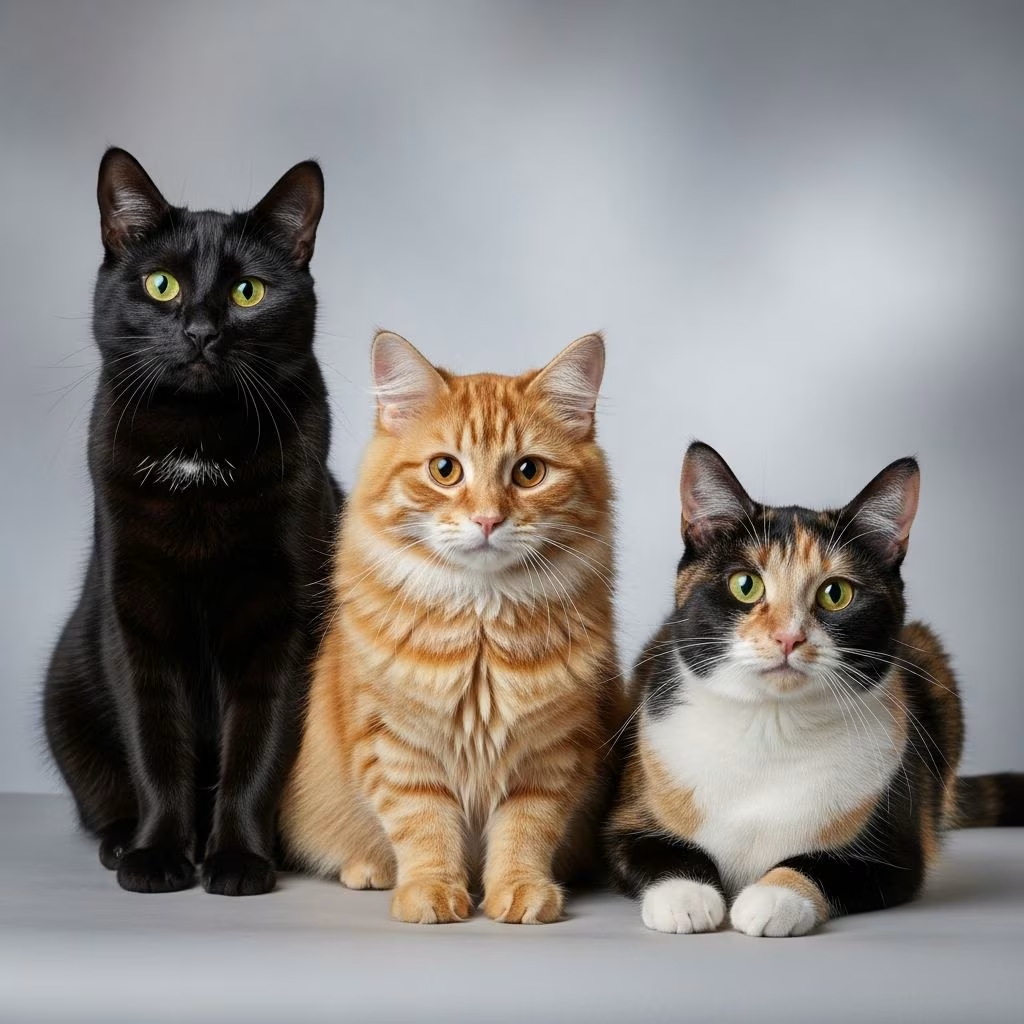
Cat coat colors captivate owners and enthusiasts alike, often sparking assumptions about temperament and behavior. From the laid-back orange tabby to the mysterious black feline, popular culture abounds with stereotypes. This article delves into the genetics behind these hues and separates fact from fiction using scientific insights.
The Genetic Foundations of Feline Coat Colors
Cat fur coloration arises from complex interactions of multiple genes, primarily influencing pigment production and distribution. Eumelanin produces black or brown tones, while phaeomelanin creates red or orange shades. Key genes on the X chromosome dictate orange versus black expression, explaining why certain patterns like tortoiseshell appear almost exclusively in females.
Dilution genes further modify intensity; a recessive dilute allele (d) lightens black to blue-gray or orange to cream when inherited from both parents. Tabby patterns, the wild-type ancestral coat, stem from genes like Taqpep for mackerel stripes or blotches, and Dkk4 for ticked varieties seen in Abyssinians.
Orange Felines: Genetics and Common Misconceptions
Orange or ginger cats owe their hue to the dominant orange gene (O) on the X chromosome, which converts eumelanin to phaeomelanin. Males, with one X chromosome, express orange if they inherit it from their mother, making about 80% of ginger cats male. Patterns range from solid ginger to tabby variants, but black and orange never mix on the same hair due to genetic exclusion.
- Dilute variants: Cream coats result from the dilute gene pairing with orange.
- Tabby overlays: Mackerel or classic stripes add visual interest without altering base color.
- Sex linkage: Females require two orange alleles for full expression.
Stereotypes paint orange cats as friendly, “dog-like,” or clumsy. While anecdotal reports suggest sociability, no peer-reviewed studies confirm genetic behavioral links. Owners may perceive traits through confirmation bias, favoring friendly examples.
Black Cats: Shadows of Superstition and Science
The black coat derives from a dominant melanistic gene overriding lighter pigments. Recessive variants produce chocolate or cinnamon shades. Dilution turns black to blue or gray, common in Russian Blues. High melanin levels may correlate with robust health, but myths of bad luck or aloofness persist culturally.
In reality, black cats face adoption biases due to Halloween associations, despite identical temperaments to other colors. Genetic studies show no behavior-specific alleles tied to melanism.
| Black Coat Variant | Gene Involved | Appearance |
|---|---|---|
| Full Black | B (dominant) | Jet black fur |
| Chocolate | b (recessive) | Warm brown |
| Dilute Blue | B + d | Gray-blue |
White Cats: Purity, Deafness, and Personality Tales
Dominant white gene (W) at the KIT locus causes all-white coats by suppressing pigmentation. About 65-85% of blue-eyed whites carry deafness risk due to shared inner ear melanocyte development. Bicolors and spots arise from incomplete dominance (w^s).
White cats are stereotyped as sweet or aggressive, but veterinary data links color to no behavioral traits. Deafness is the primary health concern, warranting early checks.
Tortoiseshell and Calico: Mosaic Marvels of X-Inactivation
Tortoiseshell (tortie) cats blend black and orange patches via X-chromosome inactivation in females, creating a mosaic effect. Calicos add white spotting. Nearly all torties are female (0.05% males are XXY). Stereotypes claim “tortitude”—fiery, sassy personalities—but surveys show owner bias, not genetics.
Tabby Patterns: Beyond Color to Design
Tabby isn’t a color but a pattern: agouti gene (A) bands pigments for stripes or spots, modified by Ta (mackerel vs. blotched) and modifiers like Sp for spots or Ti (Dkk4) for ticked fur. Breeds like Bengals exaggerate wild patterns.
- Mackerel: Narrow stripes, ancestral type.
- Classic: Swirls and bullseyes.
- Ticked: Even banding, no stripes (Abyssinian).
No evidence ties tabby patterns to docility or hunting prowess beyond coat camouflage aiding feral cats.
Gray and Silver Cats: Shaded Elegance
Gray results from dilute black; silver from inhibitor gene (I) removing base pigment, leaving tipped hairs. Shaded or chinchilla patterns involve wide-band genes. Stereotypes of intelligence lack substantiation.
Siamese Points and Temperature-Sensitive Colors
Colorpoint (cs allele at TYR locus) restricts pigment to cooler extremities, darkening with age or stress. Points appear blue, chocolate, or lilac in dilutes. Myths of vocal, demanding nature relate more to breed selection than color genetics.
Do Coat Colors Influence Behavior? The Verdict
While genes shape fur, behavior stems from breed, environment, and socialization. Studies find weak or no correlations; orange males may seem bolder due to testosterone, not color. Owner expectations amplify perceived traits—a Pygmalion effect in pet parenting.
Veterinary genetics confirms: coat loci like ASIP, TYRP1, and O affect appearance, not neurology. Future research may explore subtle links, but current data debunks stereotypes.
Caring for Cats Regardless of Coat
Focus on health: whites need hearing tests; all benefit from diet matching coat needs (e.g., taurine for melanated fur). Enrichment trumps color-based expectations.
Frequently Asked Questions
Why are most orange cats male?
The orange gene is X-linked; males need one copy.
Are black cats really unlucky?
No—superstition, not science. They share behaviors with others.
Can torties be male?
Rarely, via Klinefelter syndrome (XXY).
Do white cats go deaf?
High risk if blue-eyed, due to KIT gene pleiotropy.
What’s the rarest cat color?
Solid lilac or cinnamon points, requiring multiple recessives.
References
- The Science Behind Cat Colors and Genetics — Zoetis Petcare. 2023. https://www.zoetispetcare.com/blog/article/science-behind-cat-colors
- The link between coat colour, disease and behaviour in cats — Vet Times. 2022-10-12. https://www.vettimes.com/news/vets/small-animal-vets/the-link-between-coat-colour-disease-and-behaviour-in-cats
- Developmental genetics of color pattern establishment in cats — PMC (Peer-reviewed). 2021-09-15. https://pmc.ncbi.nlm.nih.gov/articles/PMC8423757/
- Cat Genetics: A Progressive Look at Coat Colors & Patterns — Liz’s Kitty Bootcamp. 2020-08-24. https://lizskittybootcamp.com/2020/08/24/cat-genetics-a-progressive-look-at-coat-colors-patterns/
- Cat coat genetics — Veterinary Genetics Laboratory, UC Davis (.edu). 2024. https://vgl.ucdavis.edu/resources/cat-coat-color
- The Genetics of Cat Colours and Coat Types — Melbourne Cat Vets. 2023. https://www.melbournecatvets.com.au/post/the-genetics-of-cat-colours-and-types-unlocking-the-mystery-of-feline-fur-part-1



