

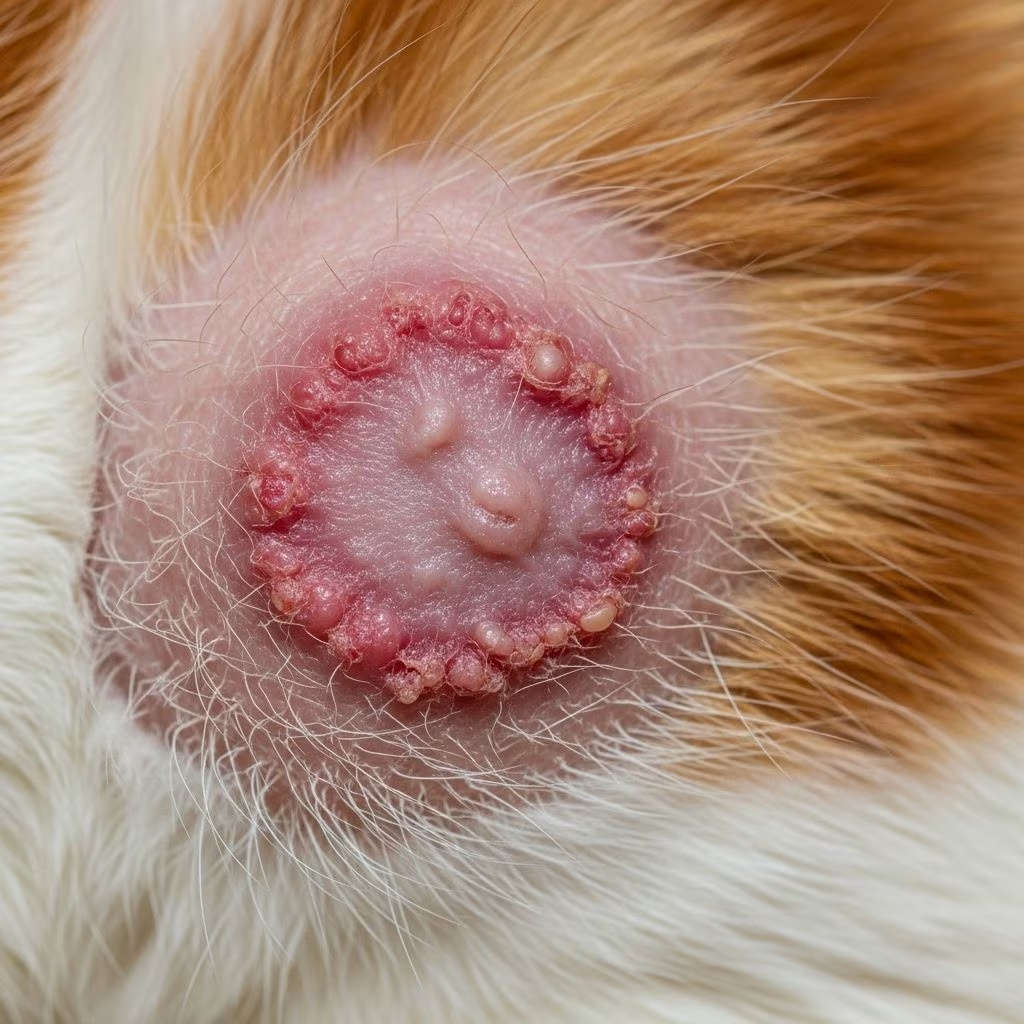
Fungal skin infections in cats, commonly known as ringworm or dermatophytosis, are highly contagious conditions caused by dermatophyte fungi like Microsporum canis. These infections affect the skin, hair, and nails, leading to characteristic lesions that can spread to other pets, humans, and the environment. Early detection and proper treatment are crucial for resolution, often requiring a combination of systemic oral antifungals, topical therapies, and environmental decontamination.
What is a Fungal Infection on a Cat’s Skin?
A fungal infection on a cat’s skin refers to dermatophytosis, primarily caused by Microsporum canis, Trichophyton mentagrophytes, or Microsporum gypseum. Unlike bacterial infections, these fungi invade keratin in hair, skin, and nails, producing spores that survive in the environment for months. Cats, especially kittens, long-haired breeds, and immunocompromised individuals, are particularly susceptible. The infection manifests as circular patches of alopecia, scaling, crusting, and broken hairs, often mistaken for allergies or parasites.
Systemic fungal infections like aspergillosis, cryptococcosis, or sporotrichosis can also present with skin lesions but typically involve lungs, sinuses, or disseminated disease. Skin involvement in these cases includes nodules, draining tracts, or ulcers, requiring different diagnostic and therapeutic approaches.
Symptoms of Fungal Infection in Cats
Symptoms vary by infection type but commonly include:
- Circular areas of hair loss (alopecia) with broken, stubby hairs around the periphery
- Red, scaly, inflamed skin patches that may itch or be asymptomatic
- Crusting, hyperkeratosis, or raised lesions on the head, ears, limbs, or trunk
- Brittle, discolored nails (onychomycosis) in severe cases
- Secondary bacterial infections leading to pustules, odor, or pain
In ringworm, lesions often glow under Wood’s ultraviolet light (fluorescence), though negative results do not rule out infection. Immunosuppressed cats may show widespread involvement without classic rings.
For deeper mycoses:
- Sporotrichosis: Firm nodules along lymphatics that ulcerate and drain
- Histoplasmosis: Skin lumps, fever, weight loss
- Blastomycosis: Draining tracts, respiratory signs
Observe for behavioral changes like lethargy or hiding, as pain or systemic illness may accompany advanced cases.
Causes of Fungal Skin Infections in Cats
Primary causes include exposure to infected animals, contaminated environments (soil, grooming tools, bedding), or spores in multi-cat households/shelters. Microsporum canis accounts for 90-95% of feline cases, transmitted via direct contact or fomites. Risk factors encompass:
- Young age (<1 year): Immature immunity
- Long-haired breeds (Persians, Maine Coons): Trapping spores
- Concurrent diseases: FIV, FeLV, diabetes, hyperthyroidism
- Crowded, stressful environments: Shelters, catteries
- Outdoor access in endemic areas for dimorphic fungi
Unlike true worms, ringworm is not a parasite but a zoonotic fungus transmissible to humans, especially children and immunocompromised individuals.
Diagnosis of Cat Skin Fungal Infections
Veterinary diagnosis combines history, clinical signs, and confirmatory tests:
- Wood’s Lamp Examination: 50-70% of M. canis strains fluoresce apple-green; rapid screening tool
- Hair Pluck/Trichogram: Microscopic evaluation for ectothrix spores (arthrospores around hair shafts)
- Fungal Culture (DTM): Gold standard; grows in 7-21 days, identifies species via macroconidia
- Biopsy/Histopathology: For atypical or systemic cases; shows hyphae in stratum corneum
- PCR Testing: Rapid detection of fungal DNA, increasingly available
Differential diagnoses include bacterial pyoderma, demodicosis, cheyletiellosis, or allergic dermatitis. Multiple negative tests may be needed due to patchy distribution.
Treatment for Fungal Infections in Cats
Treatment protocols combine systemic antifungals, topical therapies, and decontamination for 4-12 weeks or until two consecutive negative cultures. Never stop early to prevent relapse.
Systemic Antifungal Therapy
Itraconazole: First-line; 5-10 mg/kg PO daily or pulse (1 week on/1 week off). Highly effective, accumulates in hair/stratified squamous epithelium. Monitor liver enzymes; rare hepatotoxicity.
Terbinafine: 30-40 mg/kg PO daily; excellent efficacy, persists in hair 5+ weeks post-treatment. Occasional vomiting/pruritus.
Avoid griseofulvin/ketoconazole due to toxicity.
Topical Therapy
- Twice-weekly whole-body rinses: 0.2% enilconazole (Clingen) or 2% miconazole + 2% chlorhexidine (Malaseb)
- Lime sulfur dips (USA): 1:16-1:32 dilution, twice weekly; strong sporicidal
- Captan cream or povidone-iodine for localized lesions
Prevent grooming until dry using e-collar. Clip hair in long-haired cats.
Supportive Care
Treat secondary bacterial infections with antibiotics; provide IV fluids if dehydrated. Isolate infected cats; hospitalize contagious cases.
| Treatment Type | Examples | Frequency | Notes |
|---|---|---|---|
| Systemic | Itraconazole 5 mg/kg | Daily/pulse | Monitor LFTs |
| Systemic | Terbinafine 40 mg/kg | Daily | Good for hair |
| Topical Rinse | Enilconazole 0.2% | 2x/week | Sporicidal |
| Topical Shampoo | Miconazole/chlorhexidine | 2x/week | Whole body |
Recovery and Management
Improvement visible in 2-4 weeks, full cure 6-12 weeks. Monitor via culture q2-3 weeks. Relapse rates 20-40% without environmental cleaning. Prognosis excellent for localized ringworm; guarded for systemic mycoses.
Prevention of Fungal Infections in Cats
- Quarantine new cats 2-3 weeks; test high-risk
- Weekly grooming; avoid sharing brushes
- Disinfect environment: 1:10 bleach (contact 10 min), accelerated hydrogen peroxide, or enilconazole fogging
- Vaccines unavailable; focus on hygiene
- Minimize stress/crowding
Discard or hot-wash (>140°F) fabrics; vacuum daily with HEPA filter.
Frequently Asked Questions (FAQs)
Is ringworm in cats contagious to humans?
Yes, highly zoonotic. Wear gloves, wash hands, launder clothes. Children/immunocompromised at highest risk.
How long does it take for ringworm to go away in cats?
With combined therapy, 4-12 weeks until negative cultures.
Can I treat cat ringworm at home?
No, requires vet diagnosis and prescription antifungals. OTC topicals insufficient alone.
What shampoo is good for fungal infections in cats?
Miconazole/chlorhexidine or lime sulfur; twice weekly under vet guidance.
Will my cat’s hair grow back after ringworm?
Yes, typically within months post-cure.
Is cat fungal infection fatal?
Rarely for dermatophytosis; systemic forms can be if untreated.
References
- Fungal Infections in Cats: Everything You Should Know — Cedar Mill Veterinary Clinic. 2024-02-29. https://www.cedarmillvet.com/site/blog/2024/02/29/fungal-infections-cats
- Fungal Infections in Cats: Causes, Symptoms & Treatment — Diamond Bar Veterinary Clinic. 2023-07-15. https://www.diamondbarvetclinic.com/site/blog/2023/07/15/fungal-infections-cats
- GUIDELINE for Dermatophytosis, ringworm in cats — ABCD cats & vets / European Advisory Board on Cat Diseases. Accessed 2026. https://www.abcdcatsvets.org/guideline-for-dermatophytosis-ringworm-in-cats/
- Fungal Infection in Cats – Skin, Lungs & Nose — Carolina Veterinary Specialists Charlotte. 2021-03-15. https://www.charlotte.carolinavet.com/site/charlotte-emergency-vet-blog/2021/03/15/fungal-infection-cat
- Fungal Infections in Cats: Causes, Symptoms & Treatment — Critter Creek Veterinary Clinic. 2024-07-26. https://www.crittercreekvet.com/site/blog/2024/07/26/fungal-infections-cats
- Fungal Infections in Cats – Cat Owners — Merck Veterinary Manual. Accessed 2026. https://www.merckvetmanual.com/cat-owners/disorders-affecting-multiple-body-systems-of-cats/fungal-infections-in-cats
- Skin Fungal Infections in Cats — PetMD. Accessed 2026. https://www.petmd.com/cat/conditions/skin/skin-fungal-infections-cats



