

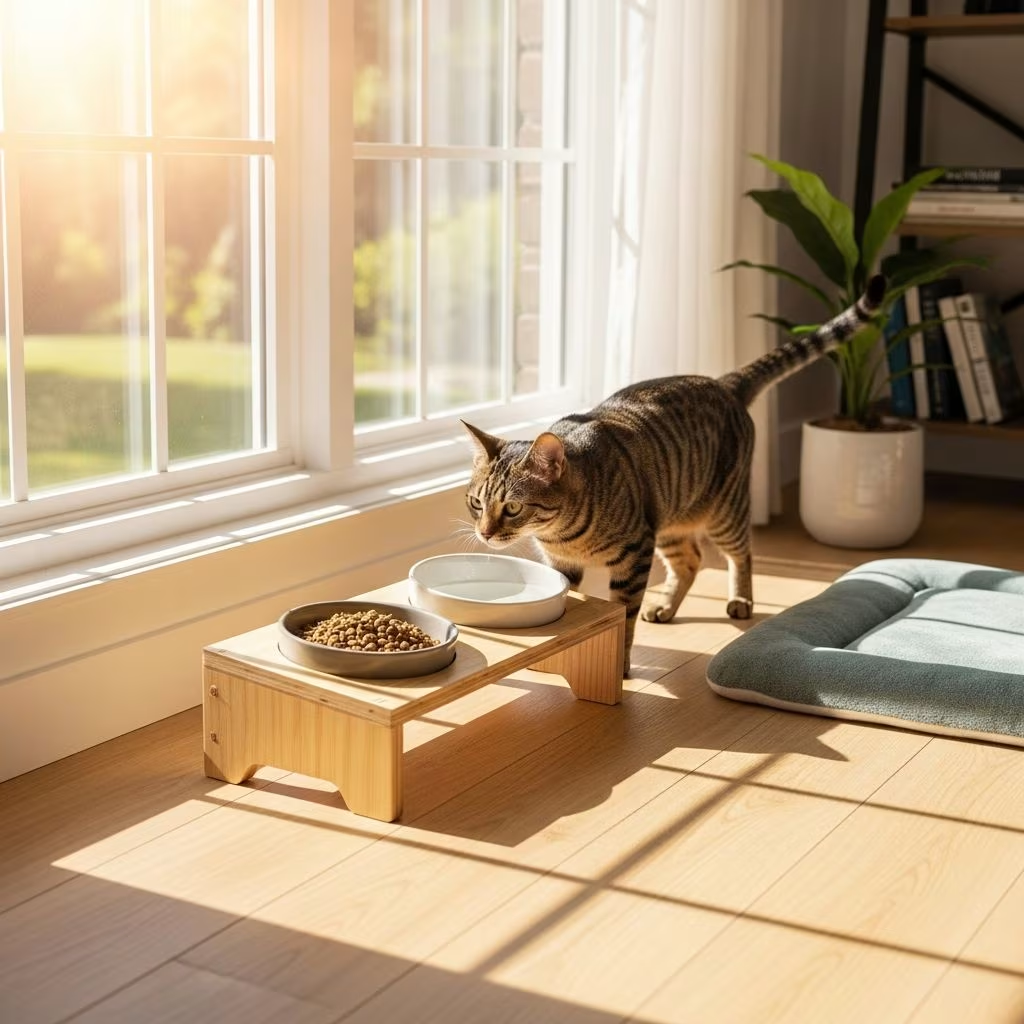
The placement of your cat’s feeding stations represents far more than a matter of convenience or aesthetics—it directly influences your feline companion’s eating habits, stress levels, and overall health outcomes. Many cat owners instinctively consolidate their pet’s supplies in a single location for organizational purposes, yet this approach frequently contradicts the natural instincts and behavioral preferences that have shaped feline development over millennia. Understanding the underlying principles of optimal bowl placement empowers you to create an environment where your cat can thrive, eating with confidence and contentment.
Understanding Why Location Matters for Feline Wellness
Your cat’s feeding experience extends beyond the nutritional content of their meals. The environment surrounding their eating and drinking stations profoundly affects their psychological state, digestion, and willingness to consume adequate food and water. Cats have evolved as solitary hunters with specific territorial behaviors, and these ancestral instincts continue to shape their preferences in domestic settings. When their feeding spaces align with these natural inclinations, cats demonstrate increased consumption, reduced anxiety, and better overall health markers. Conversely, poorly chosen locations can suppress appetite, create chronic stress, and potentially lead to behavioral issues or medical complications related to inadequate hydration or nutrition.
The Tranquility Principle: Establishing Peaceful Feeding Zones
Among the most critical factors influencing successful bowl placement is the ambient environment surrounding the feeding station. Cats are creatures of sensory sensitivity, and excessive noise, vibration, or foot traffic creates a state of hypervigilance that undermines their ability to relax while eating. The kitchen, despite its conventional appeal as a pet feeding location, often presents numerous challenges for cats, particularly in households where family activities generate considerable commotion. The proximity of appliances, the movement of people preparing meals, and the general hustle of a busy kitchen can trigger anxiety responses that either suppress appetite or encourage rushed, inefficient eating patterns.
Optimal locations for cat feeding stations include spare bedrooms, hallways with minimal traffic flow, bathroom corners away from the toilet area, or designated quiet rooms that see limited human activity. These spaces provide the psychological safety cats require to eat without stress or interruption. The establishment of a consistently peaceful feeding environment contributes significantly to maintaining regular eating schedules, supporting digestive health, and preventing stress-related behavioral complications.
The Visibility Advantage: Strategic Placement for Feline Confidence
While cats prefer quiet environments, they simultaneously need the ability to maintain awareness of their surroundings while eating. This apparent contradiction resolves when understanding that cats value open positioning that provides panoramic visibility. Placing bowls in corners where a cat’s back faces the wall, or in confined spaces that restrict peripheral vision, creates vulnerability that directly contradicts their instinctive need for environmental awareness and predator detection.
Effective placement positions the feeding station in an open area where your cat can maintain sight lines in multiple directions. This could mean placing bowls in the center of a quiet room, along an open wall of a hallway, or in any location that offers unobstructed sightlines. This approach aligns with your cat’s evolutionary history as both predator and prey, where maintaining visual awareness during feeding provided survival advantages. In modern domestic settings, this positioning satisfies your cat’s psychological need to feel secure and in control of their dining experience.
The Separation Strategy: Preventing Cross-Contamination and Stress
Perhaps no placement decision carries greater health implications than the separation of litter facilities from feeding stations. The biological imperative that drives cats to separate their elimination areas from their feeding and water sources represents a fundamental aspect of feline hygiene behavior. When bowls occupy proximity to litter boxes, several concerning outcomes become probable:
- Litter particles—including bacteria and waste material—can contaminate food and water supplies through airborne dispersal or direct contact
- Cats may consume contaminated water or food, introducing pathogens that cause gastrointestinal illness
- The olfactory association between elimination and feeding creates psychological stress that suppresses appetite
- Cross-contamination risks increase exponentially when multiple cats share household spaces
Veterinary behaviorists recommend maintaining a minimum separation distance, ideally placing feeding stations and litter facilities in different rooms when household layout permits. This separation honors your cat’s instinctive territorial organization while providing practical health protection. For households with space constraints, positioning bowls and litter boxes on opposite corners of a single room, or using barriers that prevent direct line-of-sight between facilities, provides a reasonable alternative when complete separation proves impossible.
The Separation of Food and Water: Understanding Feline Drinking Preferences
The proliferation of combination feeding stations featuring separate compartments for food and water reflects human organizational preferences rather than feline biology. In wild environments, cats instinctively maintain distance between their hunting areas and their drinking water sources, reducing contamination risks and allowing them to approach water with different sensory expectations. This ancestral behavior pattern continues in domestic cats, making separate food and water locations significantly more appealing to most felines.
When food and water occupy adjacent bowls or shared stations, multiple problems emerge. Pieces of food inevitably migrate into water supplies, creating floating particles that discourage drinking. More significantly, the olfactory presence of food while drinking creates an unpleasant sensory experience that reduces water consumption. Cats are already prone to insufficient hydration in domestic environments, and proximity to food compounds this tendency by making water less appealing.
The strategic solution involves positioning water bowls in entirely separate locations from food bowls. Many successful cat owners maintain multiple water stations throughout their homes—one on each floor, in various rooms where their cat spends time, and deliberately separated from food preparation and storage areas. This approach both respects feline preferences and provides practical benefits by ensuring your cat has consistent access to fresh water throughout their territory.
Multi-Cat Households: Individual Feeding Station Protocols
Households with multiple cats require more sophisticated feeding station strategies. Shared bowls create competition dynamics that can stress subordinate cats, leading to undereating or overeating depending on individual personality and hierarchy. Individual feeding stations for each cat allow you to monitor consumption patterns, ensure each animal receives appropriate nutrition, and prevent resource guarding behaviors that damage relationships between feline household members.
Each cat ideally receives its own feeding and drinking stations positioned in different locations, allowing each animal to develop comfort with their personal feeding routine. This individualized approach provides additional benefits including:
- Precise monitoring of each cat’s consumption for early detection of health changes
- Prevention of one cat eating another’s specialized diet or medications mixed into food
- Reduction of territorial disputes and stress-related behavioral issues
- Flexibility in managing different feeding schedules if required by health considerations
The Consistency Foundation: Maintaining Stable Feeding Locations
Cats achieve psychological comfort through predictability and routine. Once you establish optimal feeding station locations, maintaining their consistency becomes essential for ongoing success. Frequent relocation of bowls disrupts the behavioral patterns cats develop around feeding times and locations, creating confusion that manifests as appetite changes, digestive irregularity, or anxiety-related behaviors.
When transitioning to new bowl locations, employ a gradual adjustment strategy rather than abrupt relocation. Maintain existing bowl locations while simultaneously establishing new stations, allowing your cat time to discover and become comfortable with the new spaces before removing original bowls. This dual-station approach honors your cat’s need for consistency while accommodating necessary changes in household layout or circumstances.
Environmental Modifications for Multi-Species Households
Households containing both cats and dogs require additional placement considerations. Dogs naturally pursue food opportunities, and shared feeding stations create competition stress for cats while potentially leading to inappropriate food consumption by canine household members. Effective solutions include positioning cat bowls at elevated heights—on shelves, countertops, or specialized feeding furniture—that provide exclusive cat access while preventing dog interference. Alternatively, placing cat feeding stations within cat-exclusive spaces such as elevated cat condos, enclosed room spaces with restrictive doorways, or elevated shelving provides physical barriers that allow cats to eat without competition anxiety or canine interference.
Addressing Common Placement Mistakes
| Common Mistake | Why It’s Problematic | Recommended Solution |
|---|---|---|
| Locating bowls in the kitchen | High traffic, noise, appliance vibrations cause stress | Choose quieter alternative rooms or hallways |
| Using combination food/water bowls | Food particles contaminate water; odors discourage drinking | Separate into distinct bowls in different locations |
| Placing bowls near litter facilities | Cross-contamination risk; odor association suppresses appetite | Maintain maximum possible distance between facilities |
| Positioning bowls in corners | Restricts visibility; creates vulnerability feeling | Choose open locations with panoramic sightlines |
| Frequently relocating bowls | Disrupts established routines; creates confusion and stress | Choose permanent location and maintain consistency |
Frequently Asked Questions About Feline Feeding Station Placement
Q: How many water stations should I establish for a single cat?
A: Positioning at least two water stations in different locations encourages increased consumption and provides convenient access throughout your cat’s territory. Many behavioral experts recommend placing water bowls on each floor of multi-story homes and in rooms where your cat spends significant time. This strategy particularly benefits cats prone to lower-than-ideal water consumption.
Q: Can I relocate my cat’s bowls if my current setup isn’t working?
A: Yes, but implement changes gradually. Maintain existing bowl locations while establishing new stations over several weeks, allowing your cat to adjust before removing original bowls. Abrupt changes disrupt established routines and can temporarily suppress appetite or create stress-related behaviors.
Q: What if my home layout makes it impossible to separate food and litter facilities?
A: When complete separation proves impossible, maximize distance by placing facilities in opposite corners of the space or using furniture barriers to obstruct direct sightlines. Even partial separation provides significant improvement over adjacent placement.
Q: Does bowl material affect optimal placement strategies?
A: Bowl material influences your cat’s preference but doesn’t substantially alter placement principles. Cats generally prefer ceramic or glass bowls and often avoid plastic. Regardless of material, the location principles regarding quiet environments, visual openness, and separation from other facilities remain equally important.
Q: How long does a cat need to adjust to a new feeding location?
A: Most cats require 2-4 weeks to fully adjust to new feeding station locations, though individual variation is substantial. During this adjustment period, monitoring food and water consumption helps identify successful transitions versus ongoing resistance requiring alternative approaches.
Creating Your Personalized Feeding Station Strategy
The ideal feeding station configuration depends on your specific home layout, the number of cats in your household, the presence of other animals, and your individual cat’s behavioral characteristics. Begin by identifying available quiet spaces that offer good visibility and maximum distance from litter facilities. Experiment with different configurations while monitoring your cat’s eating and drinking behaviors, appetite enthusiasm, and stress indicators. Track which locations seem to generate increased consumption and apparent comfort, using these observations to refine your approach.
Remember that the time invested in optimizing feeding station placement yields dividends through improved nutrition, enhanced hydration, reduced behavioral issues, and decreased overall stress for your feline companion. By honoring your cat’s instinctive preferences and behavioral needs, you create feeding environments where cats can thrive, consuming the nutrition they require while experiencing the psychological comfort that defines optimal feline wellness.
References
- Cat-Friendly Water Bowl Guidelines — FOUR PAWS in US. Accessed 2026. https://www.fourpawsusa.org/our-stories/publications-guides/cat-friendly-water-bowl
- Where To Put Cat Food and Water Bowls — Americat Company. https://americatcompany.com/blogs/news/where-to-put-cat-food-and-water-bowls
- Perfect Spots for Cats’ Food and Water Bowls — Encore Pet Food. https://encorepetfood.com/uk/pet-advice/perfect-spots-for-cats-food-water-bowls/
- Where to Place Your Cat’s Food and Water Bowls for Optimal Health — Farm City Pets. https://www.farmcitypets.com.au/blogs/news/where-to-place-cats-food-water-bowls
- Best Place to Put Cat Food Bowl: A Complete Guide — Uahpet. https://www.uahpet.com/blogs/post/best-place-to-put-cat-food-bowl-a-complete-guide
- Elevated Cat Bowls: The Ultimate Guide — Catenary Home. https://catenaryhome.com/pages/the-ultimate-guide-to-elevated-cat-bowls



