

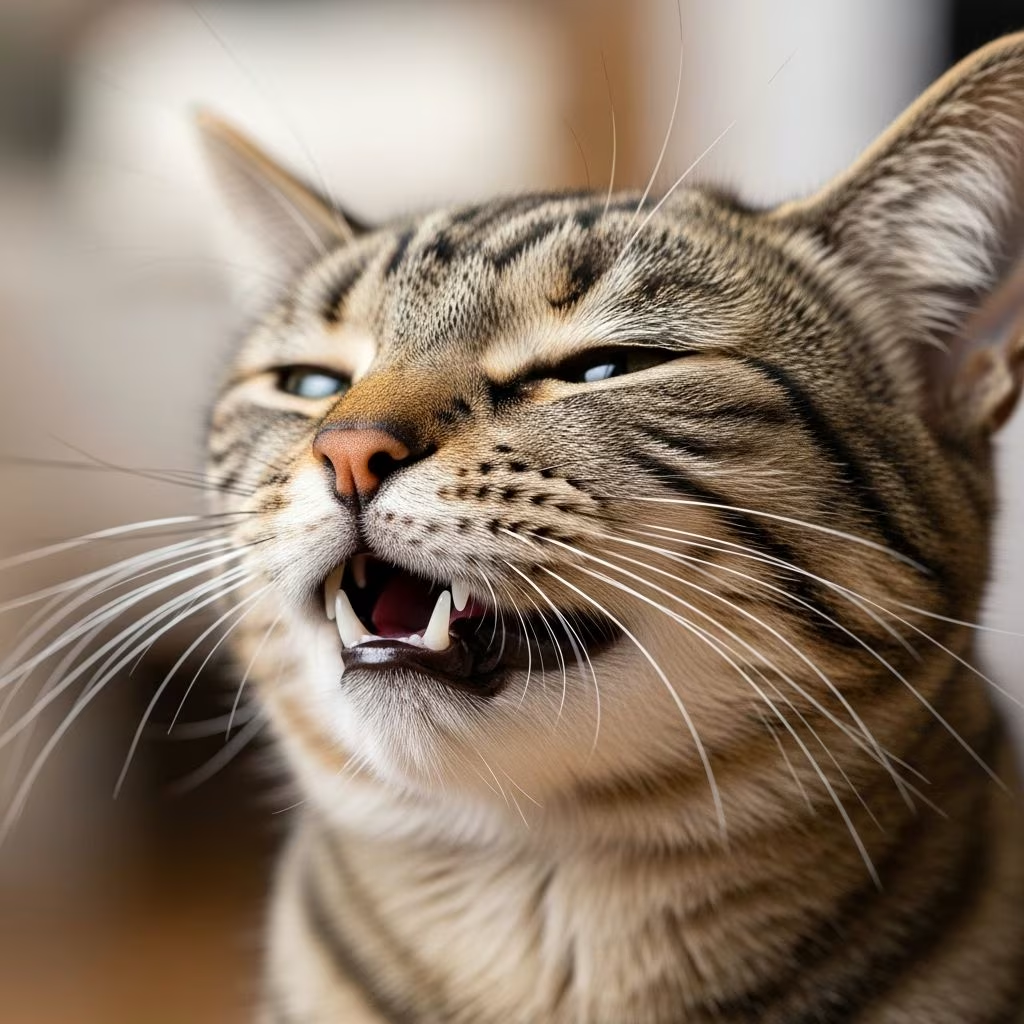
The flehmen response is a distinctive behavior in cats where they curl their upper lip, open their mouth, and hold a grimace-like pose to investigate intriguing odors. This action enables cats to direct scent molecules to their vomeronasal organ for detailed chemical analysis, particularly pheromones signaling territory, mating, or identity.
The Science of Feline Scent Detection
Cats possess an extraordinary sense of smell, far surpassing humans, thanks to their olfactory system. Central to this is the vomeronasal organ (VNO), also known as Jacobson’s organ, located in the roof of the mouth behind the incisors. This auxiliary structure detects pheromones—chemical messengers that convey social and reproductive information.
Unlike regular sniffing through the nose, which handles everyday odors, the VNO specializes in non-volatile chemicals that don’t easily evaporate. When a cat encounters such a scent, it performs the flehmen response to solubilize the particles in saliva and transport them via nasopalatine ducts to the VNO.
Research highlights that domestic cats have around 30 receptors in their VNO, compared to just nine in hounds, underscoring why felines excel at this sensory processing.
Recognizing the Flehmen Grimace
Visually, the flehmen response appears comical or concerning to owners. Cats lift their upper lip asymmetrically or symmetrically, expose their teeth, part their lips, and sometimes curl their tongue or extend their neck. The mouth stays open for several seconds as they inhale deeply, often freezing in place.
This differs from panting, aggression, or dental pain because it’s brief, odor-triggered, and purposeful. Videos of cats reacting to smells like dirty socks or urine sprays capture this perfectly, showing the head tilt and intense focus.
- Upper lip curl: Signature move exposing gums and teeth.
- Open mouth with tongue flick: Draws air into oral ducts.
- Head held high: Optimizes scent flow to VNO.
- Duration: Typically 2-10 seconds per episode.
Common Triggers for This Behavior
Cats trigger flehmen most often with pheromones from conspecifics, but household items can provoke it too. Here’s a breakdown:
| Trigger Type | Examples | Why It Elicits Flehmen |
|---|---|---|
| Conspecific Pheromones | Urine, feces, facial rubs, anal gland scents | Assesses territory, sex, health, reproductive status |
| Mating Signals | Female urine in heat | Males gauge fertility and compatibility |
| Household Odors | Dirty laundry, shoes, new cleaners | Novel or strong scents warrant deeper analysis |
| Other Animals | Dog urine, wildlife markers outdoors | Evaluates environmental threats or info |
Male cats exhibit this more frequently, especially intact ones detecting estrous females.
Evolutionary Role in Feline Communication
The flehmen response evolved as a key tool for intraspecific communication. Pheromones allow cats to ‘read’ messages without visual or auditory cues, vital for solitary hunters like domestic felines.
In wild felids such as lions and tigers, it facilitates group dynamics, mate selection, and conflict avoidance. For pet cats, it helps navigate multi-cat homes or outdoor territories, reducing unnecessary fights by understanding scent posts.
Some researchers describe it as a hybrid between smell and taste, granting cats a nuanced ‘sixth sense’ for chemical social cues.
Health Implications and When to Worry
Occasional flehmen is harmless and indicates a healthy, curious cat. However, persistent or excessive displays might signal issues:
- Dental problems: Pain from teeth or gums mimicking the grimace.
- Respiratory issues: If paired with sneezing, discharge, or labored breathing.
- Neurological concerns: Rare, but twitching or seizures could overlap.
- Stress or overstimulation: Frequent reactions in new environments.
Consult a vet if the behavior accompanies appetite loss, lethargy, or foul breath. A damaged VNO from injury or infection could impair pheromone detection, altering social behaviors.
Flehmen Across Species
While iconic in cats, flehmen occurs in many mammals. Horses flare nostrils dramatically, goats show similar lip curls, and even elephants extend trunks. In felines, it’s most pronounced due to their advanced VNO.
Dogs perform a milder version, but their fewer VNO receptors make it less common. This comparative trait highlights cats’ olfactory specialization.
Practical Tips for Cat Owners
Understanding flehmen enhances bonding and management:
- Provide scent enrichment: Catnip, silver vine, or pheromone diffusers stimulate natural behaviors safely.
- Multi-cat harmony: Use synthetic pheromones (e.g., Feliway) to mimic calming signals.
- Monitor introductions: Watch for flehmen during new cat or pet meetings—it’s info-gathering, not hostility.
- Clean strategically: Avoid masking territorial scents abruptly; gradual cleaning prevents confusion.
- Video and share: Capture episodes for vet consults if concerning.
Embrace it as a window into your cat’s world—next time they ‘stink face’ your gym bag, know they’re decoding its story!
Frequently Asked Questions (FAQs)
Is the flehmen response painful for cats?
No, it’s a normal, voluntary behavior for scent analysis, not discomfort.
Why do male cats flehmen more?
Males use it primarily for mating cues from females, checking readiness via urine pheromones.
Can kittens show flehmen?
Yes, though less frequently until maturity; it’s innate but develops with experience.
Does neutering stop flehmen?
It reduces mating-related instances but not general curiosity-driven ones.
Is flehmen a sign of aggression?
Rarely; it’s investigative. True aggression involves ears back, hissing, or swatting.
References
- Feline olfaction and the extraordinary superpower of cat smell — Felidae Fund. 2023. https://felidaefund.org/news/general/feline-olfaction-and-the-extraordinary-superpower-of-cat-smell
- Flehmen Response in Cats — Blind Cat Rescue. Accessed 2026. http://www.blindcatrescue.com/flehmen.htm
- What Is the Flehmen Response in Cats? — PetMD. 2024-05-15. https://www.petmd.com/cat/general-health/cat-sneering-what-flehmen-response
- Why Do Cats Open Their Mouths When They Smell Something? — Chewy Education. 2023. https://www.chewy.com/education/cat/training-and-behavior/why-do-cats-open-their-mouths-when-they-smell-something-is-this-normal
- Why Do Cats Make the “Stinky Face”? — Meowingtons. 2024. https://www.meowingtons.com/blogs/lolcats/why-do-cats-make-the-stinky-face-flehmen-grimace
- Flehmen response — Wikipedia. Accessed 2026. https://en.wikipedia.org/wiki/Flehmen_response



