

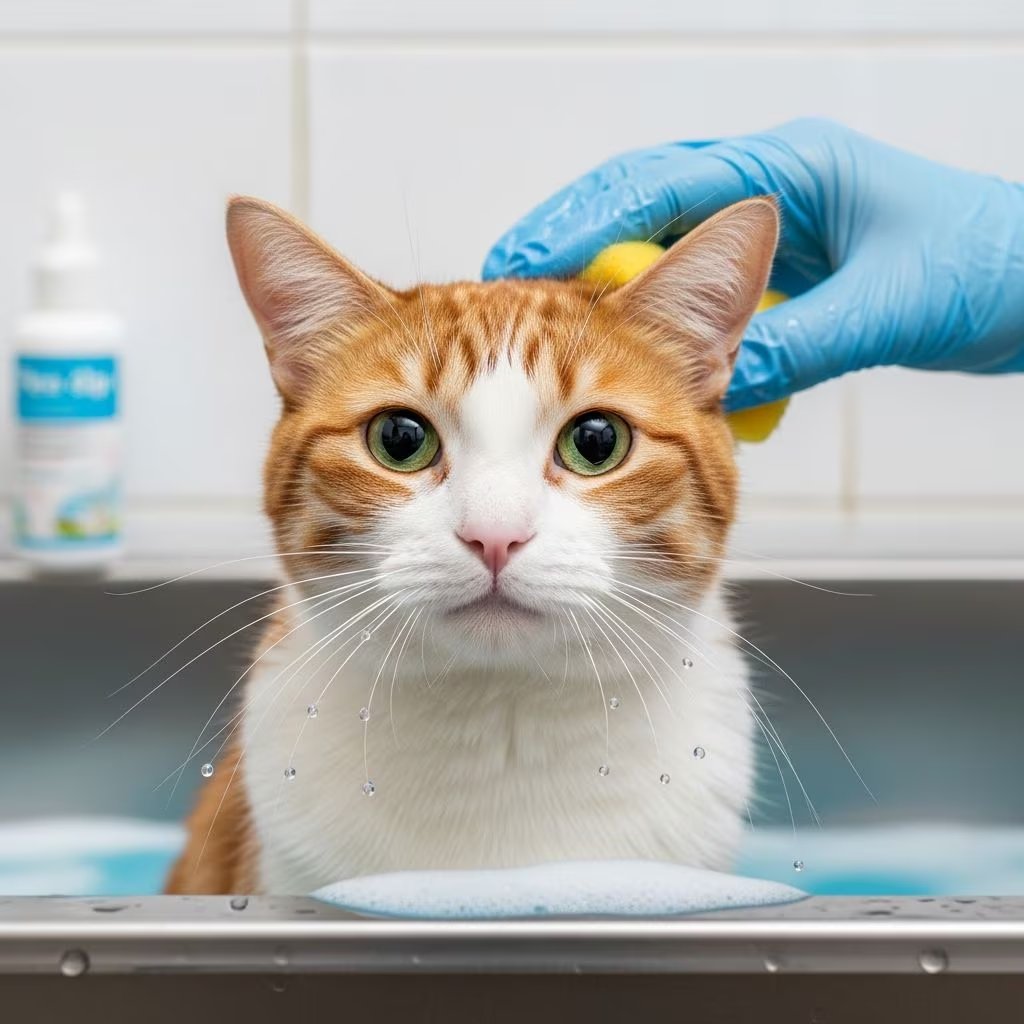
Flea dips involve submerging a cat in a diluted insecticide solution to kill fleas, but they carry risks like skin irritation and toxicity, making them less favored today compared to spot-on treatments and oral medications that offer high efficacy with minimal handling stress.
Understanding Flea Dips for Feline Parasite Control
Flea dips have historically served as a direct method to combat infestations on cats by applying pyrethrin or pyrethroid-based solutions through full-body immersion. This approach targets adult fleas on the fur and skin but requires careful dilution and rinsing to prevent adverse effects. While effective for severe cases, veterinary experts now prioritize less invasive options due to safety concerns.
The process typically involves mixing a concentrate with water, soaking the cat thoroughly, and allowing the solution to act before a thorough rinse. Key to success is using cat-specific products, as dog formulations can be lethal due to higher permethrin concentrations. Modern research shows dips achieving rapid flea reduction but often outperformed by systemic treatments in long-term control.
Risks and Precautions When Dipping Cats
Primary risks include chemical burns, neurological symptoms like tremors, and respiratory distress if not rinsed properly. Cats with sensitivities, kittens under 12 weeks, or those with pre-existing skin conditions should avoid dips entirely. Always perform a small patch test 24 hours prior and monitor for signs of reaction such as excessive salivation or lethargy.
- Wear protective gear: Gloves and eyewear to avoid human exposure.
- Dilution accuracy: Follow label ratios precisely; overdosing amplifies toxicity.
- Rinsing protocol: Use copious lukewarm water for at least 10 minutes post-application.
- Post-dip care: Keep cat warm and dry, observe for 48 hours.
Studies indicate that improper use leads to higher adverse event rates compared to topicals, underscoring the need for veterinary consultation before proceeding.
Modern Alternatives to Traditional Flea Dips
Advancements in parasitology have introduced spot-on pipettes, collars, and oral chewables that surpass dips in safety and convenience. These products deliver insecticides systemically or through the skin, providing 90-100% flea reduction for 1-3 months with fewer application errors.
| Product Type | Key Ingredients | Duration | Flea Reduction Rate | Additional Benefits |
|---|---|---|---|---|
| Spot-on (e.g., Bravecto Plus) | Fluralaner + Moxidectin | 3 months | 97-98% | Ticks, heartworm, ear mites |
| Spot-on (e.g., Revolution Plus) | Selamectin + Sarolaner | 1-3 months | 99.4-99.8% | GI worms, mites |
| Collar (e.g., Seresto) | Imidacloprid + Flumethrin | 8 months | Fast kill | Economical for multiples |
| Oral (e.g., Capstar) | Nitenpyram | 24 hours | Rapid (30 min) | Immediate relief |
This comparison highlights how isoxazoline-based topicals like fluralaner achieve sustained efficacy without bathing, ideal for indoor-outdoor cats.
Step-by-Step Application of Flea Dips
For cases where dips are deemed necessary, follow these steps meticulously:
- Consult vet: Confirm suitability based on cat’s health and flea severity.
- Gather supplies: Cat-specific dip, large tub, towels, mild shampoo.
- Prepare solution: Mix per instructions in a non-metallic container.
- Secure cat: Use a helper; wear towel over eyes/nose.
- Immerse fully: Pour over from head to tail, avoiding face; massage into fur.
- Wait time: 5-10 minutes as specified.
- Rinse thoroughly: Use running water until no residue remains.
- Dry and monitor: Towel dry, provide warm quiet space.
Combining with environmental cleaning enhances results, as 95% of fleas reside off the host.
Environmental Flea Management Strategies
Flea dips treat the cat but neglect the home, where eggs and larvae thrive. Vacuum daily, wash bedding in hot water, and use insect growth regulators (IGRs) like lufenuron for comprehensive control. Studies show combined pet and premise treatments reduce household fleas by 98-99.7%.
- Steam clean carpets and furniture weekly.
- Apply premise sprays with methoprene or pyriproxyfen.
- Dispose vacuum bags immediately to prevent reinfestation.
Product Efficacy: What Research Shows
Peer-reviewed data confirms superior performance of newer formulations. For instance, selamectin + sarolaner yields 99.5-99.9% flea reduction at 30 days, outperforming fipronil + methoprene (97.6-98.6%). Fluralaner spot-ons maintain 97-98% efficacy over 12 weeks against fleas and ticks. Oral lufenuron with pyrethrins achieves 99.2% on-pet and 99.7% in-home reduction. These metrics position modern options as first-line defenses over dips.
When to Avoid Flea Dips Altogether
Steer clear if your cat is pregnant, nursing, under 12 weeks, or shows grooming issues. Indoor-only cats with mild infestations benefit more from oral fast-kills like nitenpyram, which acts in 30 minutes without mess. For multi-pet homes, collars like Seresto offer group protection up to 8 months.
Flea Allergy Dermatitis and Dip Relevance
Cats with flea allergy dermatitis (FAD) exhibit intense itching and hair loss. Dips may exacerbate symptoms via irritation, whereas topicals like selamectin + sarolaner resolve FAD signs in 86.7-100% of cases alongside 99.8% flea kill. Prioritize hypoallergenic, systemic controls.
Cost and Accessibility Comparison
Dips range $10-20 per use but require repeat applications and vet oversight. Monthly spot-ons cost $15-25, lasting longer with broader spectrum coverage. Long-acting options like Bravecto save time and reduce stress.
| Treatment | Cost per Month (est.) | Application Frequency |
|---|---|---|
| Flea Dip | $5-10 | As needed (weekly possible) |
| Spot-on Monthly | $15-25 | Monthly |
| Spot-on 3-Month | $20-30 | Quarterly |
| Collar | $10-15 | 8 months |
Veterinary Recommendations for 2026
As of recent guidelines, vets advocate isoxazolines (fluralaner, sarolaner) for their rapid onset and uniform coverage, outperforming cutanous dips in adherence and efficacy. Pair with regular health checks for tailored plans.
Frequently Asked Questions (FAQs)
Can I use dog flea dip on my cat?
No, dog products contain toxic levels of permethrin for cats, potentially causing fatal seizures.
How often should I dip my cat?
Only as a last resort, every 7-14 days max, under vet supervision; prefer preventives.
Are flea dips safe for kittens?
Generally not under 12 weeks; opt for gentle topicals from 8 weeks.
What if my cat reacts to the dip?
Rinse immediately, contact vet; symptoms may require supportive care like fluids.
Do dips kill flea eggs?
No, they target adults; treat environment separately.
Choosing the Right Flea Control Plan
Assess your cat’s lifestyle: outdoor cats need broad-spectrum (fleas, ticks, worms); indoor ones suffice with flea-only. Rotate products annually to combat resistance, and maintain year-round prevention in endemic areas.
References
- Recent Advancements in the Control of Cat Fleas — PMC/NCBI. 2020-10-15. https://pmc.ncbi.nlm.nih.gov/articles/PMC7600267/
- Cat Flea, Worm & Tick Treatment Comparison — Walkerville Vet. 2023-01-01. https://www.walkervillevet.com.au/pet-care-advice/cats/flea-and-worm-protection-for-cats/
- Vet Guide 2025: Flea & Tick Control Products for Cats — AskAVet. 2025-01-01. https://askavet.com/blogs/news/vet-guide-2025-flea-tick-control-products-for-cats-complete-comparison-chart-%F0%9F%90%B1%F0%9F%9B%A1%EF%B8%8F



