

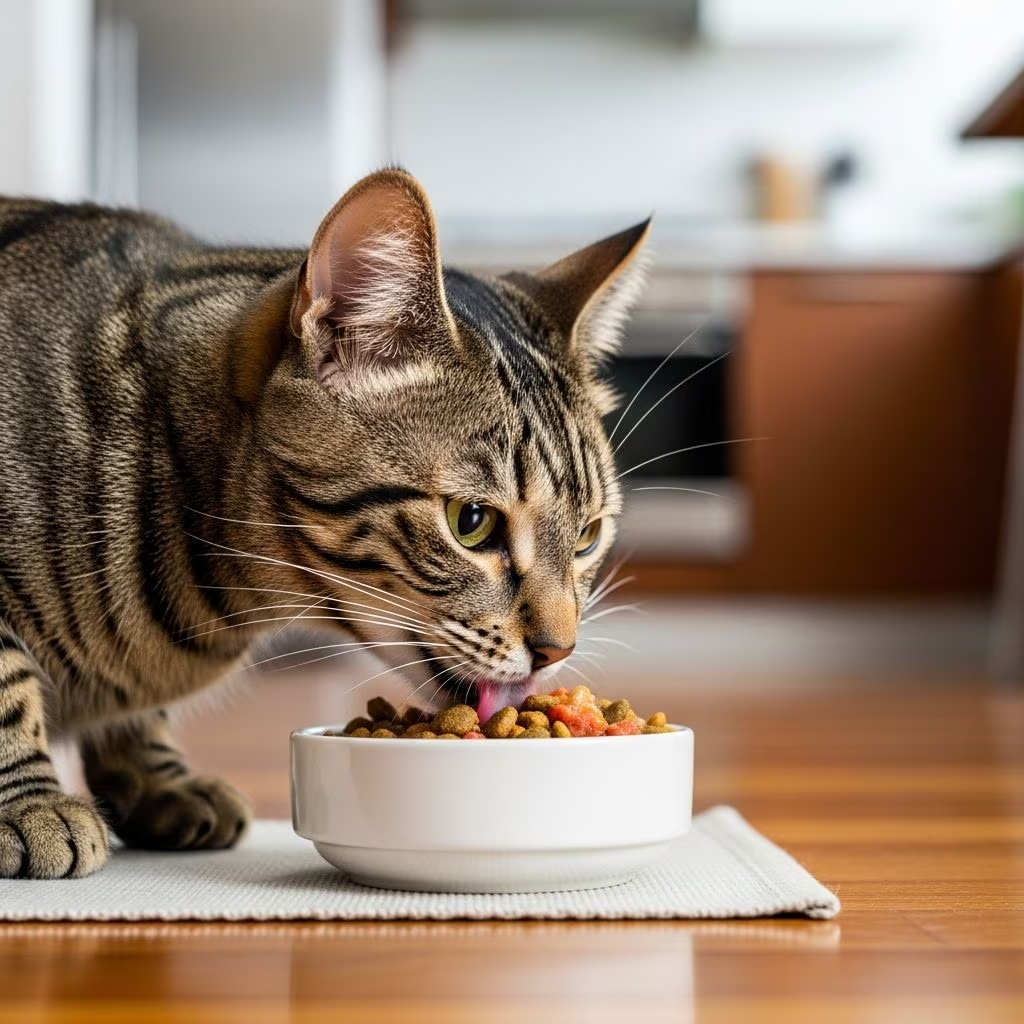
Determining the right amount of food for your cat involves considering factors like body weight, activity level, neuter status, and life stage. Proper feeding prevents obesity and supports long-term health, with daily calorie needs typically ranging from 200-400 kcal for most adults.
Understanding Your Cat’s Caloric Requirements
Cats require specific daily energy intake based on their profile. A standard adult cat needs about 20-30 kcal per pound of ideal body weight, adjusted for lifestyle. Indoor cats often need less due to lower activity, while active or intact cats demand more.
| Cat Weight (lbs) | Spayed/Neutered (kcal/day) | Intact (kcal/day) | Weight Gain Prone (kcal/day) | Weight Loss (kcal/day) |
|---|---|---|---|---|
| 5 | 157 | 183 | 131 | 105 |
| 7.5 | 210 | 245 | 175 | 140 |
| 10 | 260 | 303 | 216 | 173 |
| 12.5 | 298 | 362 | 258 | 207 |
| 15 | 354 | 413 | 295 | 236 |
This table provides baseline estimates; consult a vet for personalized adjustments.
Portion Sizes for Dry and Wet Cat Food
Dry food is calorie-dense, often 300-500 kcal per cup, making it easy to overfeed without measuring. For a 10-lb indoor cat, aim for 1/3 to 1/2 cup daily; active cats may need 1/2 to 2/3 cup. Always use a standard measuring cup.
Wet food, with 70-100 kcal per 3-oz can, promotes hydration. A 10-lb cat on an all-wet diet requires 3-4 cans daily. Mixed feeding—1-2 cans plus dry—balances moisture and convenience.
- Dry Food Benefits: Dental health from crunching, long shelf life.
- Wet Food Benefits: Higher moisture (70-80%), appeals to picky eaters, supports urinary health.
- Mixed Diet Tip: Combine for optimal nutrition; wet in mornings, dry for grazing.
Feeding Schedules by Age Group
Kittens: Frequent Meals for Growth
Kittens under 4 months need 3-4 meals daily due to small stomachs and high energy demands for growth. Use kitten-specific formulas with elevated calories, proteins, and fats until 9-12 months. Gradually reduce to 2-3 meals by 6 months.
Adult Cats: Structured Mealtimes
Adults (1-10 years) thrive on 2-6 small meals daily, mimicking their natural grazing instinct of 12-20 mini-meals. Avoid free-feeding wet food as it spoils; divide dry into portions.
Senior Cats: Adjusted for Metabolism
Over 10 years, maintain 1-2 meals unless vet-advised otherwise. Opt for senior formulas if kidney or dental issues arise, ensuring easy chewing and joint support.
Factors Influencing Feeding Amounts
Beyond basics, tailor portions to:
- Activity Level: Outdoor cats burn more calories; increase by 20-50%.
- Health Conditions: Diabetes or thyroid issues require vet-monitored diets.
- Neuter Status: Spayed/neutered cats need 20-30% fewer calories.
- Pregnancy/Lactation: Double or triple intake; feed ad libitum.
Monitor body condition: Feel ribs without excess fat; ideal waist visible from above.
Practical Tips for Accurate Feeding
- Read Labels: Follow guidelines, adjusting for your cat’s needs.
- Measure Precisely: Avoid eyeballing; use tools for consistency.
- Set Routines: Fixed times reduce begging and overeating.
- Encourage Hydration: Multiple fresh water bowls, fountains, or wet food.
- Store Properly: Refrigerate opened wet food; use covers.
Transition foods gradually over 7-10 days to prevent digestive upset.
Common Feeding Mistakes and Solutions
Overfeeding leads to obesity, affecting 60% of cats. Free-feeding dry promotes constant snacking; switch to timed meals. Table scraps disrupt balance—stick to complete diets.
- Mistake: Ignoring Weight Changes. Solution: Monthly weigh-ins; adjust calories.
- Mistake: One Food Type Only. Solution: Rotate flavors, mix wet/dry.
- Mistake: Neglecting Water. Solution: Fountains or soaked kibble.
Choosing the Best Cat Food
Select AAFCO-approved foods meeting nutritional standards. Prioritize high protein (strict carnivores need meat-based diets, low carbs ~1-2%). Kittens: Growth formulas. Adults: Maintenance. Seniors: Joint/kidney support.
Avoid dog food or milk routinely; they lack taurine and cause issues.
Special Considerations for Health and Wellness
For urinary health, wet food reduces crystal risk. Dental issues? Larger kibble or treats. Obesity? Gradual calorie reduction under vet guidance.
Annual vet checkups refine plans, especially for multiples cats where competition occurs—feed separately.
Frequently Asked Questions (FAQs)
How do I know if my cat is overweight?
Ribs hard to feel, no waist tuck. Use body condition scoring; aim for 4-5/9.
Can cats eat dry food only?
Yes, if balanced and water available, but wet adds hydration benefits.
How often to feed free-grazing cats?
Measure daily dry total; split into 2-4 meals to curb obesity.
What if my cat refuses food?
Check health, warm food, try flavors. Persistent? Vet visit.
Is grain-free necessary?
Not always; focus on meat-first, complete nutrition.
References
- Nutrition – How Much Food Should a Cat Actually Eat? — Nulo. 2023. https://nulo.com/blogs/nutrition/how-much-food-should-a-cat-actually-eat
- How Much to Feed a Cat: Portions, Calories, and More — Chewy. 2024. https://www.chewy.com/education/cat/food-and-nutrition/how-much-should-i-feed-my-cat
- Nutrition – General Feeding Guidelines for Cats — VCA Animal Hospitals. 2024. https://vcahospitals.com/know-your-pet/nutrition-feeding-guidelines-for-cats
- How often should you feed your cat? — Cornell University College of Veterinary Medicine. 2023. https://www.vet.cornell.edu/departments/cornell-feline-health-center/health-information/feline-health-topics/how-often-should-you-feed-your-cat
- Proper Nutrition for Cats — Merck Veterinary Manual. 2025-02-01. https://www.merckvetmanual.com/cat-owners/selecting-and-providing-a-home-for-a-cat/proper-nutrition-for-cats
- 7 Tips on How To Feed a Cat — Purina. 2024. https://www.purina.com/articles/cat/feeding/guides/how-to-feed-a-cat
- Feeding Your Cat: Know the Basics of Feline Nutrition — CatInfo.org. 2023. https://catinfo.org



