

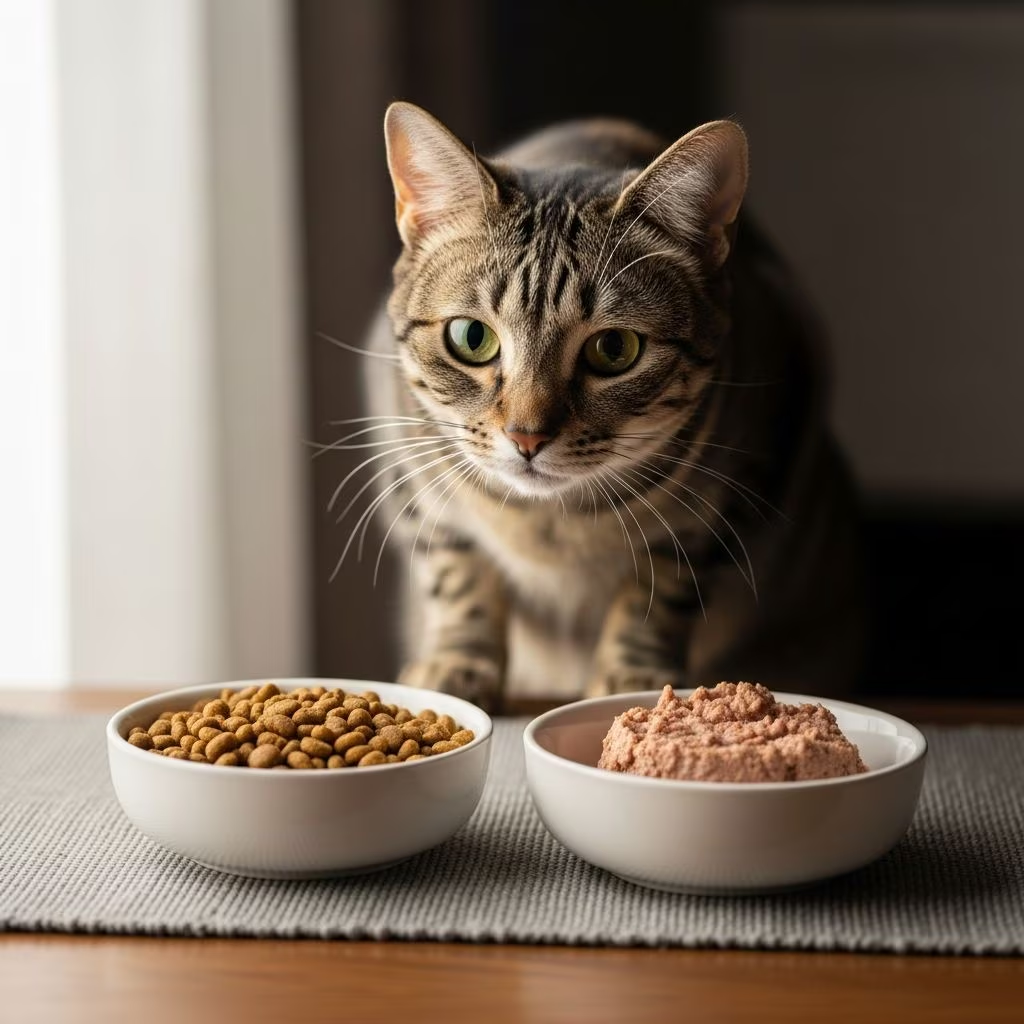
Determining the right amount of food for your cat involves considering factors like age, weight, activity level, and overall health. Proper feeding prevents obesity, supports growth, and maintains vitality throughout a cat’s life.
Essential Nutrients Every Cat Needs
Cats are obligate carnivores, meaning their diet must include animal-based proteins to supply critical nutrients like taurine, arginine, and other essential amino acids that they cannot produce on their own. These components are vital for heart function, vision, reproduction, and tissue repair. High-quality fats provide energy, while vitamins and minerals act as catalysts for metabolic processes.
A balanced feline diet typically features meat or seafood as primary ingredients, ensuring adequate protein levels—around 30% of energy for growing kittens and sufficient for adults to maintain body condition. Carbohydrates should be minimal, ideally 1-2% in natural diets, as excessive amounts from plant sources can disrupt health.
Calorie Requirements by Life Stage
Caloric needs vary significantly across a cat’s life. Kittens require 2-3 times more energy than adults due to rapid growth, while seniors may need fewer calories to avoid weight gain.
| Weight (lbs) | Kitten (Active) | Adult (Active) | Adult (Sedentary) | Senior |
|---|---|---|---|---|
| 5 | 175 kcal | 125 kcal | 100 kcal | 75 kcal |
| 8 | 280 kcal | 200 kcal | 160 kcal | 120 kcal |
| 10 | 350 kcal | 250 kcal | 200 kcal | 150 kcal |
| 12 | 420 kcal | 300 kcal | 240 kcal | 180 kcal |
| 15 | 525 kcal | 375 kcal | 300 kcal | 225 kcal |
This table provides approximate daily caloric guidelines based on body weight and activity. Adjust for individual needs with veterinary input.
Feeding Kittens: Growth-Focused Nutrition
Newborn kittens depend on their mother’s milk, transitioning to solid food around 4 weeks via a gruel of kitten formula mixed with water or milk replacer. By 5-6 weeks, reduce moisture and introduce lightly moistened kibble. At 8-10 weeks, they can handle dry food fully.
Feed kittens 3-4 times daily until 4 months, then reduce to 2-3 meals. Free-choice feeding works well with dry kitten food, which stays fresh, providing 80-90% of nutrients from growth-formulated products until 9-12 months. These foods are calorie-dense to match high energy demands.
- Start with gruel: Blend kitten kibble with warm water or replacer.
- Gradually thicken over weeks for weaning.
- Offer dry food and water freely by 8 weeks.
- Monitor weight weekly to ensure steady gain.
Adult Cat Portion Control
Adult cats need food matching their energy output, typically 25-35 kcal per pound of body weight daily. A 10-pound active cat might require 250-350 kcal, split into two meals 8-12 hours apart to mimic natural grazing while preventing overeating.
Measure portions precisely using the food label’s calorie content. For example, if a dry food has 500 kcal per cup and your cat needs 250 kcal, provide ½ cup daily, or ¼ cup per meal. Activity influences this: indoor cats need less than outdoor hunters.
Senior Cats: Adjusting for Aging
As cats age beyond 7-10 years, metabolism slows, increasing obesity risk. Reduce calories by 20-25% while prioritizing joint-supporting nutrients and highly digestible proteins. Feed smaller, more frequent meals if dental issues arise, and ensure easy access to fresh water.
Seniors benefit from senior-specific formulas with controlled phosphorus for kidney health and added antioxidants. Regular weigh-ins help fine-tune intake.
Wet vs. Dry Food: Pros, Cons, and Mixing
Dry food offers convenience and dental benefits through crunching, suitable for free-feeding. Wet food provides hydration—crucial since cats often underdrink—and higher moisture mimics prey.
When mixing, balance calories, not volume. A cat needing 250 kcal might get ⅔ of a 5.5-oz can (181 kcal) and ¼ cup dry (about 120 kcal, adjusted for brand). Limit treats to 10% of daily calories.
- Dry: Long shelf life, economical, promotes dental health.
- Wet: High moisture (78-82%), palatable for picky eaters.
- Mix: Enhances variety, meets full nutrition.
Feeding Schedules and Methods
Most cats thrive on 2-3 measured meals daily, curbing begging and aiding weight management. Free-feeding suits dry food for grazers but risks obesity in low-activity cats.
Puzzle feeders encourage natural foraging, slowing intake and reducing gulping. Schedule example for adults:
- 7 AM: ½ daily portion.
- 7 PM: Remaining ½ portion.
- Water refresh: Daily cleaning.
Special Considerations: Health and Environment
Neutered cats need 20-30% fewer calories due to lower metabolism. Extreme weather boosts energy needs. Multi-cat homes require separate feeding to prevent bullying.
Consult vets for conditions like diabetes or hyperthyroidism, which alter requirements. Always choose AAFCO-labeled foods stating nutritional adequacy.
Common Mistakes and How to Avoid Them
- Overfeeding treats: Cap at 10% calories.
- Ignoring labels: Calculate based on kcal/cup or can.
- Free-feeding wet food: Spoils quickly.
- No weight monitoring: Weigh monthly.
Frequently Asked Questions
How much should I feed my 10-pound cat?
Around 200-350 kcal daily, depending on activity. Divide into 2 meals.
Can I free-feed my kitten?
Yes, with dry kitten food until maturity.
What’s the best food for obese cats?
Vet-recommended low-calorie formula with portion control.
How often to change food?
Transition gradually over 7-10 days to avoid digestive upset.
Do cats need milk?
Adult cats are often lactose intolerant; provide water instead.
References
- Cat Nutrition Tips — ASPCA. 2023. https://www.aspca.org/pet-care/cat-care/cat-nutrition-tips
- How Much To Feed a Cat — PetMD. 2024. https://www.petmd.com/cat/nutrition/how-much-to-feed-a-cat
- Proper Nutrition for Cats — Merck Veterinary Manual. 2025. https://www.merckvetmanual.com/cat-owners/selecting-and-providing-a-home-for-a-cat/proper-nutrition-for-cats
- Feeding Your Cat — Cornell University College of Veterinary Medicine. 2024. https://vet.cornell.edu/departments-centers-and-institutes/cornell-feline-health-center/health-information/feline-health-topics/feeding-your-cat
- Feeding Your Cat: Know the Basics — CatInfo.org. 2023. https://catinfo.org
- Wet vs. Dry Cat Food — Blue Buffalo. 2024. https://www.bluebuffalo.com/articles/cat/wet-vs-dry-cat-food/



