

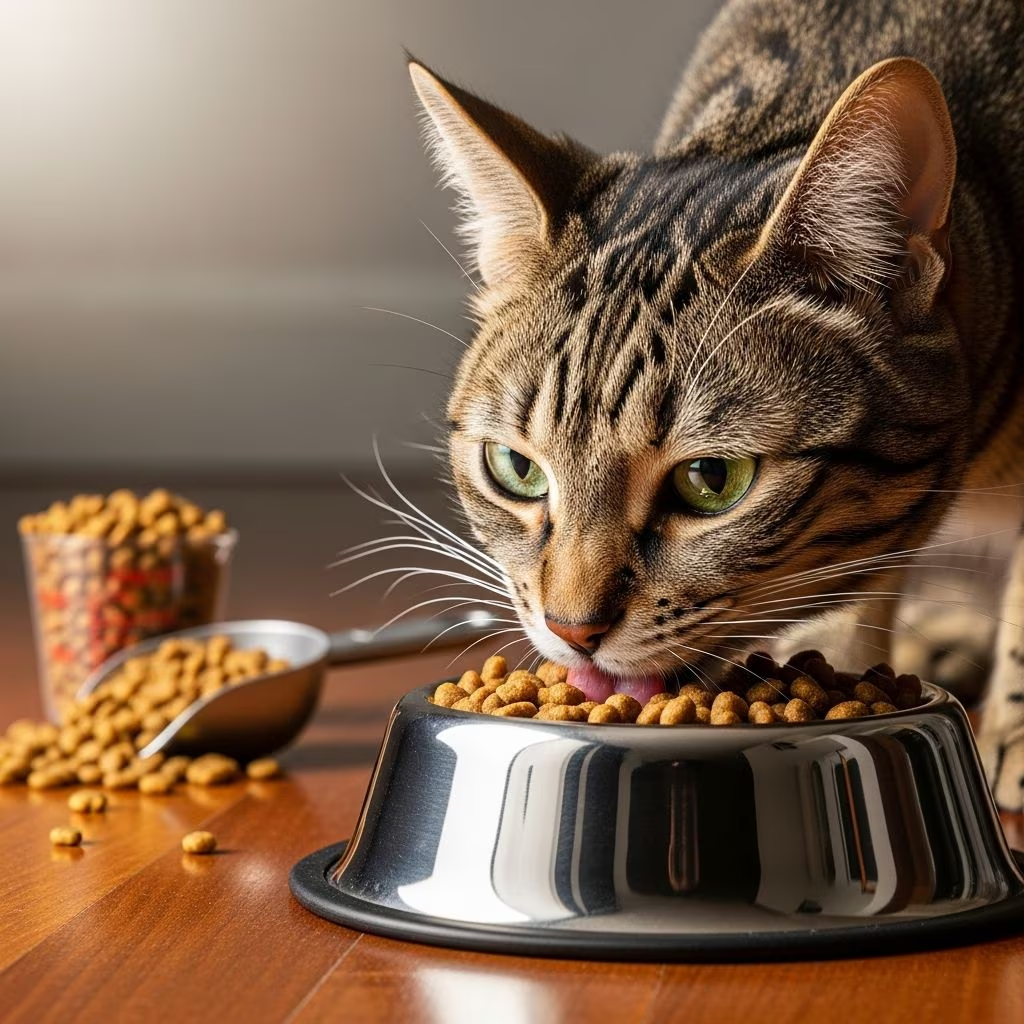
Determining the right amount of food for your cat is essential for maintaining their health, energy levels, and ideal body weight. Factors like age, weight, activity level, and food type all influence daily intake needs. This guide provides detailed recommendations, feeding schedules, and strategies to ensure your feline companion thrives.
Understanding Your Cat’s Nutritional Needs
Cats are obligate carnivores, requiring diets high in animal-based proteins with balanced fats, minimal carbohydrates, and adequate moisture. Daily caloric requirements vary widely: kittens need up to three times more calories per pound than adults for growth, while seniors may require fewer to prevent weight gain. Activity level plays a key role—indoor cats often need 20-30% fewer calories than outdoor ones. Always consult your veterinarian for personalized advice, especially for cats with medical conditions like diabetes or kidney disease.
Life Stage Feeding Recommendations
Different life stages demand tailored nutrition to support growth, maintenance, or age-related changes.
Kittens: Fueling Rapid Growth
From weaning around 4-6 weeks until 6-8 months, kittens grow quickly and need frequent, nutrient-dense meals. Feed 3-4 times daily to match their small stomachs and high metabolism. Transition to kitten-specific formulas rich in DHA for brain development and proteins for muscle building. By 6 months, gradually switch to adult food if growth stabilizes.
Adult Cats: Maintaining Prime Condition
Ages 1-7 years represent peak adulthood. Most indoor adults need 200-300 calories daily, split into 1-2 meals. Monitor body condition: ribs should be felt without excess fat covering. Adjust portions if your cat is very active, neutered (typically 20% less calories), or prone to weight gain.
Senior Cats: Adjusted for Aging
Over 7-10 years, metabolism slows, joint issues may arise, and kidney function declines. Opt for 180-220 calories daily in 2-3 smaller meals to aid digestion. Senior formulas often include glucosamine, omega-3s, and controlled phosphorus. Weigh monthly and tweak intake to combat sarcopenia or obesity.
Special Cases: Pregnancy, Lactation, and Obesity
Pregnant queens require 25-50% more calories in late gestation, up to double during lactation based on litter size. Obese cats need gradual calorie reduction (e.g., 20% less) under vet supervision to avoid hepatic lipidosis. Use prescription weight management foods if recommended.
Food Type Comparisons: Dry, Wet, and Mixed Diets
Choosing between dry kibble, wet canned food, or a combination affects hydration, dental health, and calorie density.
- Dry Food: Convenient, calorie-dense (300-500 kcal/cup), supports dental abrasion but higher carbs. Ideal for free-feeding if portions controlled.
- Wet Food: 70-80% moisture promotes urinary health, lower carbs, more palatable. Higher cost but better for hydration-averse cats.
- Mixed Feeding: Balances benefits—e.g., 1/4 cup dry + 2-3 oz wet daily. Enhances variety and nutrition.
Veterinarians often recommend prioritizing wet food for long-term kidney health, as cats evolved on prey with high water content.
Detailed Feeding Charts by Food Type
Use these tables as starting points; adjust based on your cat’s specifics and food label guidelines.
Wet Food Daily Guidelines
| Life Stage | Weight | Calories (kcal/day) | Approx. Wet Food (oz/day) | 3 oz Cans/Day | 5.5 oz Cans/Day |
|---|---|---|---|---|---|
| Kitten | 5 lb | 320 | 10 | 3 | 2 |
| 10 lb | 540 | 17 | 6 | 3 | |
| Adult | 10 lb | 280 | 9 | 3 | 2 |
| 15 lb | 360 | 11 | 4 | 2 | |
| Overweight | 15 lb | 280 | 9 | 3 | 2 |
| 20 lb | 310 | 10 | 3 | 2 | |
| Pregnant | 10 lb | 390 | 12 | 4 | 2 |
| 15 lb | 510 | 16 | 5 | 3 |
Dry Food Daily Guidelines
| Life Stage | Weight | Calories (kcal/day) | Approx. Dry (oz/day) | Approx. Cups/Day |
|---|---|---|---|---|
| Kitten | 5 lb | 320 | 3 | 0.8 |
| 10 lb | 540 | 5 | 1.4 | |
| Lean Adult | 10 lb | 280 | 3 | 0.7 |
| 15 lb | 360 | 4 | 0.9 | |
| Overweight | 15 lb | 280 | 3 | 0.7 |
| 20 lb | 310 | 3 | 0.8 | |
| Pregnant | 10 lb | 390 | 4 | 1.0 |
Note: 1 cup ≈ 8 oz volume; check food packaging for exact calorie content. Divide daily totals by meal frequency.
Feeding Schedules: Frequency and Styles
Consistency builds routine and aids digestion.
- Meal Feeding: 1-2 measured portions daily. Best for weight control and multi-pet homes.
- Free Feeding: Food available 24/7, suitable for dry kibble only. Risks overeating; not for wet food.
- Combination: Scheduled meals with treats. Use auto-feeders for precision.
Kittens: 3-4 meals. Adults: 2 meals. Seniors: 2-3 smaller ones.
Portion Control and Weight Management Tips
Overfeeding leads to obesity in 60% of indoor cats. Strategies include:
- Weigh food with a kitchen scale for accuracy.
- Use body condition scoring: ideal cats have visible waist and palpable ribs.
- Account for treats (limit to 10% daily calories).
- Switch to measured bowls or puzzle feeders to slow eating.
- Monthly weigh-ins; adjust by 10% if needed.
Common Mistakes and How to Avoid Them
Avoid these pitfalls:
- Guessing Portions: Always use guidelines and labels.
- Ignoring Transitions: Introduce new foods over 7-10 days.
- Free-Feeding Wet Food: Spoils quickly; refrigerate leftovers.
- Overlooking Health Changes: Recheck needs post-neuter or illness.
Enhancing Hydration and Treats
Cats often under-drink, risking crystals. Wet food helps; add fountains or broth. Treats should be low-cal; freeze-dried meats are ideal sparingly.
FAQs
How do I know if my cat is overweight?
Feel ribs (easy, no fat pinch), check waist view from above, and profile tummy tuck. Vet BMI confirms.
Can I switch from dry to wet food?
Yes, gradually over a week to prevent tummy upset. Many benefit from the moisture boost.
What’s the best feeding schedule for working owners?
Two meals: morning/evening, supplemented by timed auto-feeder.
Do neutered cats need less food?
Yes, 20-25% fewer calories due to slowed metabolism.
How much for multi-cat homes?
Separate feeding stations; measure individually to prevent competition.
By following these guidelines, you’ll support your cat’s lifelong health. Regular vet check-ups ensure adjustments for breed, lifestyle, or health shifts.
References
- Ask the Vet: How Much Should I Feed My Cat? Feeding Chart — Whisker. 2023. https://www.whisker.com/blog/how-much-should-i-feed-my-cat
- How Much to Feed Your Cat — Stella & Chewy’s. 2024. https://www.stellaandchewys.com/blogs/articles/how-much-to-feed-cats
- How Much to Feed a Cat: Portions, Calories, and More — Chewy. 2024. https://www.chewy.com/education/cat/food-and-nutrition/how-much-should-i-feed-my-cat
- Cat and Kitten Nutrition 101 — Small Door Veterinary. 2023. https://www.smalldoorvet.com/learning-center/nutrition/cat-kitten-nutrition-101
- Nutrition – General Feeding Guidelines for Cats — VCA Animal Hospitals. 2024. https://vcahospitals.com/know-your-pet/nutrition-feeding-guidelines-for-cats
- How often should you feed your cat? — Cornell University College of Veterinary Medicine. 2023. https://www.vet.cornell.edu/departments/cornell-feline-health-center/health-information/feline-health-topics/how-often-should-you-feed-your-cat



