

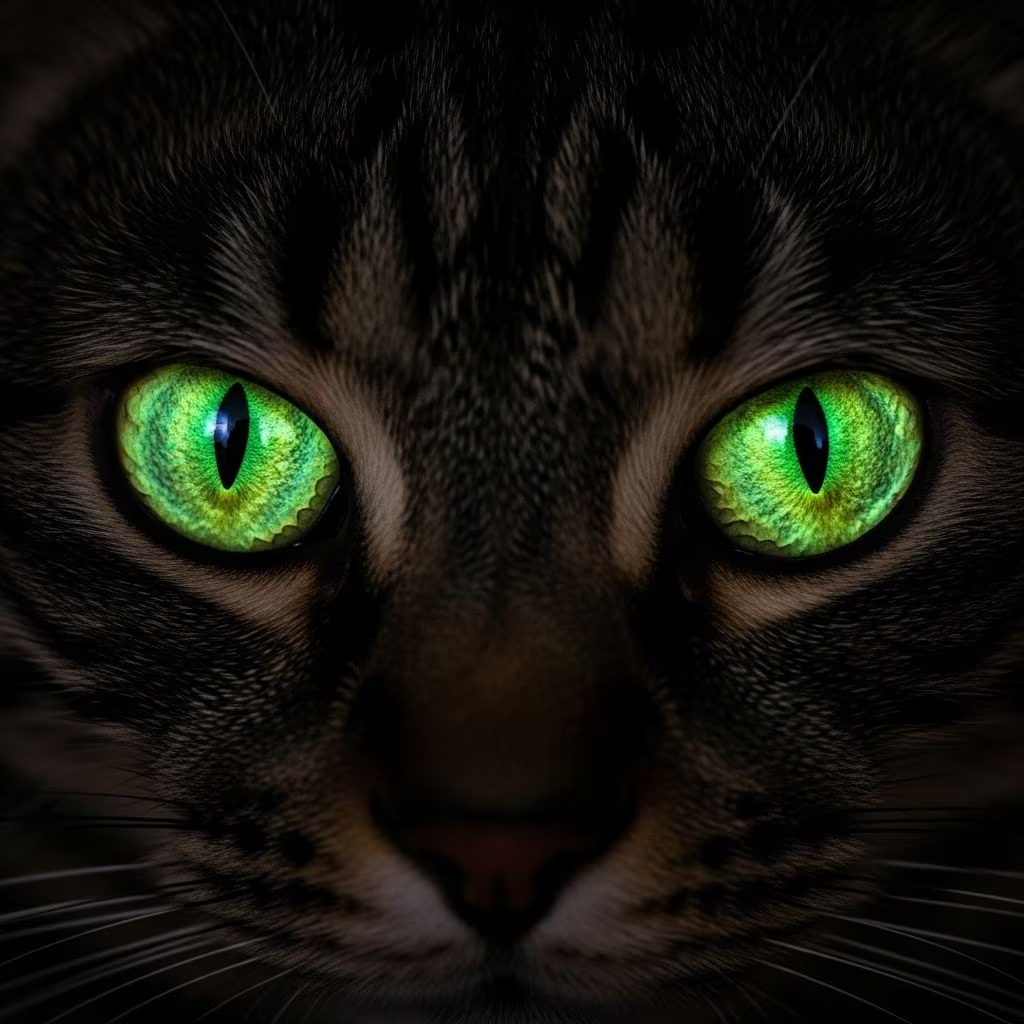
The mesmerizing glow of a cat’s eyes in the dark has captivated humans for centuries, often sparking tales of mystery and magic. In reality, this phenomenon stems from sophisticated biological adaptations that equip cats as expert nocturnal hunters. This reflective eyeshine not only enhances their ability to navigate low-light environments but also reveals key insights into feline physiology.
The Biology Behind the Glow
At the heart of a cat’s glowing eyes lies a specialized structure known as the tapetum lucidum, a thin, iridescent layer positioned behind the retina. This tissue acts as a biological mirror, reflecting incoming light back through the retina to give photoreceptor cells a second opportunity to capture photons. When external light—such as from a flashlight or streetlamp—enters the eye, some of it bounces back out, creating the signature glow visible to observers.
This adaptation is particularly vital for crepuscular animals like cats, which are most active during dawn and dusk when light levels are minimal. The tapetum lucidum amplifies available light by up to 130 times compared to human eyes, dramatically improving visibility in dim conditions. Without it, cats would struggle to detect prey in their natural hunting hours.
How Feline Eyes Process Light Differently
Cat vision surpasses human capabilities in low light due to several interconnected features. Their pupils can dilate to cover nearly the entire iris, allowing up to 50% more light entry than human pupils. Combined with a higher density of rod cells—photoreceptors optimized for dim light and motion detection—cats can perceive environments at light levels just 16% as bright as those required by humans.
- Rod Cells Dominance: Cats possess 6 to 8 times more rods than cones, prioritizing sensitivity over color detail.
- Large Corneas: These expand light intake, funneling more photons to the retina.
- Pupil Control: Vertical slit pupils adjust precisely, constricting in bright light and widening in darkness for optimal exposure.
These traits make cats adept at spotting subtle movements, essential for stalking rodents or birds under moonlight.
Colors of the Glow: What Influences Eyeshine?
The hue of a cat’s eyeshine varies, most commonly appearing green or yellow, though blues and oranges occur too. This spectrum arises from the tapetum’s composition: in cats, it’s rich in riboflavin (vitamin B2) and zinc crystals that reflect specific wavelengths. Higher zinc concentrations often produce greener tones, while riboflavin amplifies yellow-green light that aligns with feline visual sensitivity.
| Glow Color | Common Causes | Examples |
|---|---|---|
| Green/Yellow | High zinc/riboflavin levels | Most domestic cats |
| Blue | Lower zinc, specific pigments | Some breeds like Siamese |
| Red | Absence of tapetum (albinos, blue-eyed cats) | Direct retinal reflection |
Eye color itself influences the effect; cats with blue eyes or albinism lack a functional tapetum, resulting in a red flash from blood vessels in the retina.
Evolutionary Advantages for Predators
The tapetum lucidum evolved in nocturnal and crepuscular predators to maximize hunting success. By recycling light, it boosts retinal sensitivity, enabling cats to detect prey from afar in near-total darkness. Studies show cats identify motion and shapes at distances where humans see only shadows.
This isn’t unique to cats—dogs, ferrets, and many wild felids share it—but domestic cats retain wild ancestry traits. In urban settings, the glow aids navigation around furniture or through gardens at night, preventing mishaps.
Comparing Cat and Human Vision
| Feature | Cats | Humans |
|---|---|---|
| Low-Light Threshold | 16% of human requirement | Baseline |
| Rod Density | 6-8x higher | Lower |
| Tapetum Lucidum | Present (reflective) | Absent |
| Pupil Dilation Max | 50% larger | Smaller |
| Color Vision | Limited (dichromat) | Trichromat |
While cats sacrifice some color acuity for brightness, their system excels in real-world survival scenarios.
Health Indicators: When the Glow Fades
A missing or diminished glow can signal eye issues. Conditions like cataracts, glaucoma, hypertension, or tumors may obscure the tapetum or damage it directly. Nutritional deficiencies, especially in vitamin A or riboflavin, impair its function. If your cat’s eyes don’t shine under proper light angles, consult a vet promptly—the glow requires direct illumination at the right trajectory.
Regular check-ups ensure this vital structure remains intact, preserving your pet’s predatory prowess.
Myths and Fun Facts About Cat Eyeshine
- Myth: Cats See in Total Darkness. They need some ambient light; pure black is challenging even for them.
- Fact: Human Tech Mimics It. Reflective road studs, called ‘cat’s eyes,’ imitate the tapetum for visibility.
- Fun: Breed Variations. Orientals often show vivid blues, while tabbies lean yellow-green.
- Supernatural Lore: Ancient cultures viewed the glow as otherworldly, linking it to witchcraft or spirits.
Enhancing Your Cat’s Nighttime Environment
To support natural vision, provide low-glare night lights, avoid sudden flashes, and ensure a riboflavin-rich diet via quality foods. Play in dim conditions to engage their instincts safely.
Frequently Asked Questions
Why do some cats’ eyes glow brighter than others?
Brighter glows correlate with thicker tapetum layers and optimal zinc/riboflavin levels. Breed, age, and health influence intensity.
Do all cats have glowing eyes?
Most do, but albinos, blue-eyed cats, or those with retinal disorders may not due to tapetum absence.
Is the glow harmful to cats?
No, it’s a natural, beneficial trait. Bright lights like camera flashes can startle but don’t damage the tapetum.
Can kittens’ eyes glow from birth?
The tapetum develops post-birth; eyeshine appears around 6-8 weeks as vision matures.
How does diet affect eyeshine?
Vitamin B2 (riboflavin) deficiencies dull the glow; balanced nutrition maintains vibrancy.
Conclusion: A Window into Feline Supremacy
The glow of cat eyes illuminates not just the dark but the ingenuity of evolution. This simple yet profound adaptation underscores why cats thrive as companions and hunters alike.
References
- Why Do Cats’ Eyes Glow In The Dark? — cats.com. 2023. https://cats.com/why-do-cats-eyes-glow-in-the-dark
- 20/20 Vision: Why Do Cats’ Eyes Glow in the Dark? — diamondpet.com. 2023. https://www.diamondpet.com/blog/health/conditions/why-do-cats-eyes-glow-in-the-dark/
- How Do Cats See In The Dark? Understanding Feline Night Vision — samscatsanddogs.com. 2023. https://samscatsanddogs.com/everett/blog/how-do-cats-see-in-the-dark-the-science-behind-your-cats-night-vision
- Why Do a Cat’s Eyes Glow? — hillspet.com. 2023. https://www.hillspet.com/cat-care/behavior-appearance/why-do-cats-eyes-glow
- Why Do Eyes of Cats, Dogs and Other Animals Glow in the Dark? — sci.news. 2018-10-31. https://www.sci.news/biology/tapetum-lucidum-10711.html



