

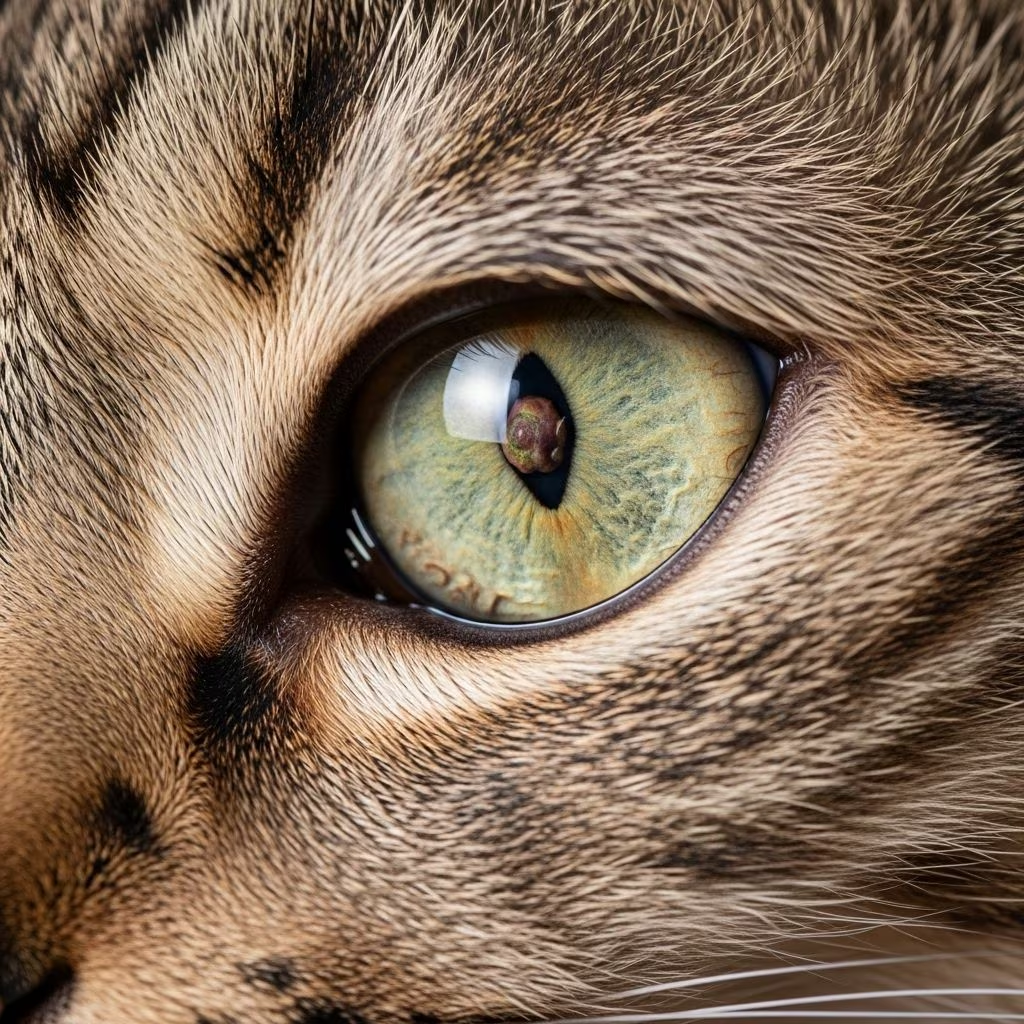
Cat eye tumors, particularly **diffuse iris melanoma**, represent a significant concern in feline veterinary medicine, often affecting middle-aged to older cats. These ocular neoplasms can lead to vision loss, pain, and metastasis if untreated, but early detection through regular exams improves outcomes.
What Are Cat Eye Tumors?
Cat eye tumors are abnormal growths originating within or around the eye structures, classified as primary (arising in the eye) or secondary (metastasized from elsewhere). The most common primary tumor is **diffuse iris melanoma**, where the iris progressively darkens and develops an irregular surface. Other types include limbal melanoma, conjunctival neoplasia, iris/ciliary body tumors, and orbital tumors like fibrosarcomas or osteosarcomas. Secondary tumors, such as lymphoma, infiltrate the eyeball from systemic disease.
These tumors vary in aggressiveness; melanomas grow slowly but have a 19-70% metastasis rate to lymph nodes, liver, kidneys, lungs, or bones. Feline ocular post-traumatic sarcomas (FOPTS) arise after trauma or chronic uveitis, presenting aggressively with corneal opacity or glaucoma.
Types of Eye Tumors in Cats
- Diffuse Iris Melanoma: Widespread pigmentation of the iris, leading to pupil irregularities, uveitis, glaucoma, and buphthalmos (enlarged eye). Affects cats around 10 years old.
- Limbal Melanoma: Benign raised dark mass at the sclera-cornea junction, often in the upper limbus; slow-growing but may invade if unchecked.
- Conjunctival Neoplasia: Growths on the conjunctiva lining eyelids, eyeball, or socket.
- Iris/Ciliary Body/Choroid Tumors: Infiltrative cancers causing opaque white eyes, lens destruction, inflammation, and blindness.
- Orbital Tumors: Affect bone/soft tissues around the eye, including spindle-cell, round-cell tumors, fibrosarcomas, osteosarcoma.
- Lymphoma/Lymphosarcoma: Metastatic, appearing as intraocular masses.
- Post-Traumatic Sarcomas (FOPTS): Linked to prior trauma, causing phthisis (shrunken eye) or buphthalmos.
Symptoms of Eye Tumors in Cats
Symptoms often develop subtly, mimicking other conditions like uveitis. Common signs include:
- Abnormal eye appearance or swelling.
- Iris color change (darkening, freckles, spots) or thickening.
- Dark spots on eye surface, irregular pupil shape/mobility.
- Bulging eyeball (buphthalmos), secondary glaucoma (high pressure).
- Cloudy eye from uveitis, leading to blindness.
- Pain indicators: squinting, rubbing/scratching eye, tearing, discharge, closed eyes.
- Redness, corneal ulcers, visible masses.
Cats may show unilateral changes, progressing to bilateral if metastatic. Vision loss occurs in advanced cases.
Causes and Risk Factors
The exact causes remain unknown for most feline eye tumors, involving genetic and environmental interplay. Key risk factors include:
- Age: Middle-aged to older cats (average 10 years for iris melanoma).
- Trauma: Ocular injuries predispose to FOPTS or sarcomas.
- Chronic Conditions: Long-term uveitis or glaucoma increases risk.
- Genetics: Possible predisposition in some breeds/lines.
- Systemic Disease: Lymphoma from FeLV/FIV-related immunosuppression.
No definitive carcinogens identified, unlike canine melanomas linked to sun exposure.
How Are Eye Tumors in Cats Diagnosed?
Diagnosis requires veterinary ophthalmology expertise:
- Physical/Ophthalmic Exam: Assess iris changes, masses, pressure via tonometry.
- Serial Photography: Track progression over time.
- Biopsy/Fine-Needle Aspiration: Confirms cell type, essential for differentiation.
- Imaging: Ultrasound, CT/MRI for orbital extension or metastasis.
- Intraocular Pressure Check: Detects glaucoma.
Differentiate from benign lesions like freckles via histopathology post-enucleation if needed.
Treatment Options for Cat Eye Tumors
Treatment depends on tumor type, size, progression, cat’s age, and owner preferences. Options include:
- Monitoring: For slow-growing lesions in older cats; periodic exams and photos.
- Laser Photoablation: For small, isolated freckle-like iris lesions (limited long-term data).
- Surgical Excision: Partial iridectomy or limbal melanoma removal, sometimes with cryotherapy/radiation.
- Enucleation (Eye Removal): Gold standard for aggressive, glaucomatous, or painful eyes; curative for local disease, relieves pain.
- Chemotherapy/Radiation: Adjunctive for metastatic cases, though limited efficacy.
| Tumor Type | Preferred Treatment | Prognosis |
|---|---|---|
| Diffuse Iris Melanoma (mild) | Monitor | Good if stable |
| Diffuse Iris Melanoma (advanced) | Enucleation | 30-50% mortality without tx |
| Limbal Melanoma | Monitor/Surgery | Excellent, benign |
| FOPTS/Orbital | Enucleation | Poor, aggressive |
| Lymphoma | Systemic chemo | Variable |
Post-enucleation, cats adapt well with one eye, maintaining quality of life.
Prognosis for Cats with Eye Tumors
Prognosis varies widely:
- Limbal Melanoma: Excellent; often curative with surgery.
- Diffuse Iris Melanoma: Fair; 19-70% metastasize, but enucleation extends life if early. Untreated leads to death in 30-50%.
- Orbital/FOPTS: Poor; 1-2 months survival.
- Lymphoma: Depends on systemic response.
Early intervention is key; metastasis detected via staging improves survival.
Preventing and Managing Eye Tumors in Cats
Prevention focuses on risk reduction:
- Regular vet eye exams, especially for seniors.
- Prompt trauma treatment to avoid FOPTS.
- FeLV/FIV vaccination/testing to curb lymphoma.
- Monitor for early symptoms; home checks for rubbing/squinting.
Post-diagnosis, pain management (e.g., anti-inflammatories) and supportive care enhance comfort.
Frequently Asked Questions (FAQs)
What are the first signs of eye tumors in cats?
Initial signs include iris color changes, dark spots, pupil irregularities, or subtle swelling. Pain signs like squinting follow.
Is iris melanoma in cats fatal?
Not always; early enucleation prevents local issues and may avert metastasis in many cases, though 19-70% risk exists.
Can cat eye tumors be treated without removing the eye?
Yes, monitoring or laser for small/slow lesions, but enucleation is common for progression or pain.
How do cats live with one eye after enucleation?
Most adapt quickly, navigating well with depth perception from the remaining eye and heightened senses.
Are eye tumors common in young cats?
Rare; typically affect older cats, except trauma-induced sarcomas.
References
- Eye Cancer in Cats: Causes, Symptoms, and Treatment — cats.com. 2023. https://cats.com/eye-cancer-in-cats
- Tumor of the Eye in Cats — PetMD. 2024. https://www.petmd.com/cat/conditions/eyes/c_ct_eye_tumor
- Eye Tumors – Melanoma in Cats — VCA Animal Hospitals. 2024. https://vcahospitals.com/know-your-pet/eye-tumors-melanoma-in-cats
- Cancers and Tumors of the Eye in Cats — Merck Veterinary Manual. 2023-11-28. https://www.merckvetmanual.com/cat-owners/eye-disorders-of-cats/cancers-and-tumors-of-the-eye-in-cats
- Feline ocular post-traumatic sarcomas — PubMed Central/NIH. 2024. https://pmc.ncbi.nlm.nih.gov/articles/PMC10814148/



