

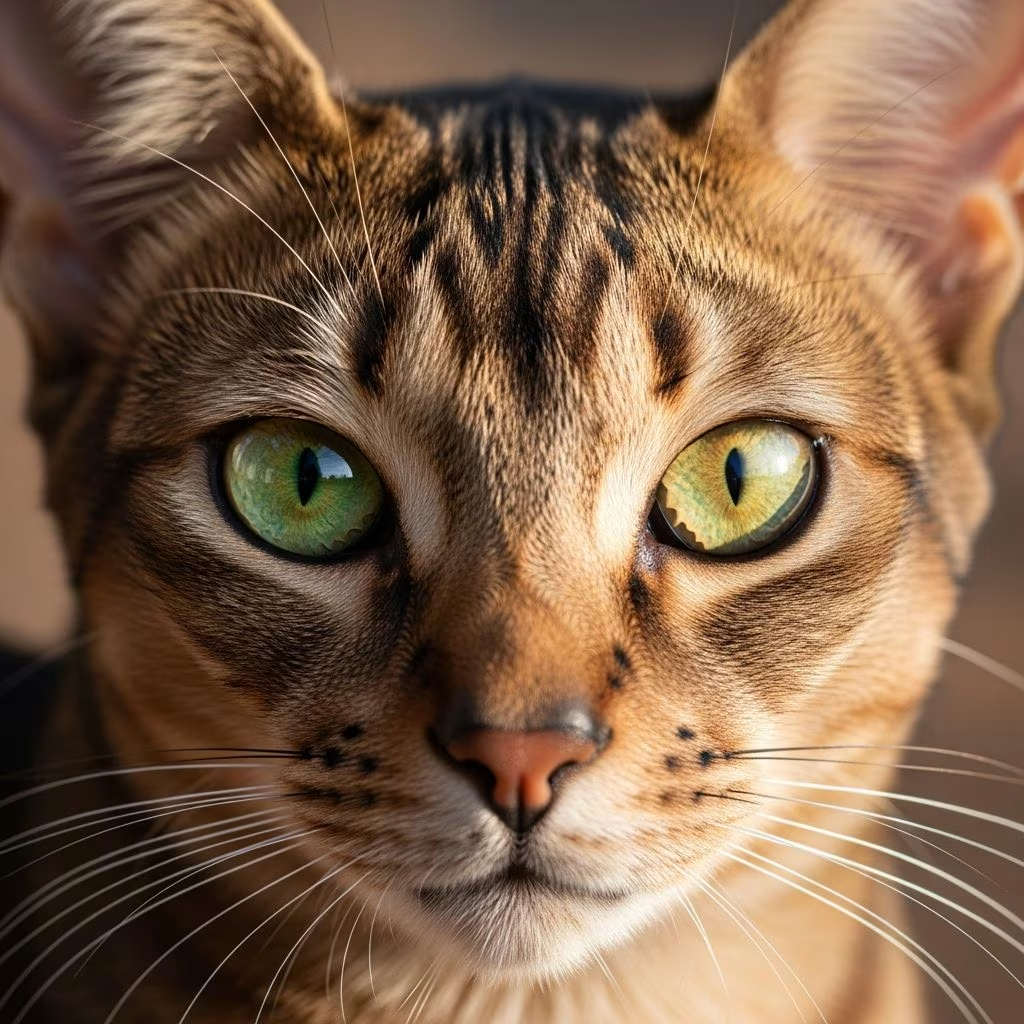
Cat eye colors captivate pet owners with their stunning variety, ranging from deep copper to icy blue. While many assume green eyes dominate, scientific evidence points to yellow, amber, and copper as more prevalent shades in the feline population. This article delves into the biology, genetics, and health aspects shaping these colors.
The Biology of Feline Iris Pigmentation
The hue of a cat’s eyes stems from melanin levels in the iris, produced by specialized cells called melanocytes. High concentrations yield orange or gold tones, moderate amounts create green or yellow, and minimal presence results in blue. Unlike coat color, eye pigmentation develops post-birth as kittens’ initial blue eyes mature around 6-8 weeks.
Melanin exists in two forms: eumelanin (brown-black) and pheomelanin (yellow-red). Variations in these dictate shade intensity. For instance, balanced low pigment leads to blue eyes, often recessive in wild felids. Lipochrome, a yellow pigment, combines with light scattering to produce green.
Prevalence of Eye Colors in Domestic Cats
Yellow and amber eyes top the charts, appearing in most mixed-breed cats due to typical melanin levels. Green eyes comprise about 10-15% of cats, while blue affects 3-5%, mainly in specific breeds or white cats. Copper, a rich reddish-brown, graces breeds like Bombay and Persian.
| Eye Color | Estimated Prevalence | Common Associations |
|---|---|---|
| Yellow/Amber | Most common | Mixed-breeds, high melanin |
| Green | 10-15% | Lipochrome pigment |
| Copper | Common in breeds | Bombay, Persian |
| Blue | 3-5% | Siamese, white cats |
Genetic Foundations of Eye Shades
Eye color inheritance mirrors human patterns but involves cat-specific genes like the white spotting (W) gene and orange (O) gene. The W gene, when homozygous (WW), often yields blue eyes by suppressing pigment in utero; heterozygous (Ww) cats may show heterochromia. The O gene influences coat and indirectly eyes, favoring green-amber in carriers.
- White Gene (W): Dominant, masks other colors; linked to blue eyes and deafness risk in white cats.
- Orange Gene (O): Sex-linked on X chromosome; promotes warmer eye tones like amber.
- Temperature-Sensitive Albinism: In colorpoints (e.g., Siamese), causes blue eyes due to cooler extremity pigmentation.
Kittens start with blue eyes from absent melanin migration; as melanocytes activate, color shifts incrementally. Breeds like Turkish Van carry heterochromia genes, blending blue with other shades.
Breeds and Their Signature Eye Colors
Certain breeds showcase distinct eyes due to selective breeding:
- Siamese & Himalayan: Striking blue from cs gene (colorpoint).
- Turkish Van/Angora: Prone to odd eyes (one blue, one copper/green).
- Bombay & Persian: Deep copper, prized in shows.
- Ragdoll & Birman: Blue, retained from kittenhood.
- Khao Manee: Rare odd-eyed white cats.
Mixed-breeds display broader spectra, with yellow dominating due to diverse genetics.
Heterochromia: The Enigma of Odd-Eyed Cats
Heterochromia, or mismatched eyes, fascinates with one blue and one colored iris. Genetic roots tie to the W gene in white or bicolor cats; non-genetic causes include injury, glaucoma, or uveitis altering pigment. Prevalent in Turkish breeds, it’s usually benign but correlates with unilateral deafness in blue-eyed sides.
Across species, genetics underpin this trait, though rarer in humans. Acquired cases from trauma affect cats, dogs, and people similarly.
Health Signals from Eye Color Changes
Stable colors signal health, but shifts warrant vet checks. Sudden yellowing may indicate jaundice; cloudiness suggests cataracts or infection. Blue-eyed white cats face 40% deafness risk from neural crest cell issues. Copper eyes denote vitality, but monitor for anomalies.
Regular exams catch issues early: uveitis, glaucoma can induce heterochromia. Nutrition supports melanocyte health; omega-3s aid eye integrity.
Caring for Your Cat’s Eyes: Practical Tips
Maintain ocular health through:
- Daily wipe-downs with saline for debris.
- Balanced diet rich in taurine, antioxidants.
- Annual vet dilated exams for early detection.
- Avoid trauma; indoor living reduces risks.
- Watch for redness, squinting, discharge.
Breed-specific care: Colorpoints need UV protection; odd-eyed cats hearing tests.
Eye Color and Feline Behavior Myths
No evidence links eye color to personality—green-eyed cats aren’t more aloof. Behavior stems from breed, socialization, environment. Wild cats show varied eyes for camouflage, blue rarer to avoid prey detection.
FAQs on Cat Eye Colors
Are green eyes the most common in cats?
No, yellow/amber prevail; green is 10-15%.
Why do kittens have blue eyes?
Immature melanocytes; color develops later.
Is heterochromia harmful?
Usually genetic and harmless, but check for deafness.
Can eye color change with age?
Yes, gradually deepens; sudden changes need vet attention.
What breeds have copper eyes?
Bombay, Persian; high melanin trait.
Conclusion
Cat eye colors blend art and science, revealing genetic stories and health clues. From prevalent ambers to rare blues, each shade enchants. Consult vets for personalized insights.
References
- Understanding Cats with Different Colored Eyes — Cat Tree UK. 2023. https://cattree.uk/understanding-cats-with-different-colored-eyes/
- Blue, green, gold: Why eyes of wild cats vary in color — Harvard Gazette. 2024-10. https://news.harvard.edu/gazette/story/2024/10/blue-green-gold-why-eyes-of-wild-cats-vary-in-color/
- 8 Most Common Cat Eye Colors – Facts, Details, & Cat Breeds — Litter-Robot. 2023. https://www.litter-robot.com/blog/cat-eye-colors/
- Exploring Feline Eye Colors: Genetics, Variations, and Care — Basepaws. 2023. https://basepaws.com/blog/cat-eye-colors-unveiling-the-mysteries-behind-your-felines-gorgeous-eyes
- Eye Colours — Messybeast. 2023. http://messybeast.com/eye-colours.htm
- What Cat Eye Colors Reveal About Their Health and Genetics — Petbarnkw. 2024. https://petbarnkw.com/what-cat-eye-colors-reveal-about-their-health-and-genetics/



