

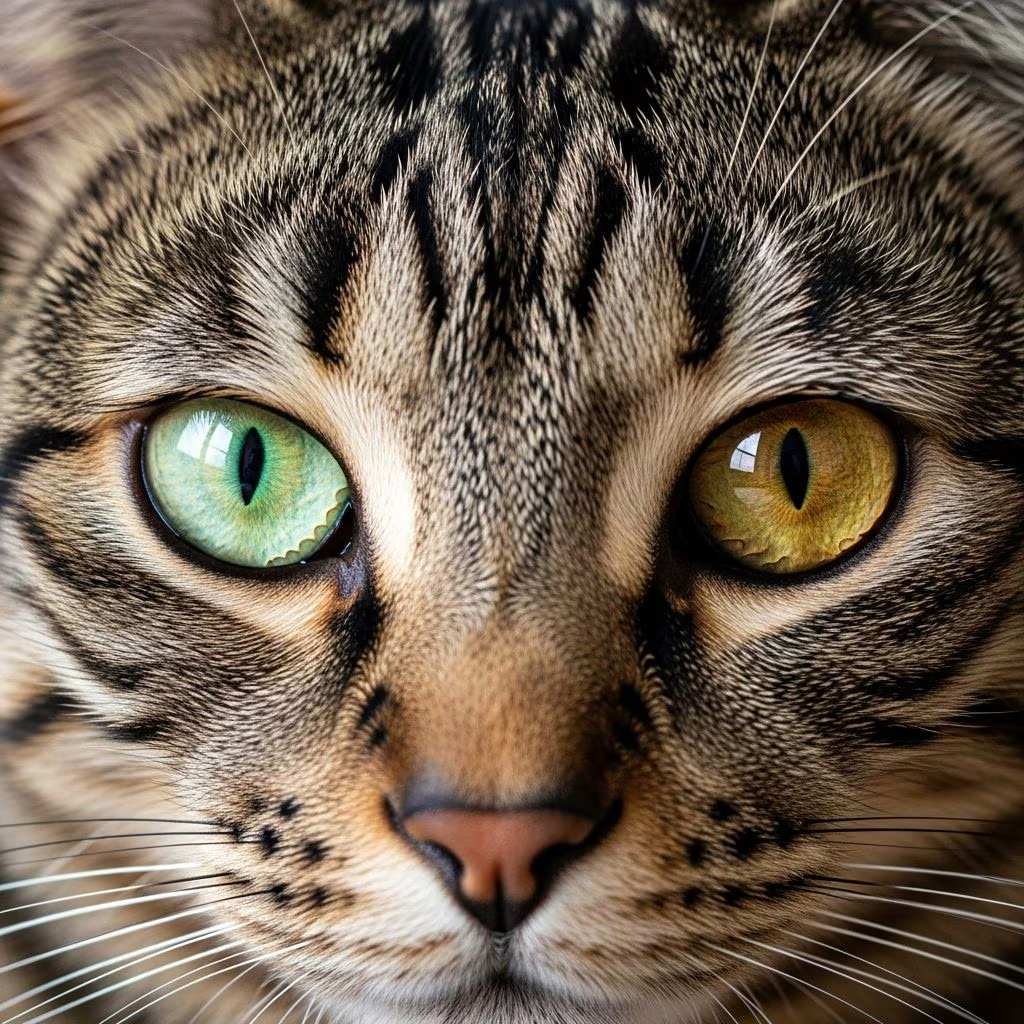
Cat eye colors captivate pet owners with their vibrant hues ranging from deep copper to striking blue. These colors result primarily from melanin levels in the iris, influenced by genetics, and can indicate breed traits or health status. Understanding them enhances appreciation of feline diversity.
Cat Eye Color Chart
A **cat eye color chart** illustrates the spectrum determined by melanocytes, the melanin-producing cells in the iris. High melanocyte levels produce **orange or gold eyes**, moderate levels yield **green or yellow**, while a lack results in **blue or pink (albino)** eyes. Common shades include:
- Green eyes: 10-15% of cats, featuring lipochrome pigment with light scattering.
- Yellow/Amber eyes: Prevalent due to moderate melanin, ranging from light gold to deep copper.
- Blue eyes: 3-5% of population, often in kittens initially, retained in certain breeds.
- Copper eyes: Rich reddish-brown from high melanin concentration.
- Odd-eyed (heterochromia): One blue and one colored eye, linked to white genes.
What Determines Cat Eye Color?
Cat eye color stems from **melanin distribution** in the iris, governed by genes like the white (W) gene and orange (O) gene. The epistatic white or dominant white gene masks other colors, often producing blue eyes by inhibiting melanin in one or both irises. Meanwhile, the O gene influences green, amber, or copper shades.
Kittens are born with blue eyes due to immature melanocytes; color develops around 6-8 weeks as pigmentation matures. Factors like coat color genes (e.g., pointed patterns in Siamese) also play roles, with white spotting leading to heterochromia in 15-40% of solid white cats.
Most Common Cat Eye Colors
The **most common cat eye colors** are yellow, amber, and green, reflecting typical melanin levels in mixed breeds. These warm tones dominate because:
- They require balanced melanocytes, common genetically.
- No extreme pigmentation mutations needed.
Blue eyes are rarer overall but frequent in specific lineages. Harvard research on wild felids notes blue eyes as recessive, needing low pigment balance, while brownish-gray intermediates appear in mutations reducing eumelanin (brown melanin).
Blue-Eyed Cats
| Aspect | Details |
|---|---|
| Prevalence | 3-5% of cats; common in Siamese, Ragdoll, Birman. |
| Genetics | Low/no melanin due to white or pointed genes; kittens start blue. |
| Health | White cats with blue eyes: ~40% deafness risk. |
| Breeds | Siamese, Himalayan, Turkish Angora (odd-eyed possible). |
**Blue-eyed cats** retain kitten-like eyes into adulthood via genetics inhibiting melanin. They’re striking but in white cats, linked to congenital deafness from melanocyte absence in ear nerves.
Green-Eyed Cats
**Green-eyed cats** (10-15%) feature lipochrome yellow pigment scattered by light, creating emerald hues. Common in general population, they signal moderate melanin—healthy standard. No major health links, though sudden yellowing may indicate jaundice.
Yellow or Gold Cat Eyes
**Yellow or gold cat eyes**, among the most frequent, arise from higher melanocytes producing warm glows from light gold to copper. Prevalent in mixed breeds, they’re a health positive unless clouded.
- Genetics: Not tied to specific mutations; broad distribution.
- Breeds: Many, including British Shorthair.
Copper Cat Eyes
**Copper cat eyes** offer rich, reddish-brown intensity from elevated melanin, prized in shows. Seen in Bombay, Persian breeds; generally healthy indicator.
Odd-Eyed Cats
**Odd-eyed cats** exhibit **heterochromia**: one blue eye, one green/yellow/amber/brown. Caused by white spotting (W gene) or dominant white blocking melanin in one eye during development. Breeds like Turkish Van, Khao Manee predisposed.
Acquired heterochromia can follow injury, glaucoma, or uveitis altering pigment. Across species, genetics underpin it, rarer in humans.
Cat Breeds by Eye Color
| Eye Color | Associated Breeds | Notable Traits |
|---|---|---|
| Blue | Siamese, Ragdoll, Birman, Himalayan | Pointed coats; deafness risk in whites. |
| Green | American Shorthair, Russian Blue | Moderate melanin; common domestic. |
| Gold/Yellow/Amber | British Shorthair, mixed breeds | Versatile; healthy norm. |
| Copper | Bombay, Persian | Show preference; high melanin. |
| Odd-Eyed | Turkish Van, Turkish Angora, Khao Manee | White spotting gene. |
Breeds showcase eye color via selective genetics, e.g., Siamese ‘points’ suppress iris melanin.
Why Do Cats’ Eyes Change Color?
Cats’ eyes change due to:
- Kitten development: Blue to adult color at 6-12 weeks as melanocytes activate.
- Acquired heterochromia: Trauma, glaucoma, uveitis damage pigment cells.
- Age/disease: Cloudiness from cataracts or jaundice yellowing.
- Genetic deepening: Blue tints intensify over life if melanocytes persist.
Monitor changes; consult vets for non-developmental shifts.
Health Problems Associated With Cat Eye Color
Eye color signals potential issues:
- Blue in whites: 40% deafness (ear melanocyte link).
- Odd-eyed: Possible unilateral deafness.
- Sudden changes: Injury, glaucoma, uveitis, jaundice.
- Albino pink: Vision sensitivity, skin cancer risk.
Colors like green/yellow/copper generally denote health; anomalies warrant exams.
Frequently Asked Questions (FAQs)
What is the rarest cat eye color?
The rarest is heterochromia (odd eyes), followed by deep copper; blue is uncommon outside breeds.
Are all kittens born with blue eyes?
Yes, due to immature pigmentation; most change by 8 weeks.
Do eye colors relate to coat color?
Indirectly via shared genes like white spotting or O gene.
Is heterochromia harmful?
Congenital no, but check for deafness; acquired signals health issues.
Can cat eye color change with age?
Yes, during development or rarely from disease/injury.
References
- Understanding Cats with Different Colored Eyes — Cat Tree UK. Accessed 2026. https://cattree.uk/understanding-cats-with-different-colored-eyes/
- Odd-eyed cat — Wikipedia. Accessed 2026. https://en.wikipedia.org/wiki/Odd-eyed_cat
- Blue, green, gold: Why eyes of wild cats vary in color — Harvard Gazette. 2024-10. https://news.harvard.edu/gazette/story/2024/10/blue-green-gold-why-eyes-of-wild-cats-vary-in-color/
- 8 Most Common Cat Eye Colors – Facts, Details, & Cat Breeds — Litter-Robot. Accessed 2026. https://www.litter-robot.com/blog/cat-eye-colors/
- Exploring Feline Eye Colors: Genetics, Variations, and Care — Basepaws. Accessed 2026. https://basepaws.com/blog/cat-eye-colors-unveiling-the-mysteries-behind-your-felines-gorgeous-eyes
- Eye Colours — Messybeast. Accessed 2026. http://messybeast.com/eye-colours.htm
- What Cat Eye Colors Reveal About Their Health and Genetics — Petbarnkw. Accessed 2026. https://petbarnkw.com/what-cat-eye-colors-reveal-about-their-health-and-genetics/



