

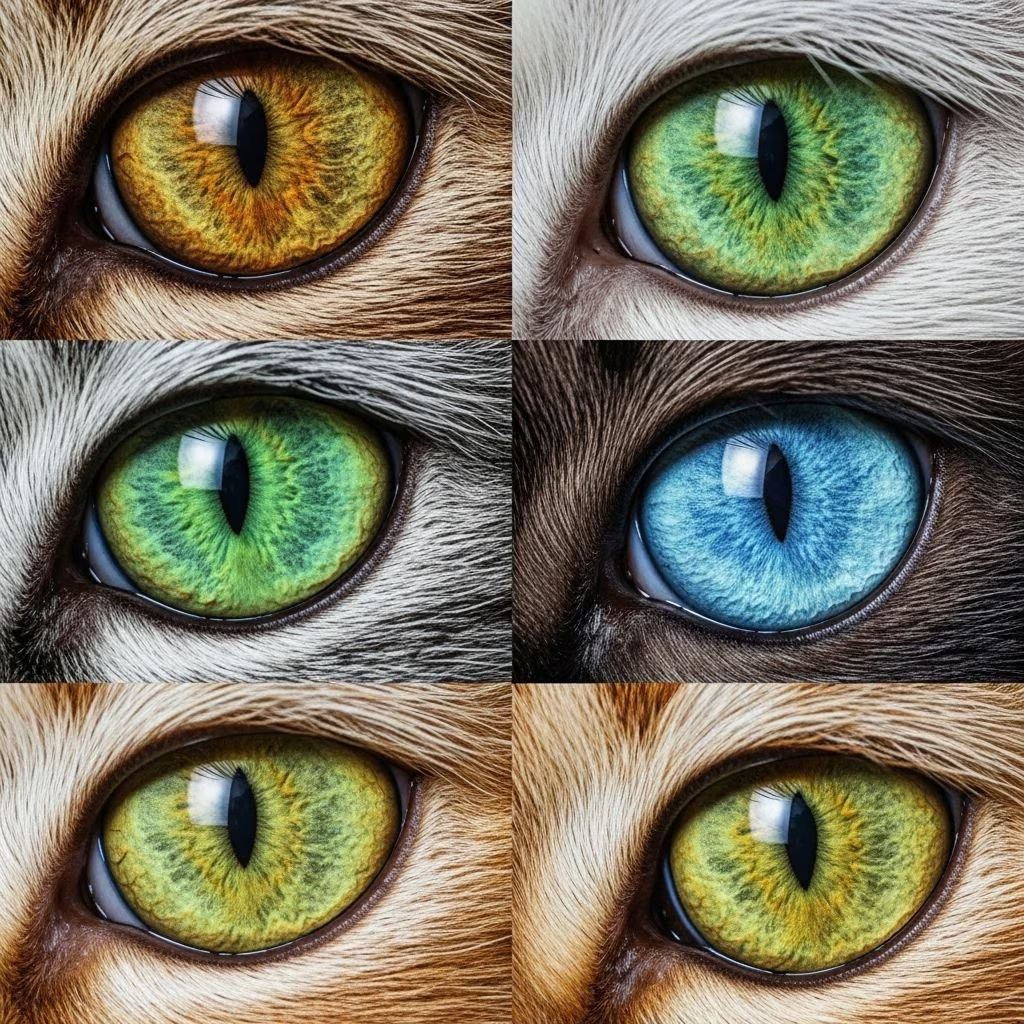
The captivating hues of a cat’s eyes, ranging from vivid green to deep copper or striking blue, result primarily from melanin levels in the iris. Variations like mismatched or sectoral colors intrigue owners and stem from genetic blueprints or later health shifts.
The Science Behind Feline Iris Pigmentation
Melanocytes, specialized cells in the iris, produce melanin, the pigment dictating eye shade. Higher melanocyte counts and activity yield darker tones like amber or brown, while fewer lead to lighter blues or greens through light scattering. Genetic factors control this: the white (W) gene, when dominant, suppresses pigment for blue eyes, especially in homozygous cats (WW).
The orange (O) gene influences coat and indirectly eyes, favoring warmer shades like gold or copper in its presence. Mutations disrupting melanin distribution create uneven patterns, explaining many anomalies.
Types of Eye Color Irregularities in Cats
Unusual eye colors fall into distinct categories, each with unique mechanisms.
- Complete Heterochromia (Odd Eyes): One eye differs entirely, often blue paired with green, yellow, or brown. Linked to white spotting genes reducing melanin in one iris.
- Segmental Heterochromia: Color splits within one iris, like a blue sector amid green. Arises from patchy melanocyte migration during development.
- Central Heterochromia: A inner ring contrasts the outer iris, creating spiky blends from pupil outward. Common in breeds with diluted pigmentation.
These traits appear congenital in most cases but can emerge later due to external influences.
Genetic Foundations of Unique Eye Shades
Cat eye colors tie closely to coat genetics. White or bicolor cats frequently show heterochromia because the KIT gene’s retroviral insertions (FERV1 LTR for dominant white) impair melanoblast migration to the eye. A PAX3 gene insertion, identified via genome-wide studies, causes dominant blue eyes in British cats, highlighting retroviral roles in hypopigmentation.
Breeds like Turkish Van, Japanese Bobtail, and Khao Manee carry higher risks due to selective breeding preserving the white (W) or spotting (w^S) alleles. Siamese patterns (cs allele) force blue eyes via temperature-sensitive melanin suppression in cooler extremities.
| Breed | Common Eye Variation | Genetic Link |
|---|---|---|
| Turkish Van | Odd eyes | White spotting gene |
| Khao Manee | Blue or odd | Dominant white |
| Siamese | Blue | Colourpoint allele |
| Norwegian Forest | Amber variants | O gene mutation |
This table summarizes breed-eye correlations, underscoring inheritance patterns.
Breed-Specific Patterns and Inheritance
Certain lineages amplify color diversity. Turkish Vans often exhibit one blue eye amid white coats, a hallmark from the Van pattern’s spotting genetics. Sphynx or hairless breeds may show deeper shades due to skin exposure aiding melanocyte function.
Inheritance follows complex polygenic rules. Heterochromia isn’t simply dominant or recessive but emerges from epistatic interactions—where one gene masks another. Parents with white spotting can produce odd-eyed kittens at rates up to 15-20% in predisposed lines. Albinism, rare, yields ruby-red or blue eyes from total melanin absence.
Non-Genetic Triggers for Color Changes
Not all anomalies are innate. Acquired heterochromia arises post-birth from trauma, inflammation, or disease altering iris structure.
- Injury or Surgery: Physical damage disrupts melanocytes, fading one eye.
- Uveitis or Glaucoma: Inflammation (uveitis) or pressure (glaucoma) shifts pigment, often darkening or clouding.
- Iris Melanosis: Benign freckles can progress to melanoma, spotting the iris brown.
- Systemic Issues: Jaundice tints eyes yellow from liver dysfunction; cataracts add opacity.
Owners noting sudden shifts should consult vets promptly, as these signal underlying conditions.
Health Implications of Eye Color Traits
Intriguing colors often pose no risk, but associations exist. Blue-eyed white cats face higher deafness odds (up to 65-85%) from shared neural crest cell migration defects affecting ear and eye pigment. Heterochromia itself rarely impairs vision unless tied to disease.
Rare shades like violet (from albinism) or split-face calicos demand monitoring for light sensitivity. Routine exams catch issues early, especially in seniors where age-related sclerosis dulls colors.
Normal Eye Color Development Timeline
Kittens birth with blue eyes from sparse melanocytes; pigmentation ramps 4-10 weeks as melanin activates. Final shades stabilize by 3-6 months. Breeds like Siamese retain blue lifelong, others deepen to adult hues.
Delays past 12 weeks or asymmetry warrant checks for albinism or csd mutations.
Caring for Cats with Distinctive Eyes
Enhance life for odd-eyed or light-eyed felines:
- UV-protective windows to shield sensitive retinas.
- Annual ophthalmic exams for at-risk breeds.
- Nutrient-rich diets boosting antioxidants for eye health.
- Watch for rubbing, squinting, or discharge signaling trouble.
Genetic testing via labs like UC Davis identifies carriers for breeding plans.
Comparing Feline Eye Traits Across Species
Heterochromia spans cats, dogs, and humans via similar melanin genes, though rarer humanly (1/10,000). Dogs mirror cat patterns in Australian Shepherds; humans link it to Waardenburg syndrome. Acquired forms unite all from injury or glaucoma.
Frequently Asked Questions
Can all cats develop heterochromia?
Primarily genetic in white or bicolor cats; acquired rarer via injury or illness.
Is heterochromia harmful?
No, congenital forms are cosmetic; monitor acquired changes.
Why do white cats have blue eyes?
Dominant W gene blocks iris melanin.
Do eye colors predict personality?
No scientific basis; folklore only.
How to test for genetic eye traits?
Vet labs offer coat/eye panels.
References
- Understanding Cats with Different Colored Eyes — Cat Tree UK. 2023. https://cattree.uk/understanding-cats-with-different-colored-eyes/
- Cat Eye Colors, Explained: Genetics, Health, and Rare Shades — Kinship. 2024. https://www.kinship.com/cat-health/cat-eye-colors
- Different Founding Effects Underlie Dominant Blue Eyes (DBE) in the Domestic Cat — PMC/NCBI (peer-reviewed). 2024-07-15. https://pmc.ncbi.nlm.nih.gov/articles/PMC11240321/
- What Causes Abnormal Eye Color in Cats? 3 Vet-Reviewed Factors — Catster. 2024. https://www.catster.com/lifestyle/what-causes-abnormal-eye-color-in-cats/
- Eye Colours — Messybeast. 2023. http://messybeast.com/eye-colours.htm
- What Cat Eye Colors Reveal About Their Health and Genetics — Petbarnkw. 2024. https://petbarnkw.com/what-cat-eye-colors-reveal-about-their-health-and-genetics/
- Find Cat Tests – Coat Color and/or Type — Veterinary Genetics Laboratory, UC Davis (.edu). 2025. https://vgl.ucdavis.edu/dna-tests/cat/all/coat-color-and-or-type



