
Cat Enrichment Essentials
Unlock your cat's potential with smart enrichment strategies for a happier, healthier indoor life.
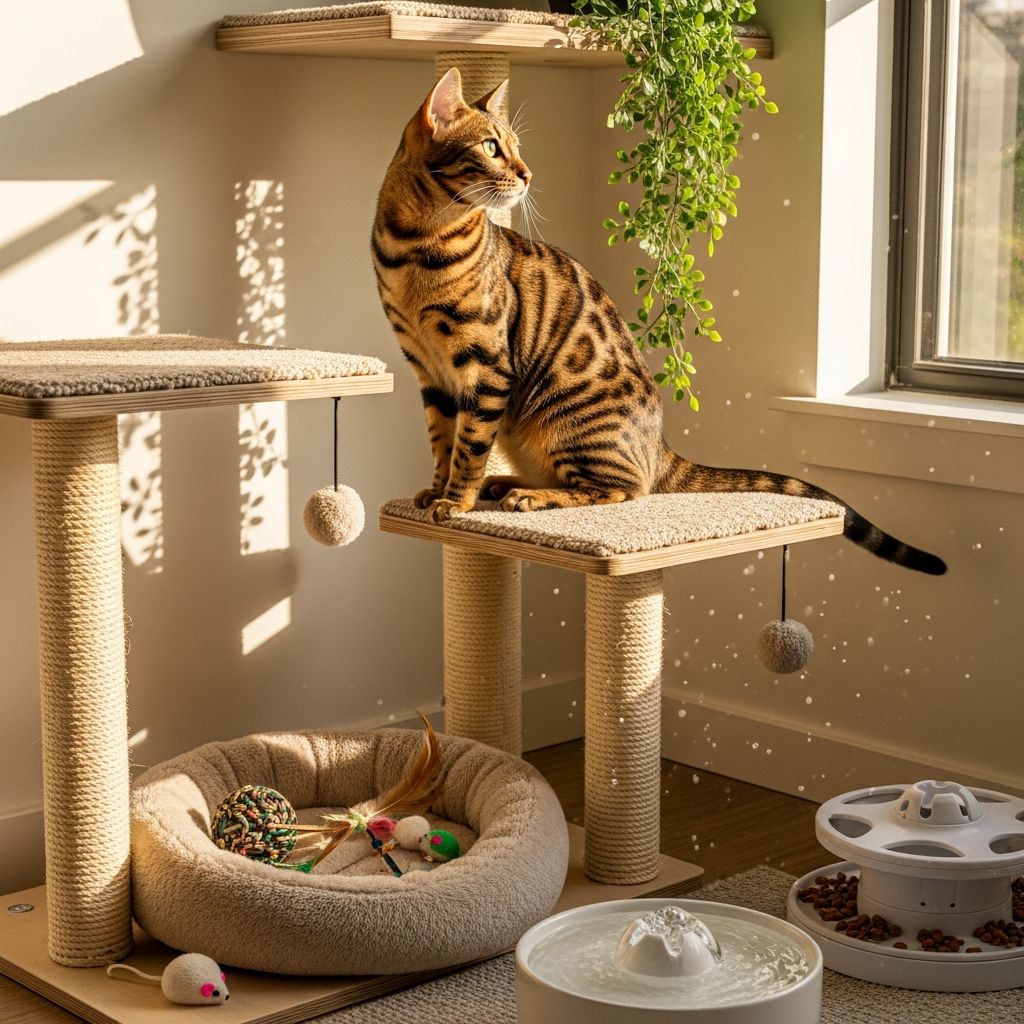
Environmental enrichment transforms ordinary homes into vibrant spaces where cats thrive by fulfilling their innate needs for exploration, hunting, and play. Indoor cats, protected from outdoor dangers, require deliberate efforts to mimic natural stimuli, leading to improved physical health, mental sharpness, and emotional balance.
The Vital Role of Enrichment in Feline Lives
Cats descend from solitary hunters whose days revolved around stalking prey, scaling heights, and patrolling territories. In modern indoor settings, these instincts persist, but without outlets, they manifest as stress or maladaptive behaviors. Enrichment addresses this by integrating elements that engage a cat’s body and mind, fostering a sense of purpose and satisfaction.
Research from veterinary institutions highlights how enriched environments correlate with lower cortisol levels—the stress hormone—and enhanced immune function. For instance, cats in stimulated homes show reduced incidences of urinary tract issues and obesity, common in understimulated pets. This isn’t mere luxury; it’s a foundational aspect of responsible cat ownership, akin to balanced diet and regular vet visits.
Core Pillars of Effective Cat Enrichment
Successful enrichment rests on five interconnected pillars, each targeting specific feline needs. These provide a framework for owners to build a dynamic living space.
- Safe Retreats: Cats crave elevated, enclosed spots to observe and rest securely. Install wall shelves, tunnel beds, or hammocks to offer multiple hideaways, reducing anxiety during household changes.
- Resource Distribution: Follow the n+1 rule—one more of each essential (litter boxes, bowls, scratchers) than the number of cats. Space them apart to minimize territorial tension, especially in multi-cat homes.
- Hunting Simulations: Puzzle feeders and treat-dispensing toys replicate foraging, encouraging problem-solving and slowing meals to prevent rapid eating.
- Vertical Territory: Cat trees, window perches, and climbing walls expand usable space upward, satisfying arboreal instincts without floor clutter.
- Social and Play Opportunities: Daily interactive sessions with wand toys or laser pointers build trust and provide aerobic exercise.
Practical Ways to Stimulate Your Cat’s Senses
Cats perceive the world through heightened senses, making sensory enrichment a powerful tool. Tailor activities to sight, sound, smell, touch, and even taste for comprehensive engagement.
| Sense | Enrichment Ideas | Benefits |
|---|---|---|
| Sight | Bird feeders outside windows, moving feather toys | Triggers stalking instincts, sharpens focus |
| Sound | Crumple paper balls, battery-operated mice | Encourages pouncing and auditory hunting |
| Smell | Catnip mice, silvervine mats, fresh herbs | Promotes relaxation or euphoria, scent marking |
| Touch | Varied textures: sisal ropes, soft brushes | Satisfies grooming and scratching urges |
| Taste | Freeze-dried treats in puzzles, lick mats | Extends mealtime, aids dental health |
Rotate items weekly to maintain novelty, preventing habituation. Observe your cat’s preferences—some adore catnip, while others prefer visual chases—to customize effectively.
Safe Outdoor Access Without the Risks
Indoor living extends lifespan by shielding cats from traffic, predators, and diseases, with studies indicating indoor cats live 2-3 times longer. Yet, nature calls. Enclosed ‘catios’—screened patios or balconies—offer breeze-kissed adventures safely. Start small with window boxes or portable pens, graduating to custom builds with shelves and tunnels.
Harness training enables leashed walks, introducing scents and sights gradually. Always supervise, using escape-proof gear, to build confidence without overwhelm.
Addressing Common Behavioral Challenges Through Enrichment
Boredom fuels issues like furniture scratching, litter avoidance, excessive meowing, or overgrooming. Enrichment redirects energy positively:
- Scratching: Multi-level posts with varied materials (cardboard, rope) placed near problem areas.
- Inappropriate Elimination: Added boxes and cleaning with enzyme sprays, plus stress-relief toys.
- Nighttime Zoomies: Evening play to tire them out, followed by a meal mimicking hunt-eat-rest cycle.
- Aggression: Separate resources and pheromone diffusers for harmony.
Track progress with a journal, adjusting based on responses. Consistency yields results within weeks.
DIY Enrichment on a Budget
No need for expensive gadgets. Repurpose household items:
- Cardboard boxes into mazes with holes.
- Sock stuffed with crinkly material as a kicker toy.
- Muffin tin with ping-pong balls and kibble for foraging.
- Paper bags for ambushing fun.
- Toilet paper rolls filled with treats.
These foster creativity while saving money, proving enrichment accessible to all.
Multi-Cat Dynamics and Enrichment
In shared homes, enrichment prevents rivalry. Provide identical resources in separate zones, rotate shared toys, and offer individual playtime. Vertical space acts as natural dividers, allowing peaceful coexistence. Introduce companions gradually with scent swapping to ease tensions.
Health Impacts: From Weight Management to Longevity
Active lifestyles combat obesity, a leading feline health woe. Enrichment promotes muscle tone, joint flexibility, and cardiovascular health. Mentally, it wards off cognitive decline in seniors via novel challenges. Overall, enriched cats exhibit stronger bonds, displaying more affection and less fearfulness.
Getting Started: A Step-by-Step Plan
Begin with assessment: Note your cat’s daily routine and unmet needs. Week 1: Add vertical elements. Week 2: Introduce feeders. Week 3: Sensory toys. Dedicate 15-20 minutes daily to play. Monitor for engagement; tweak as needed.
Frequently Asked Questions
Is enrichment necessary for all cats?
Yes, especially indoors. Even ‘low-key’ cats benefit from subtle stimuli to prevent subtle stress buildup.
How often should I change toys?
Rotate every 3-7 days to sustain interest without overwhelming.
What if my cat ignores new items?
Demonstrate use yourself, add treats, or pair with meals. Patience is key.
Can enrichment help senior cats?
Absolutely—gentle puzzles and soft climbers support mobility and brain health.
Does it work for kittens too?
Essential for development, building confidence and skills.
References
- Feline Environmental Needs and Enrichment — MSPCA-Angell. 2023-05-15. https://www.mspca.org/pet_resources/feline-enrichment/
- CAT-ching Up On Feline Enrichment — Texas A&M University College of Veterinary Medicine & Biomedical Sciences. 2024-02-20. https://vetmed.tamu.edu/news/pet-talk/feline-enrichment/
- Environmental Enrichment for Cats — ASPCA Pet Health Insurance. 2023-11-10. https://www.aspcapetinsurance.com/resources/cat-enrichment/
- How Environmental Enrichment Enhances Your Cat’s Wellbeing — Whitney Veterinary Hospital. 2024-01-08. https://whitneyvet.com/cat-environmental-enrichment/
- Why Enrichment is Essential for a Happy, Healthy Indoor Cat — Atlanta Humane Society. 2023-09-12. https://atlantahumane.org/blog/cattopia/
Similar Articles








Read full bio of medha deb




