

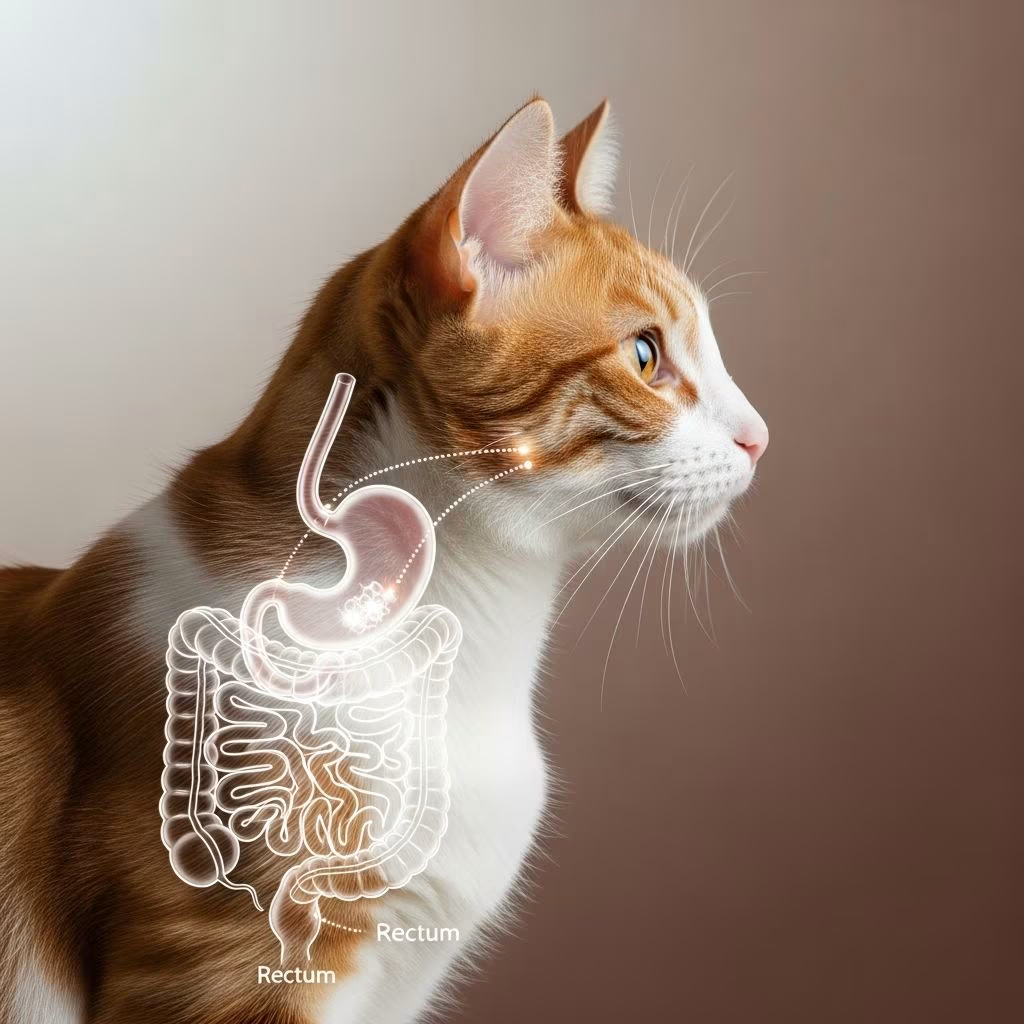
Cats digest food through a multi-stage process spanning 12 to 48 hours on average, varying by diet, age, and health.
The Journey Begins: Oral Processing and Swallowing
Digestion starts the moment a cat encounters food. Their sharp teeth slice meat into manageable pieces rather than grinding, as felines are obligate carnivores adapted for high-protein diets. Saliva moistens the food but contains minimal amylase since cats process little starch.
Food passes quickly through the esophagus via peristalsis, taking mere seconds to minutes. Cats often gulp bites whole, minimizing chewing time to under a minute per meal.
Gastric Breakdown: Stomach’s Acidic Powerhouse
In the stomach, hydrochloric acid and enzymes like pepsin target proteins, churning solids into chyme—a semi-liquid paste—in 2 to 4 hours. This acidic vat (pH 1-2) kills bacteria and initiates macronutrient disassembly, essential for meat-heavy meals.
- Key action: Mechanical mixing increases enzyme contact.
- Duration: 2-4 hours for most solids.
- Protein focus: Longer for dense meats due to carnivorous needs.
Nutrient Harvest: Small Intestine Efficiency
Chyme enters the small intestine, the primary absorption site, aided by pancreatic enzymes and liver bile for fats, carbs, and remaining proteins. Villi and microvilli maximize surface area, extracting 90% of nutrients over 8-12 hours.
This winding 3-5 foot tube processes moisture-rich chyme, with transit influenced by gut motility.
Final Processing: Large Intestine and Waste Formation
The large intestine absorbs water and electrolytes from residue, fermenting fibers via bacteria to produce vitamins like K and B. Remaining matter compacts into feces over 12-24 hours.
Total gut time post-stomach: 20-36 hours, culminating in rectal storage before elimination.
Overall Transit Time Variations
Full digestion—from mouth to feces—ranges 12-48 hours, with averages of 24-36 hours. Shorter for kittens or wet food; longer for dry kibble or seniors.
| Stage | Avg. Time | Factors |
|---|---|---|
| Mouth/Esophagus | Minutes | Eating speed |
| Stomach | 2-4 hrs | Protein load |
| Small Intestine | 8-12 hrs | Enzyme activity |
| Large Intestine | 12-24 hrs | Water content |
| Total | 24-48 hrs | Diet, age, health |
Factors Shaping Digestion Speed
Several elements modulate feline gut transit:
- Diet type: Wet food digests faster (less fiber) than dry.
- Age: Kittens process quicker; seniors slower.
- Size/activity: Active cats metabolize faster.
- Health: Stress, illness prolongs time.
- Meal frequency: 2-3 small meals/day optimal to avoid overload.
Signs of Optimal Digestive Health
Healthy cats defecate 1-2 times daily, with firm, brown stools. Litter use every 12-24 hours post-meal signals normal transit. Urine output: 2-4 times/day.
Monitor for changes: diarrhea (too fast), constipation (too slow).
Enhancing Feline Gut Function
Support digestion with:
- High-quality protein kibble/wet food matching AAFCO standards.
- Probiotics for microbiome balance.
- Gradual diet transitions.
- Ample water via fountains.
- Regular vet checks for parasites.
Common Digestive Challenges and Fixes
Hairballs: Grooming + malt paste reduces blockages.
Constipation: Fiber boost, hydration.
Diarrhea: Bland diet, vet if persistent.
Feeding Schedules by Life Stage
| Life Stage | Meals/Day | Digestion Notes |
|---|---|---|
| Kitten | 3-4 | Fast transit, milk-based early. |
| Adult | 2 | 8-12 hr spacing ideal. |
| Senior | 2-3 small | Slower; soft foods help. |
FAQs
How long after eating do cats poop?
Typically 12-24 hours for full transit.
Does wet food digest faster than dry?
Yes, due to higher moisture aiding breakdown.
Why monitor litter habits?
Indicates gut health; deviations signal issues.
Can stress slow digestion?
Yes, via reduced motility.
Optimal feeding frequency?
Adults: twice daily, spaced 12 hours.
References
- How Long Does it Take a Cat To Digest Food? — Sunmed. 2023. https://getsunmed.com/blogs/blog/how-long-does-it-take-a-cat-to-digest-food
- Cat Digestive System: A Closer Look at How It Works — Great Pet Care. 2023. https://www.greatpetcare.com/cat-nutrition/cat-digestive-system/
- How Long Does It Take For a Cat to Digest Food? — PrettyLitter. 2023. https://www.prettylitter.com/blog/how-long-does-it-take-a-cat-to-digest-food
- Understanding Your Cat’s Digestion: How Long Does It Really Take? — Orea. 2023. https://www.oreateai.com/blog/understanding-your-cats-digestion-how-long-does-it-really-take/b063fa89952ba179cb28af7474dd44fd
- How Long Does it Take a Cat to Digest Food? — Purina US. 2023. https://www.purina.com/articles/cat/health/digestion/how-long-does-it-take-cat-to-digest-food
- How long does it usually take for a cat to poop after eating? — Dial A Vet. 2023. https://www.dialavet.com/vet-answers/cat-digestion-time-bathroom-30411



