

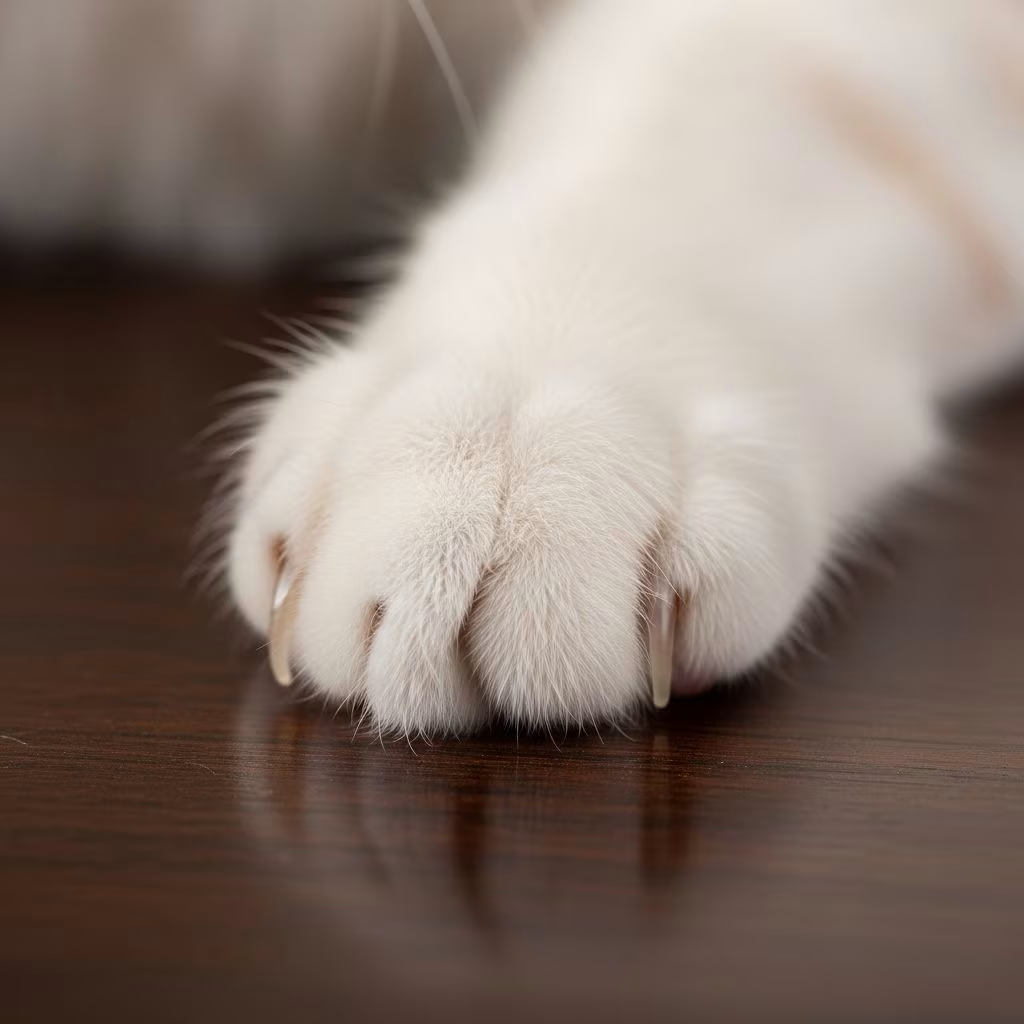
Declawing, or onychectomy, surgically removes the last bone of a cat’s toes, fundamentally altering its natural anatomy. While some owners consider it for household protection, veterinary organizations highlight substantial downsides, prompting widespread shifts toward bans and alternatives.
Understanding the Surgical Process
The procedure typically uses methods like scalpel, guillotine clippers, or laser to amputate the third phalanx of each toe on the front paws. Performed under general anesthesia, it requires pre-surgical exams, pain management, and post-operative care including antibiotics and bandages. Recovery spans weeks, with cats needing soft litter and restricted activity to avoid complications. Despite advancements, all methods carry anesthesia risks and potential for incomplete healing.
Health Complications from Declawing
Declawing poses immediate and lifelong health threats. Acute issues include hemorrhage, infection, swelling, and nerve damage, with studies reporting complication rates up to 50% post-surgery. Long-term problems are more alarming: declawed cats face 3-7 times higher risks of chronic back pain, lameness, palmigrade stance (abnormal walking on heels), and retained bone fragments causing abscesses or claw regrowth.
- Pain and Mobility Issues: Phantom limb pain, gait changes, and joint strain lead to persistent discomfort, affecting jumping and balance.
- Infection and Healing Failures: Wound dehiscence, necrosis, and draining tracts often necessitate further surgeries.
- Age Factors: Kittens under one year recover faster with fewer issues, but adults suffer heightened risks.
Research confirms these outcomes, with radiographic evidence linking retained P3 fragments to elevated back pain odds (OR 2.9).
Behavioral Changes in Declawed Cats
Beyond physical harm, declawing disrupts natural behaviors, increasing aggression, biting, overgrooming, and litter box avoidance. Cats may associate paw pain with litter, leading to house soiling—reported in up to 19.8% of cases post-discharge. Without claws for defense or marking, stress rises, suppressing immunity and fostering conditions like cystitis or IBS. Shelters note many surrenders stem from these post-declaw behaviors.
| Common Behavioral Issue | Prevalence Increase | Source |
|---|---|---|
| Inappropriate Elimination | 3-7x higher | |
| Aggression/Biting | Significant rise | |
| Overgrooming/Barbering | OR 3.06 | |
| Chronic Back Pain | OR 2.9 |
Potential Advantages for Owners
Proponents cite owner-centric benefits: reduced furniture damage, safer interactions for children or immunocompromised individuals, and lower cat scratch disease transmission risk. In rare medical cases—like tumors or infections—vets may deem it necessary. Some cats heal without issues, potentially strengthening owner-pet bonds if scratching was a dealbreaker. Costs range $600-$1,800, covering exams, surgery, and follow-ups.
However, the American Animal Hospital Association (AAHA) and others assert these rarely outweigh risks, urging alternatives first.
Legal Landscape: Where Declawing Stands
Declawing is banned in New York (2019 onward), several U.S. cities, and countries including the UK, Australia, Brazil, Israel, and much of Europe. The AVMA neither endorses nor opposes it outright but stresses best practices if performed, excluding cosmetic cases. Momentum grows via groups like ASPCA, with veterinary bodies like AAFP labeling it non-medically necessary in most scenarios.
- Banned Regions: Full state bans (NY), city ordinances (e.g., San Francisco, Denver), international prohibitions.
- Guidelines: Multimodal pain control mandatory; laser may reduce some complications but not retained fragments.
Humane and Effective Alternatives
Non-surgical options preserve cat welfare while addressing scratching. Start with environmental tweaks:
- Regular Trimming: Clip nails every 2-3 weeks using cat-specific clippers.
- Scratching Posts: Provide varied textures (sisal, cardboard) in multiple locations; place near problem areas.
- Nail Caps: Soft vinyl covers like Soft Paws last 4-6 weeks, applied with glue.
- Deterrents: Double-sided tape, citrus sprays, or furniture guards on targeted surfaces.
- Training: Positive reinforcement—reward post use; redirect with toys.
Tenyectomy (tendonectomy) severs flexor tendons to prevent claw extension but is similarly discouraged due to complications and ethical concerns. Behavioral consults help if issues persist.
Post-Surgery Care Essentials
If declawing occurs, prioritize recovery: confine to small areas, use paper-based litter, administer prescribed pain meds, monitor for swelling/infection, and restrict jumping. Follow-ups ensure healing; watch for reluctance to walk or chew paws. Younger cats fare better, but vigilance is key regardless.
Expert Recommendations and Welfare
Veterinary consensus—from AAHA, AAFP, and AVMA—favors alternatives over surgery. Declawing removes essential tools for stretching, climbing, and security, akin to human fingertip amputation. Opt for prevention: multi-cat households benefit from ample resources to curb stress-induced scratching.
Frequently Asked Questions (FAQs)
Is declawing painful for cats?
Yes, it causes acute post-operative pain and potential chronic issues like back pain or lameness.
Does declawing stop litter box use?
Often, due to paw tenderness; studies show increased elimination problems.
Are there safe alternatives to declawing?
Yes, nail caps, trimming, posts, and training effectively manage scratching without surgery.
Is declawing illegal everywhere?
No, but banned in NY, many cities, and several countries; check local laws.
Can adult cats be declawed safely?
Risks rise with age; kittens have shorter recovery but still face complications.
References
- Cat Declawing: Pros, Cons, and Safe Alternatives — Pets Best. 2023. https://www.petsbest.com/blog/cat-declawing-safer-alternatives
- Declawing — AAHA. 2024. https://www.aaha.org/declawing/
- Declawing Cats — SPCA of Wake County. 2022. https://spcawake.org/services/pet-behavior/declawing-cats/
- Cat Declawing: Pros, Cons, and Safer Alternatives — Shallowford Vet. 2023. https://shallowfordvet.com/cat-declawing-pros-cons-and-safer-alternatives/
- Cat Declawing — CareVet. 2024. https://www.carevet.com/interstate/cat-declawing/
- AAFP Position Statement: Declawing — PMC/NIH. 2024-05-15. https://pmc.ncbi.nlm.nih.gov/articles/PMC11128892/
- Declawing — PAWS Chicago. 2019. https://www.pawschicago.org/fileadmin/media/images/News_Resources/Cat_Resources/CatResource_Declawing_2019-web.pdf
- Declawing of Domestic Cats — AVMA. 2019-07-23. https://www.avma.org/sites/default/files/resources/declawing_bgnd.pdf



