

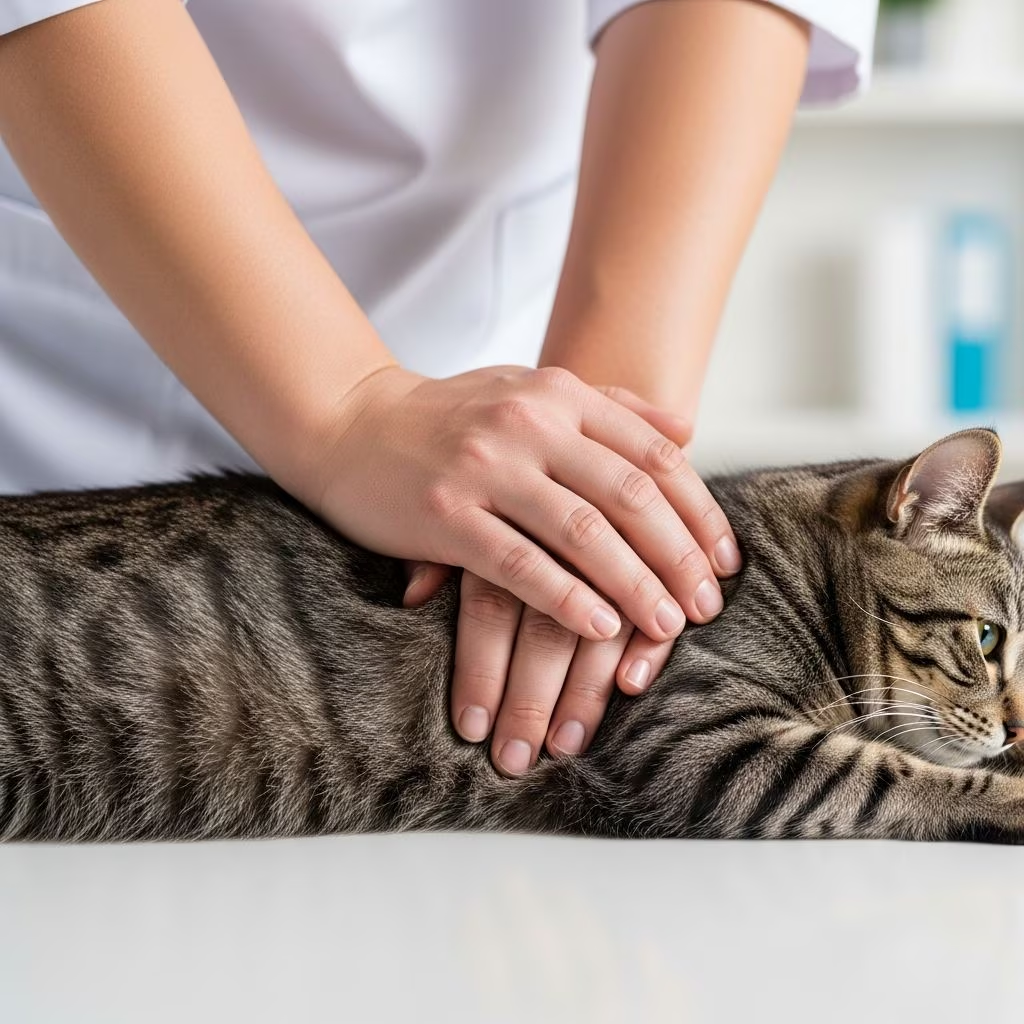
Cardiac arrest in cats demands immediate action, as every second counts for restoring vital functions like heartbeat and breathing. This comprehensive guide equips cat owners with veterinary-endorsed techniques to perform CPR effectively, drawing from established protocols to maximize survival chances during crises such as choking, trauma, or drowning.
Understanding Feline Cardiac Emergencies
Cats can suffer sudden cardiac arrest from various causes, including household accidents, heatstroke, or underlying heart conditions. Unlike humans, a cat’s narrow chest and high heart rate require tailored CPR approaches. Recognizing the urgency is key: without prompt intervention, brain damage occurs within minutes due to oxygen deprivation.
Statistics from veterinary studies highlight the stakes—survival rates plummet if CPR delays exceed 30 seconds. Common triggers include electrocution, vehicular impacts, or foreign object aspiration. Preparedness through training can double positive outcomes, emphasizing why every pet owner should master these skills.
Signs Your Cat Needs Immediate CPR
Before initiating CPR, confirm the emergency with a rapid assessment lasting no more than 10 seconds. Look for these critical indicators:
- Unresponsiveness: Gently shake the cat and call its name loudly—no reaction means proceed.
- No breathing: Observe the chest for movement; listen near nostrils for air flow.
- Absent heartbeat: Place your palm on the left chest behind the elbow or feel the femoral artery in the inner thigh.
- Blue gums or tongue: Indicates severe oxygen lack—act now.
If any sign is present, assume arrest and start CPR while arranging veterinary transport. Hesitation reduces efficacy dramatically.
Preparing the Scene for Effective CPR
Create a stable environment: place the cat on a firm, flat surface like a table or floor to allow full chest recoil. Position it on its side or right lateral recumbency for optimal access. Remove collars or obstructions, and enlist help if available—one handles CPR, the other drives.
Gather tools if possible: a pet oxygen mask or Ambu bag enhances delivery, but hands suffice in most home scenarios. Time cycles with a clock or song like “Stayin’ Alive” at 100-120 beats per minute.
Step-by-Step Cat CPR Protocol
Follow this structured sequence, adapted from RECOVER guidelines for small animals, prioritizing compressions over breaths in single-rescuer scenarios.
1. Secure the Airway
Extend the neck straight, pull the tongue forward, and visually inspect for blockages. Sweep with a finger if needed, but avoid blind probing to prevent lodging objects deeper. If clear, advance.
2. Deliver Chest Compressions
Use a one-handed encircling technique: wrap your dominant hand around the chest with thumb over the heart (third rib space) and fingers underneath. Compress thumb toward palm at 100-120 per minute, achieving 1/3 to 1/2 chest depth. Stabilize the spine with your other hand. Allow full recoil between presses—no leaning on the chest.
| Cat Size | Compression Depth | Rate per Minute |
|---|---|---|
| Adult (4-10 lbs) | 1-2 inches | 100-120 |
| Kitten (<4 lbs) | 0.5-1 inch | 120-140 |
3. Provide Rescue Breaths
After 30 compressions, deliver 2 breaths: close the mouth, seal lips over nostrils, and blow gently until the chest rises (1-second duration). Pause briefly for exhalation. Resume compressions immediately—minimize interruptions.
For two rescuers: one compresses while the other ventilates at 10 breaths per minute via endotracheal tube if available.
4. Cycle and Monitor
Repeat 30:2 ratio for 2-minute cycles. Pause to reassess: if pulse returns, focus on breaths and vet rush. Switch compressors to combat fatigue—CPR exhausts arms quickly.
CPR Variations for Special Cases
- Choking: Perform abdominal thrusts (Heimlich-style) before compressions: place fists behind ribs and thrust upward.
- Drowning: Drain water from lungs by holding hind legs upward and swinging gently before standard CPR.
- Kittens: Use two fingers for compressions; smaller breaths to avoid overinflation.
- Obese cats: Increase depth slightly but monitor recoil.
Common Mistakes to Avoid in Cat CPR
Even well-intentioned efforts falter without precision:
- Incomplete chest recoil traps blood flow.
- Excessive breath force risks lung damage—chest rise equals normal breath.
- Ignoring airway clearance prolongs hypoxia.
- Prolonged single-person efforts without switching lead to poor quality.
- Stopping prematurely: continue until vet arrival or signs of recovery.
Veterinary data shows poor technique halves success rates; practice on mannequins builds muscle memory.
Post-CPR Care and Veterinary Follow-Up
Once heartbeat resumes, keep the cat warm, monitor vitals, and transport immediately. Vets may administer epinephrine, defibrillate, or diagnose root causes via ECG. Survival post-CPR hovers at 10-40%, underscoring professional intervention.
Monitor for complications like rib fractures or pneumothorax from compressions—rare but possible in fragile felines.
Training Resources and Certification
Enroll in pet first aid courses from organizations like the Red Cross or veterinary colleges. Hands-on practice with mannequins simulates real scenarios. Apps with metronomes aid rhythm during home drills.
Frequently Asked Questions (FAQs)
Can I hurt my cat by doing CPR incorrectly?
Yes, risks include rib fractures, but inaction is deadlier—benefits outweigh harms in arrest.
How long should I perform CPR before stopping?
Continue until professional help arrives or the cat revives; stopping too soon forfeits recovery chances.
Is mouth-to-nose safe for cats?
Absolutely—seal properly to prevent aspiration; use a barrier if concerned about disease.
What if my cat has a pulse but isn’t breathing?
Provide rescue breaths only at 10-12 per minute until spontaneous respiration returns.
Does CPR work as well on cats as on humans?
Rates are lower due to anatomy, but prompt action per guidelines improves odds significantly.
Enhancing Prevention Through Awareness
Reduce emergencies by securing toxins, supervising play, and scheduling annual vet checks for heart issues. Microchip and ID tags aid recovery if outdoors. Informed owners save lives—empower yourself today.
References
- How To Perform CPR on a Cat — PetMD. 2023. https://www.petmd.com/cat/general-health/how-to-perform-cpr-on-a-cat
- CPR for Cats and Kittens — PDSA. 2023-03-01. https://www.pdsa.org.uk/pet-help-and-advice/pet-health-hub/other-veterinary-advice/cpr-for-cats-and-kittens
- How to Perform Pet CPR — American Red Cross. 2024. https://www.redcross.org/take-a-class/cpr/performing-cpr/pet-cpr
- CPR for Dogs and Cats: The RECOVER Guidelines — Today’s Veterinary Practice. 2022. https://todaysveterinarypractice.com/emergency-medicine-critical-care/cardiopulmonary-resuscitation-the-recover-guidelines/
- Revised CPR guidelines in dogs, cats emphasize speed, standard techniques — AVMA. 2023. https://www.avma.org/news/revised-cpr-guidelines-dogs-cats-emphasize-speed-standard-techniques
- Cardiopulmonary Resuscitation of Small Animals — Merck Veterinary Manual. 2024. https://www.merckvetmanual.com/emergency-medicine-and-critical-care/specific-diagnostics-and-therapy/cardiopulmonary-resuscitation-of-small-animals



