

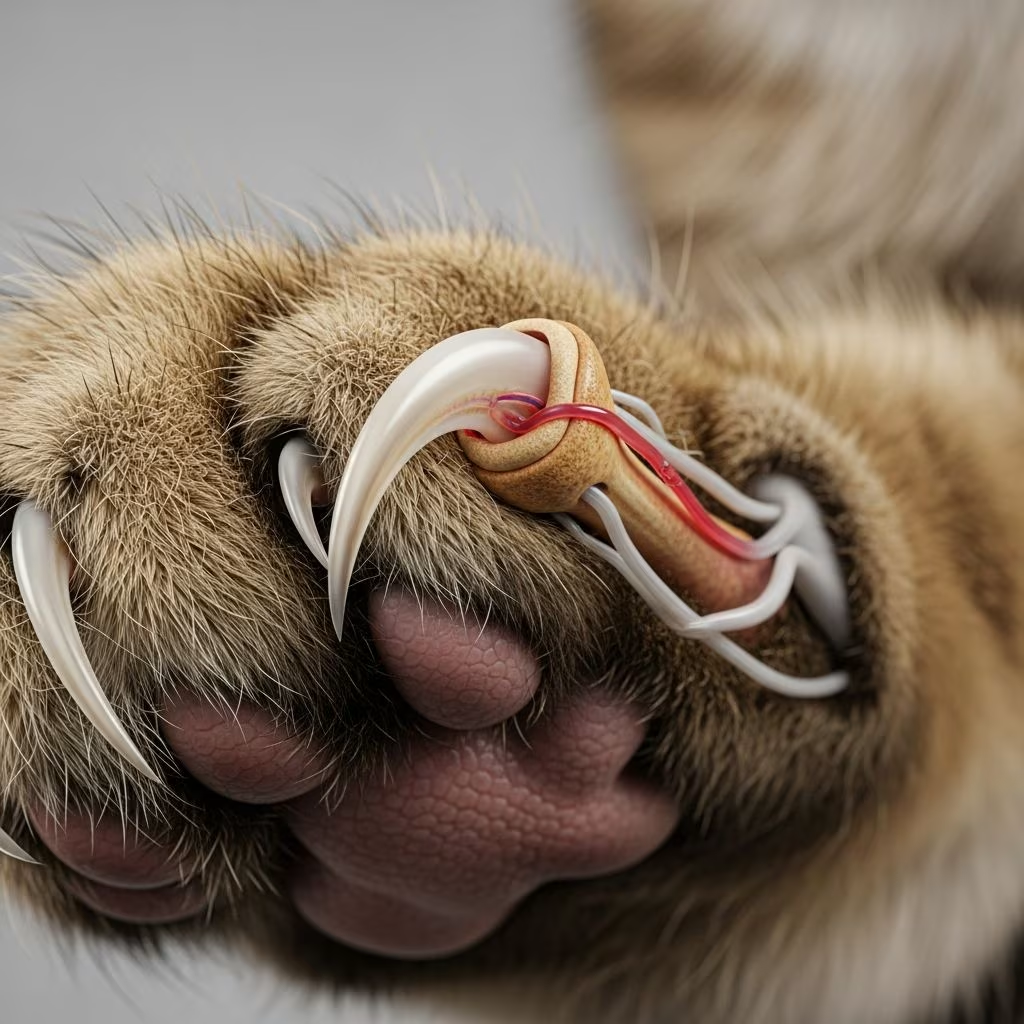
Cat claws represent a pinnacle of evolutionary design, enabling these agile predators to navigate their world with precision and power. Composed primarily of keratin, the same tough protein found in human nails, cat claws grow continuously from the distal phalanx bone, supported by intricate tendons and ligaments that allow for effortless extension and retraction. This unique anatomy not only keeps claws razor-sharp but also plays vital roles in hunting, climbing, and territorial marking.
The Building Blocks: Keratin and Claw Composition
At the core of every cat claw lies keratin, a durable protein that forms layered structures around a sensitive vascular core known as the quick. Unlike flat human nails, cat claws curve into sickle-like hooks, tapering to needle-sharp points ideal for gripping prey or scaling surfaces. These claws emerge from the final bone segment of each digit, the distal phalanx, which provides rigid support and stability during high-impact activities.
The cornified claw sheath, as detailed in anatomical studies, divides into distinct horn regions: the hard, glossy wall horn for piercing and the softer sole horn for flexibility. This dual composition allows cats to maintain lethality while adapting to various substrates. Growth occurs from the quick, nourished by blood vessels and nutrients, pushing older layers outward for periodic shedding.
Retractable Marvel: Mechanisms of Extension and Sheathing
What sets cat claws apart is their retractability, a feature powered by a sophisticated interplay of muscles, tendons, and ligaments. When a cat wishes to deploy its claws, it contracts the flexor muscles in the foreleg, tightening the digital flexor tendon attached to the base of the distal phalanx. This pulls the claw forward, extending it beyond the protective skin pouch.
Conversely, relaxation of these muscles, aided by an elastic ligament in the toe, allows the claw to sheath back into the pouch, preserving sharpness during casual movement. The superficial flexor tendon works in tandem, ensuring smooth protraction. This system grants cats precise control, visible when they flex their distal interphalangeal joint to expose the unguicular pleat at the claw base.
- Key Components: Digital flexor tendon (pulls claw out), superficial tendon (stabilizes), elastic ligaments (enable retraction).
- Muscle Groups: Foreleg flexors and extensors coordinate for rapid deployment.
- Skin Pouch: Modified cuticle encases retracted claws, preventing wear.
Skeletal Foundations: The Distal Phalanx and Supporting Structures
The distal phalanx, or P3 bone, is the anchor point for the claw, featuring an ossified unguicular hood that overhangs the unguicular process, forming a recess for the claw root. This bony architecture, complete with extensor and flexor tubercles, interfaces with tendons from muscles like the M. extensor digitorum communis and M. flexor digitorum profundus.
Dermal connective tissue bridges the gap, providing vascular support to the living epidermis that generates the cornified sheath. A dorsal dermal papilla and frenulum create a trough for precise claw alignment, ensuring mechanical stability during flexion. Cats’ digitigrade stance—walking on toes—amplifies this design, keeping claws poised for action.
Natural Maintenance: Shedding and Sharpening Processes
Cat claws self-regulate through shedding, where outer keratin layers loosen and flake off, revealing fresh, sharp tips beneath. This built-in mechanism, driven by growth from the quick, prevents overgrowth and maintains lethality. Scratching posts mimic natural substrates, stretching the skin pouch and dislodging worn husks.
Without regular scratching, claws can become dull or embedded, leading to discomfort. Indoor cats especially benefit from designated posts to replicate tree bark abrasion, promoting healthy shedding cycles.
| Claw Feature | Function | Anatomical Support |
|---|---|---|
| Wall Horn | Piercing/Gripping | Hard keratin layers |
| Sole Horn | Flexibility | Friable structure in recess |
| Quick | Growth/Nourishment | Vascular core |
| Skin Pouch | Protection | Unguicular pleat |
Multifaceted Roles: Hunting, Climbing, and Beyond
Claws are indispensable for survival. In hunting, extended claws hook prey, preventing escape during the killing bite. Climbing relies on their curvature for traction on bark or fabric, with dewclaws on front paws aiding in secure holds.
Self-defense involves rapid swipes, where retracted claws deploy in milliseconds for counterattacks. Territorial scratching deposits pheromones from paw pads, signaling ownership while conditioning claws. Footpads complement this, absorbing shocks from leaps up to six times body height and muffling steps for stealthy approaches.
Footpad Synergy: The Unsung Heroes of Feline Paws
Beneath the claws lie robust footpads, thick cushions of modified skin rich in adipose tissue and sweat glands. These pads insulate against extremes, provide traction, and house retracted claws. Located under digits, metacarpal/metatarsal joints, and carpal pads (front) or tarsal (rear), they enable silent prowls and acrobatic landings.
The hypodermis’s fat layers act as shock absorbers, crucial for high-jump recoveries. Sweat glands between pads aid thermoregulation and scent marking, enhancing claw functionality.
Care Essentials: Trimming, Health Monitoring, and Enrichment
Pet owners must support this anatomy to prevent issues like overgrown claws or infections. Regular trimming—every 2-4 weeks for indoors cats—removes excess keratin without nicking the quick, identifiable by its pink hue in light claws. Use cat-specific clippers, avoiding the vascular area to prevent bleeding.
Signs of trouble include limping, reluctance to jump, or bloody sheaths, signaling ingrown claws or paronychia. Provide varied scratching surfaces: sisal posts, cardboard scratchers, and horizontal options to match natural behaviors. Declawing is discouraged as it removes the P3 bone, disrupting gait and causing chronic pain.
- Trimming Tips: Hold paw firmly, clip translucent tips only.
- Enrichment Ideas: Multi-level posts, cat trees for climbing.
- Vet Checks: Annual exams for claw and pad integrity.
Common Claw Conditions and Prevention
Overgrown claws curve inward, potentially piercing pads. Bacterial infections thrive in moist sheaths; dry environments and cleaning mitigate risks. Senior cats may develop brittle claws from nutrition deficits—ensure taurine-rich diets.
Genetic variations, like polydactyl extra toes, demand tailored care but share core anatomy. Monitor for tumors or cysts in the quick, rare but serious.
FAQs
Do cat claws grow back if trimmed too short?
Yes, claws regrow from the quick within weeks, provided the living tissue remains intact.
Why do cats scratch furniture?
Scratching maintains claws, marks territory with scents, and stretches muscles—a natural, non-destructive outlet via posts prevents this.
Can you feel pain in a cat’s claws?
The outer keratin is insensate, but the quick contains nerves and vessels; avoid it during trims.
How often should indoor cats get claw trims?
Every 10-14 days, depending on wear; observe for curling tips.
Are front and back claws different?
Front paws have five digits (including dewclaw) versus four on rear; all retract, but fronts bear more climbing load.
Comparative Insights: Cats vs. Other Animals
Unlike dogs’ non-retractable nails, cat claws stay honed. Big cats share this trait, scaled for larger prey. Human nails lack curvature or retraction, prioritizing tool use over predation.
References
- How Do Cat Claws Work? How They Come Out & Retract — Catster. 2023. https://www.catster.com/ask-the-vet/how-do-cat-claws-work/
- The structure of the cornified claw sheath in the domesticated cat — PMC (NCBI). 2009-08-26. https://pmc.ncbi.nlm.nih.gov/articles/PMC2736126/
- Structure and Function of the Claw and Foot Pad in Cats — PetPlace. N/A. https://www.petplace.com/article/cats/pet-health/structure-and-function-of-the-claw-and-foot-pad-in-cats
- How to Support Your Cat’s Normal Scratching Behavior — TVMF. N/A. https://www.tvmf.org/articles/feline-scratching-behavior/
- Understanding Cat and Dog Claw Anatomy and Their Essential Uses — Pet Nation Omaha. 2024-10-15. https://www.petnationomaha.com/blog/understanding-cat-and-dog-claw-anatomy-and-their-essential-uses-20241015



