

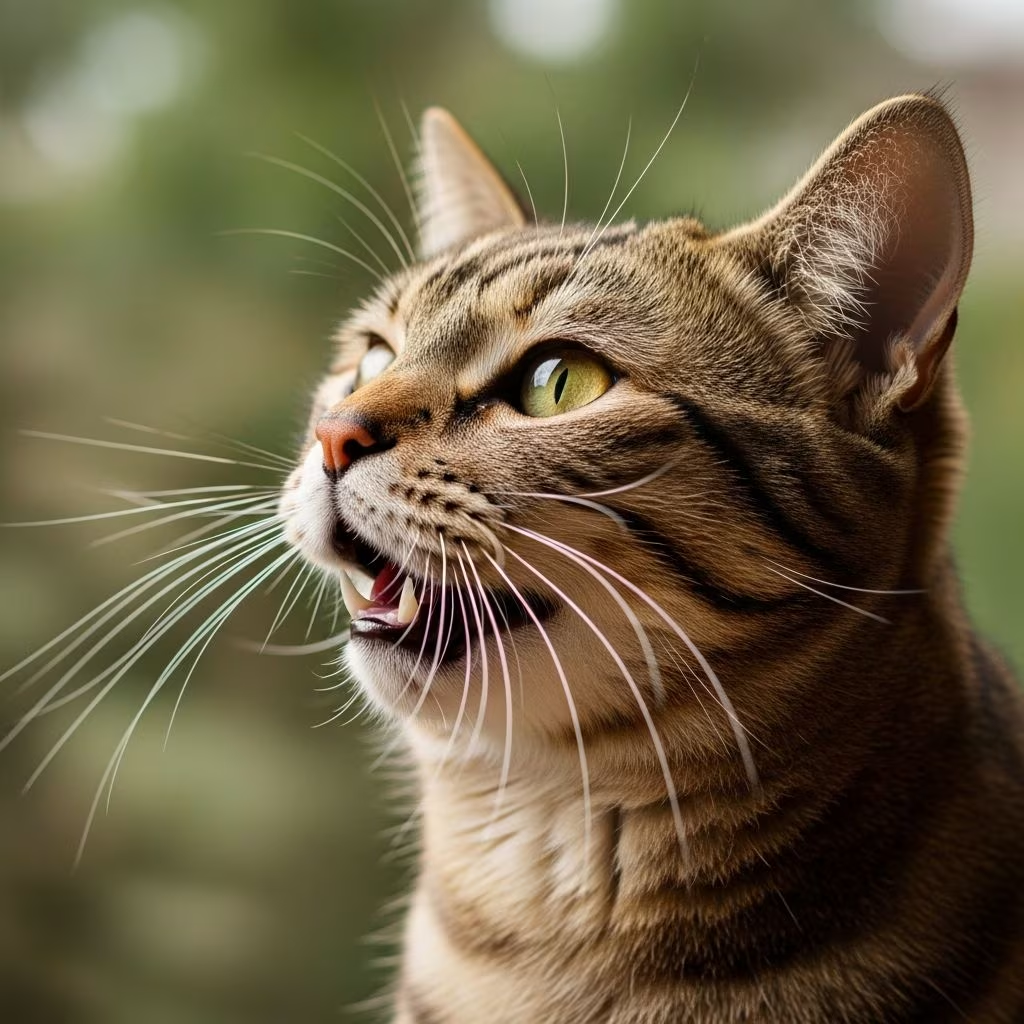
Cat chirping is a distinctive high-pitched vocalization that many pet owners notice during moments of heightened interest or emotion. This sound, often resembling a bird’s trill or a quick peep, serves multiple purposes rooted in a cat’s instincts and social needs.
The Nature of Feline Vocal Sounds
Cats produce a variety of noises beyond the familiar meow, each carrying specific meanings shaped by evolution and domestication. Chirping stands out as a short, sharp burst, typically higher in pitch than standard meows and created with minimal mouth opening. Experts classify it among softer murmurs, alongside purring, used for non-aggressive exchanges.
This vocalization originates from the throat, sometimes accompanied by subtle jaw movements or quivers. Adult cats deploy it selectively, often when fixated on distant stimuli or interacting socially. Understanding its production helps owners interpret their pet’s mindset accurately.
Primary Triggers for Chirping Behavior
Several scenarios prompt cats to chirp, with hunting-related excitement topping the list. When spotting birds or insects through glass barriers, felines enter a state of intense focus, tail twitching and body rigid. The chirp emerges as an outlet for this pent-up energy, blending thrill with mild irritation at the unreachable target.
- Predatory Focus: Cats mimic prey calls subconsciously, possibly as muscle memory from wild ancestors who lured victims with similar sounds.
- Window Watching: Common indoors, where safe observation heightens the response without risk.
- Toy Interaction: Feather wands or laser pointers elicit chirps mimicking real hunts.
Social and Greeting Functions
Beyond predation, chirping acts as a friendly overture. Mother cats use it to summon kittens, a habit persisting into adulthood for human bonds. A chirp directed at owners signals recognition, pleasure, or a bid for engagement—like sharing a discovery or inviting play.
In multi-cat homes, it facilitates acknowledgment between felines, denoting approval or mild curiosity without threat. Owners often hear it during greetings after separations, underscoring cats’ selective sociability despite solitary reputations.
Emotional Underpinnings: Frustration and Joy
Chirping conveys nuanced feelings. Frustration arises when prey evades capture, such as birds flitting just out of paw reach, prompting rapid chirps akin to chattering. Conversely, pure delight surfaces in relaxed settings, like during gentle petting or novel encounters.
| Emotion | Chirping Style | Common Context |
|---|---|---|
| Excitement | Quick, rhythmic bursts | Bird sighting or play |
| Frustration | Intense, repetitive | Barred access to prey |
| Affection | Soft, single trill | Greeting owner |
How Cats Produce Chirps
The mechanics involve rapid jaw clacks or throat vibrations, often voiceless for subtlety. Some describe it as ‘ek-ek-ek,’ a staccato pattern from teeth clicking. This differs from meows, which engage full vocal cords, making chirps stealthier—ideal for stalkers avoiding detection.
Research links it to infancy, where queens chirp to locate offspring, evolving into adult signals for attention or location sharing. Even sleeping cats may chirp, likely processing dream hunts via ancestral reflexes.
Comparing Chirps to Other Cat Noises
Chirping fits into a broader vocal repertoire. Meows target humans primarily, while hisses signal defense. Trills, a chirp variant, are softer greetings. Chattering, an aggressive chirp form, intensifies during frustration.
- Meow: Versatile human communication.
- Purr: Contentment or self-soothing.
- Chirp/Trill: Excitement or hello.
- Chatter: Frustrated hunting.
Enhancing Your Cat’s World Through Chirp Awareness
Recognizing chirps allows tailored responses. Interactive toys channeling hunt urges reduce frustration, promoting exercise and mental stimulation. Puzzle feeders or window perches satisfy curiosities safely.
Responding to social chirps with calm acknowledgment—like verbal replies or treats—fortifies bonds. Avoid startling fixated cats; instead, observe body language for optimal timing.
When Chirping Might Signal Concerns
Typically benign, excessive or altered chirping warrants vet checks. Sudden increases could tie to pain, cognitive shifts in seniors, or environmental stress. Pairing with lethargy, appetite loss, or aggression demands professional input.
Practical Strategies for Cat Owners
- Install bird feeders outside view for controlled watching.
- Rotate toys to sustain interest.
- Use clicker training linking chirps to rewards.
- Enrich environments with vertical spaces.
- Monitor for multi-cat tensions via vocal shifts.
FAQs on Cat Chirping
Is cat chirping always about birds?
No, it also greets humans, signals play readiness, or expresses general excitement.
Why do some cats chirp more than others?
High-energy breeds or those with strong prey drives, like Bengals, chirp frequently. Personality and past experiences influence it too.
Can chirping indicate health issues?
Rarely alone, but combined with other symptoms, consult a vet to rule out problems.
How should I react to my cat’s chirps?
Acknowledge positively with play or affection to encourage communication.
Do all cats chirp?
Most do, though some prefer silence; it’s more common in socialized pets.
Expert Insights into Feline Acoustics
Behaviorists note chirping’s role in human-cat synergy, mirroring visual cues both species favor. Studies on wild felids, like margays mimicking monkeys, suggest deep evolutionary roots, preserved in domestics despite abundant food.
Domestic cats view owners as kin, chirping to share ‘hunts’ or solicit involvement, blending wild heritage with companionship.
References
- Why Do Cats Chirp? — Whitney Veterinary Hospital. 2023. https://whitneyvet.com/why-do-cats-chirp/
- What Is Cat Chirping and Why Do Cats Do It? — Hill’s Pet (Canada). 2023. https://www.hillspet.ca/en-ca/cat-care/behavior-appearance/cat-chirping
- Why does my cat chirp or ‘ek ek ek’? — Armarkat Blog. 2023. https://www.armarkat.com/blog/why-does-my-cat-chirp-or-ek-ek-ek/
- 9 Cat Noises and What They Mean — PetMD. 2024-02-15. https://www.petmd.com/cat/general-health/cat-noises



