

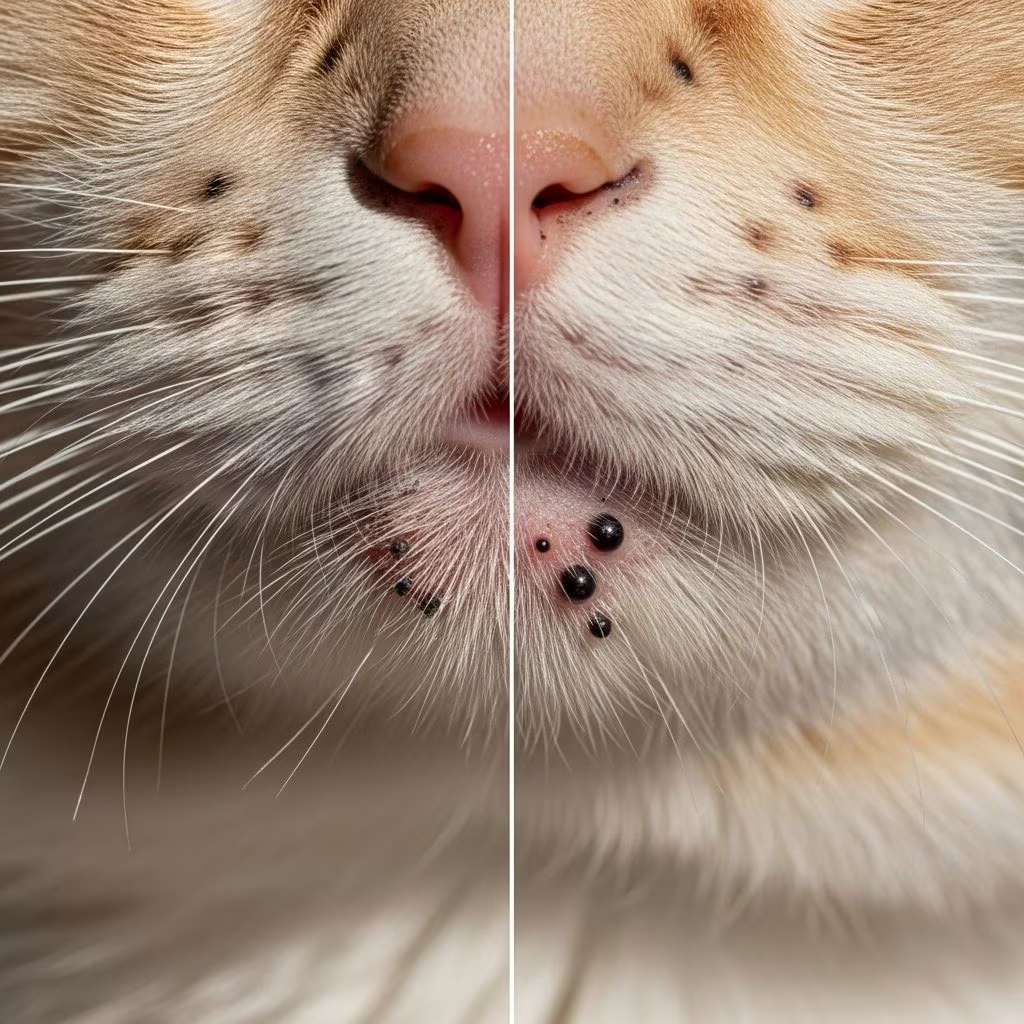
Cat owners often notice unusual bumps, redness, or blackheads on their pet’s chin, leading to confusion between **cat chin acne** and **chin mites**. While both conditions affect the chin area and share similar symptoms like redness and irritation, they have distinct causes and treatments. Chin acne is a common, non-contagious skin issue resembling human acne, whereas chin mites involve parasitic arachnids that can sometimes complicate acne cases. Accurate diagnosis by a veterinarian is crucial, as self-treatment may worsen the problem. This article breaks down the differences, drawing from veterinary insights to help you identify and address these issues effectively.
What Is Chin Acne in Cats?
**Chin acne**, also known as feline acne, is a prevalent dermatological condition in cats characterized by clogged hair follicles on the chin, leading to blackheads, pimples, and inflammation. Unlike human acne, which often affects teenagers due to hormonal changes, cat chin acne impacts cats of all ages, breeds, and sexes, though it’s more common in middle-aged and older felines. The chin area is primarily affected, sometimes extending to the lips, but rarely other body parts.
The exact cause remains unknown, but several factors contribute: overactive sebaceous glands producing excess oil, poor grooming (especially in long-haired cats), bacterial overgrowth, contact allergies to plastic bowls, stress, or a weakened immune system. Cats rubbing their chins on dirty surfaces or using unhygienic food dishes can trap debris, exacerbating blockages. In mild cases, it appears as “coffee grounds”—small blackheads that can be combed out. Severe instances involve swelling, pustules (whiteheads from bacterial infection), hair loss, pain, and discharge.
- **Mild symptoms**: Few blackheads or blocked follicles.
- **Moderate symptoms**: Redness, pimples, mild swelling.
- **Severe symptoms**: Swollen chin, deep infections, chronic recurrence, discomfort when touched.
Quick facts: Chin acne looks like human pimples but is treatable; it can be painful in advanced stages and often recurs.
Quick Facts About Chin Acne
- Cats frequently develop pimples on their chin, resembling blackheads or both.
- It can appear as coffee grounds-like residue.
- Causes skin swelling and redness.
- Severe cases are painful and require veterinary intervention.
- Treatable with proper hygiene and medication.
- Affects any age, not just young cats.
What Are Chin Mites in Cats?
**Chin mites**, often demodex or other skin mites (arachnids, not insects), are microscopic parasites residing in hair follicles and sebaceous glands. While normally harmless and present in low numbers, overpopulation—due to immune suppression, stress, or secondary to ear mites—triggers issues. They are less common than chin acne but can mimic or coexist with it, sometimes infesting acne-damaged follicles.
Symptoms include intense itching, hair loss (bald patches on chin/lips), redness, inflammation, scabs, crusts, flakes, and secondary bacterial infections. Unlike acne’s comedones, mites cause more diffuse irritation and may spread slightly. Some mites are visible to the naked eye as tiny moving specks, and certain types are contagious to other pets or humans. They are generally not life-threatening but annoying and unsightly.
- Uncommon compared to acne.
- Causes environmental contamination in homes.
- May stem from untreated ear mites.
- Leads to scabbing and baldness beyond simple bumps.
Chin Mites vs. Chin Acne: Key Differences
Both conditions overlap in redness, bumps, and hair loss, making differentiation challenging without vet tools. Acne stems from follicular hyperkeratosis and bacteria, while mites are parasitic. Use this table for quick comparison:
| Aspect | Chin Mites | Chin Acne |
|---|---|---|
| Cause | Parasitic mites (demodex, etc.) in follicles | Clogged pores, excess oil, bacteria |
| Prevalence | Uncommon | Relatively common |
| Symptoms | Itching, hair loss, scabs, crusts, bald patches, flakes | Blackheads, pimples, redness, swelling, discharge |
| Pain Level | Generally not painful, itchy | Severe cases painful |
| Contagious? | Some types yes (to pets/humans) | No |
| Diagnosis | Skin scraping/microscopy | Visual exam, sometimes biopsy |
| Treatment | Parasiticides, med shampoos; quick resolution | Topicals, antibiotics; may recur |
Acne is more refractory; mites respond faster to targeted therapy. Mites may worsen acne.
How Are Cat Chin Acne and Chin Mites Diagnosed?
Veterinarians start with a physical exam. For **acne**, visual inspection suffices for mild cases; severe ones may need cytology, biopsy, or culture for bacteria. **Mites** require skin scrapings examined under a microscope to detect eggs, larvae, or adults. Photos help track progression. Rule out allergies, hyperthyroidism, or demodicosis. Early diagnosis prevents complications.
Treatments for Chin Acne in Cats
Treatment varies by severity:
- Home care (mild)**: Comb out blackheads daily; clean chin with chlorhexidine wipes. Switch to glass/ceramic bowls; wash daily.
- Topical**: Benzoyl peroxide or salicylic acid gels kill bacteria, unplug follicles. Apply sparingly to avoid dryness.
- Severe**: Oral antibiotics (e.g., clindamycin), anti-inflammatories. Laser therapy or retinoids for recalcitrant cases.
Avoid squeezing pimples to prevent scarring. Monitor for recurrence; hypoallergenic diets if allergies suspected.
Treatments for Chin Mites in Cats
Focuses on eradicating parasites:
- Topical**: Ivermectin, milbemycin ointments, or Oridermyl cream (for ear-chin link). Medicated shampoos weekly.
- Systemic**: Oral ivermectin or selamectin if widespread.
- Supportive**: Antibiotics for secondary infections; clean environment to prevent reinfestation.
Treatment is straightforward and faster than acne. Treat all pets if contagious.
Preventing Chin Acne and Chin Mites
Acne prevention**: Daily chin cleaning, non-plastic bowls, stress reduction, regular grooming.
Mites**: Flea prevention (many cover mites), ear checks, quarantine new cats.
- Hygiene: Wipe chins post-meals.
- Bowls: Glass/steel only.
- Grooming: Brush long-haired cats.
- Vet checkups: Early detection.
When to See a Vet
Consult if: no improvement in 1-2 weeks, spreading, pain, hair loss, or scratching. Severe swelling or odor signals infection. Don’t delay—complications like abscesses can arise.
Frequently Asked Questions (FAQs)
Can chin mites cause chin acne?
Yes, mites can infest acne follicles, worsening symptoms.
Is cat chin acne contagious?
No, it’s not transmissible.
How do I clean my cat’s chin safely?
Use vet-approved wipes like chlorhexidine; avoid human products.
Can diet affect chin acne?
Possibly, if allergies; try hypoallergenic food.
Do chin mites affect humans?
Rarely; some types are zoonotic but mild.
References
- Cat Chin Acne VS Chin Mites — Pottycats. 2023. https://pottycats.com/blogs/cat-care/cat-chin-acne-vs-chin-mites
- Cat Chin Mites vs. Chin Acne: How To Tell The Difference (Vet Verified) — Catster. 2023-10-15. https://www.catster.com/ask-the-vet/cat-chin-mites-vs-chin-acne/
- Cat Acne vs. Chin Mites: How to Tell the Difference (With Pictures) — Hepper. 2024. https://articles.hepper.com/cat-acne-vs-cat-chin-mites-vet-answer/
- Understanding Feline Acne and Cat Chin Mites — WoPet. 2023. https://wopet.com/cats/feline-acne-and-cat-chin-mites/
- Chin Acne in Cats — VCA Animal Hospitals. 2024-05-01. https://vcahospitals.com/know-your-pet/chin-acne-in-cats



