

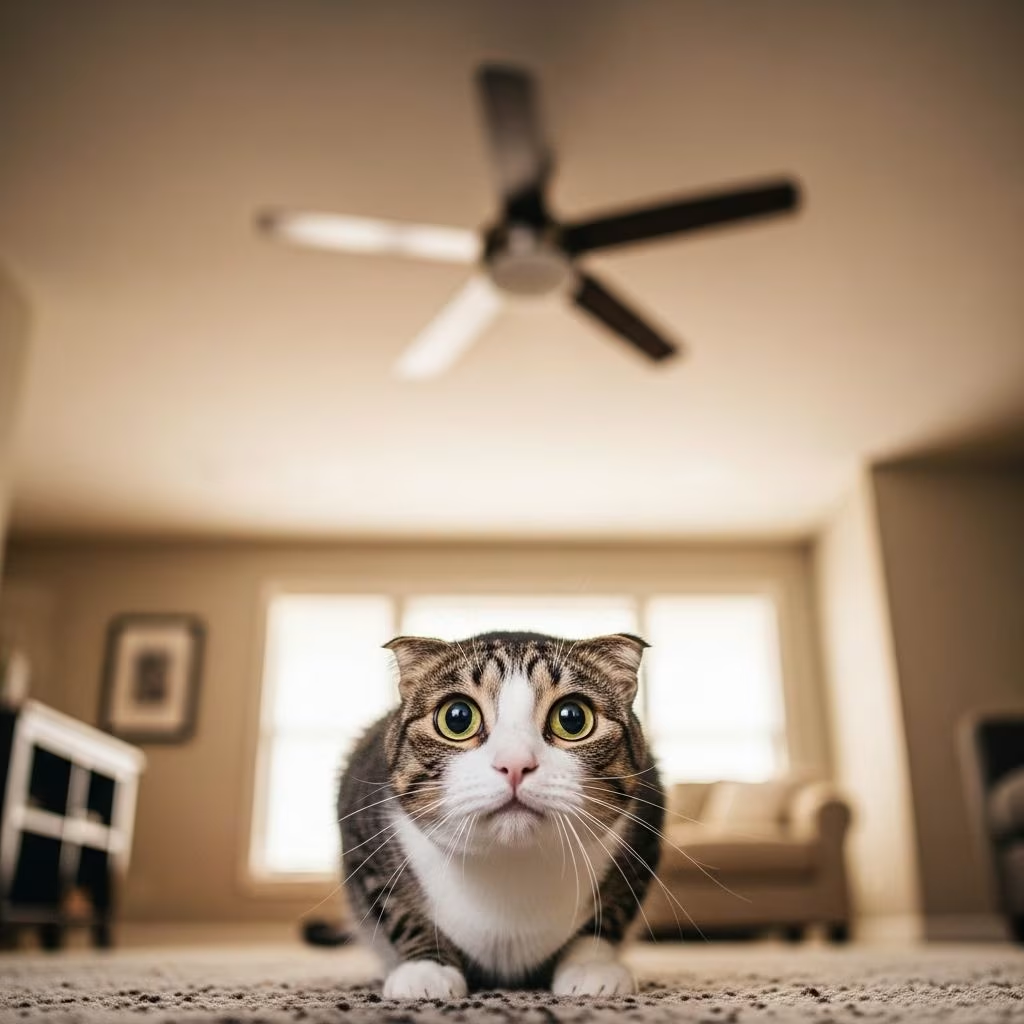
Many cat owners notice their pets suddenly bolting or hiding when a ceiling fan whirs to life. This seemingly odd behavior stems from cats’ heightened senses and survival instincts reacting to the fan’s motion, sounds, and shadows. Understanding these triggers allows owners to help their cats adapt, reducing stress and improving household harmony.
The Instinctive Roots of Feline Fan Phobia
Cats descend from small wild felines that relied on stealth and vigilance for survival. Overhead movement, like a spinning fan, can mimic the unpredictable swoop of a predator, triggering an innate flight response even in domestic settings. Unlike larger cats unthreatened from above, house cats retain caution toward anything novel above them.
This neophobia—fear of the new—serves as a protective mechanism. A fan that was off for months might suddenly become “threatening” after reactivation, especially post-warm weather when blades start turning. Cats monitor these objects intently before relaxing, as seen in behaviors where they lie down only after careful observation.
Sensory Overload: What Cats Perceive Differently
Cats possess superior hearing, vision for motion, and whisker sensitivity, making fans overwhelming. Key triggers include:
- Motion and Shadows: Blades create flickering shadows resembling attacking birds or insects, perceived as imminent danger.
- Noise Levels: High-pitched hums or whirs exceed human detection but jolt feline ears, akin to distress signals.
- Airflow Changes: Gusts ruffle fur and whiskers, disrupting spatial awareness and balance.
- Vibration: Subtle motor buzzes transmit through floors, amplifying unease.
Sudden onset often follows environmental shifts, like seasonal fan use or moves to homes with fans everywhere, as one owner experienced relocating from cooler to hotter climates.
Signs Your Cat is Experiencing Fan-Related Anxiety
Recognize distress early to intervene effectively. Common indicators:
- Dilated pupils and flattened ears upon fan activation.
- Crouching, freezing, or explosive dashes to hiding spots.
- Constant upward glances or avoidance of fan-equipped rooms.
- Refusal to enter spaces even when fans are off, due to lingering association.
- Accompanying stress signals like excessive grooming, appetite loss, or vocalizing.
These reactions vary; some cats habituate naturally over summer months, while others develop intense phobias needing intervention.
Step-by-Step Guide to Desensitizing Your Cat
Counter-conditioning and desensitization build positive links, turning fear into indifference. Proceed gradually to avoid worsening anxiety.
- Assess Baseline: Note reactions at different speeds and distances. Keep fan off initially.
- Create Safety: Offer hideouts away from fans, like elevated perches or covered beds.
- Gradual Exposure: Start with lowest speed for 1-2 minutes while absent, rewarding calm with treats upon return.
- Positive Pairing: Feed meals or play near (but not under) the fan, inching closer weekly.
- Visual Acclimation: Cover blades partially, uncovering slowly over days.
- Run Constantly: In mild cases, leave on 24/7 for habituation.
- Monitor Progress: Increase duration as tolerance builds; full adaptation may take weeks.
| Week | Exposure Level | Reward Type | Expected Outcome |
|---|---|---|---|
| 1 | Off or low speed, distant | Treats from afar | No panic, curious glances |
| 2-3 | Low-medium speed, mid-room | Play sessions | Relaxed proximity |
| 4+ | Full speed, under fan | Meals nearby | Ignore fan completely |
Helpful Tools and Environmental Adjustments
Enhance success with aids:
- Pheromone Diffusers: Feliway mimics calming scents, reducing overall anxiety.
- Calming Supplements: Vet-approved options like L-theanine for mild stress.
- Fan Alternatives: Oscillating floor fans move slower, less shadowy.
- Room Zoning: Designate fan-free zones for retreat.
For multi-cat homes, isolate fearful ones during initial training to prevent mimicry.
Potential Health Links and When to See a Vet
Occasional fan fear is normal, but persistent cases may signal issues:
- Vision problems heightening motion sensitivity.
- Hyperthyroidism or pain amplifying startle responses.
- Generalized anxiety from life changes.
Consult a vet if phobia coincides with lethargy, weight loss, or aggression. They can rule out medical causes and suggest behaviorists.
Real Owner Experiences and Success Stories
Owners report triumphs: One cat overcame terror after weeks of treat-pairing, lounging unbothered. Another habituated via constant running, eliminating hiding. Patience yields results; sudden fixes risk setbacks.
Preventing Future Phobias in Kittens and New Cats
Expose young cats early: Run fans during play, pairing with fun. For rescues, simulate household sounds gradually. This builds resilience against neophobia.
FAQs
Why do some cats fear fans while others don’t?
Individual temperament, past experiences, and genetics play roles. Sensitive cats react more to novel stimuli.
Can fan fear indicate illness?
Possibly; heightened sensitivity may stem from health issues. Vet check recommended if persistent.
How long does desensitization take?
Typically 2-6 weeks with consistency, varying by cat.
Is it safe to force exposure?
No—gradual methods prevent trauma. Abrupt exposure worsens fear.
What if my cat never adapts?
Remove or cover the fan; consult professionals for severe cases.
References
- Why is my cat suddenly terrified of the ceiling fan when it… — Dial A Vet. 2023. https://www.dialavet.com/vet-answers/cat-scared-of-ceiling-fan-16900
- Why does my cat freak out and hide every time the ceiling fan turns… — Dial A Vet. 2023. https://www.dialavet.com/vet-answers/cat-afraid-ceiling-fan-51552
- Now that warm weather has arrived, we’ve turned the ceiling fans on… — Daniel Estep, Ph.D. and Suzanne Hetts, Ph.D., Animal Behavior Associates. N/D. https://animalbehaviorassociates.com/pdf/RMN_cats_afraid_new_things.pdf



